
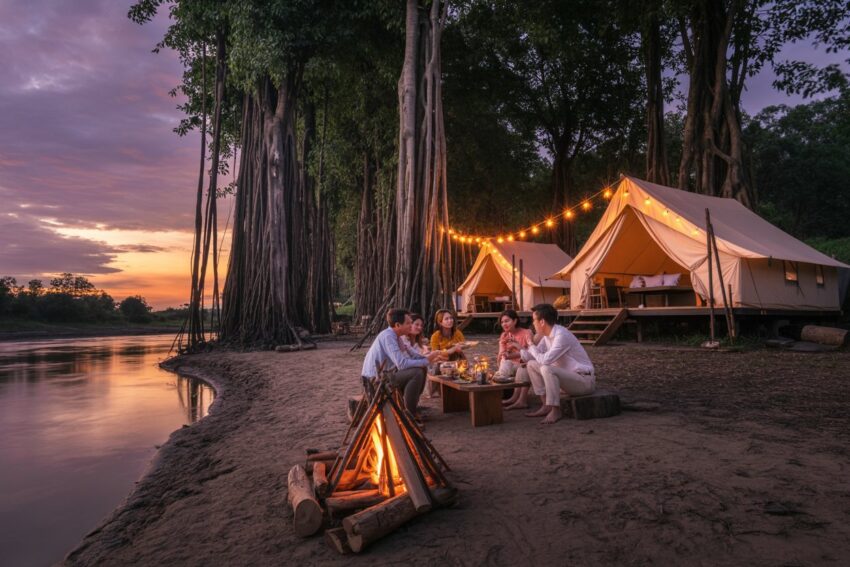

For years, the image of tourism in Hà Nội was defined by the buzzing motorbikes of the Old Quarter, the hushed dignity of the Temple of Literature, and the historic charm of Hoàn Kiếm Lake. However, by early 2026, a new narrative has taken root—one that smells of fresh pine, flowing water, and campfire smoke. In a move toward sustainability and rural revitalization, “Green Tourism” and river camping have emerged as the driving forces behind a tourism boom in Hà Nội’s outskirts.
This shift isn’t just a passing trend; it is a calculated effort to balance the city’s rapid urbanization with a deep-seated need for nature, providing a lifeline to rural economies while offering urbanites a much-needed “green escape.”
The Rise of the “Glamping” Revolution
The traditional hotel stay is being traded for something more visceral. Districts like Ba Vì, Sơn Tây, and the areas along the Red River and Đuống River have seen a surge in camping and “glamping” (glamorous camping) sites. These locations offer a middle ground for the modern traveler: the thrill of sleeping under the stars without sacrificing the comforts of modern life.
According to local tourism reports, the demand for outdoor, nature-based activities has spiked significantly. Travelers are no longer satisfied with just looking at a landscape through a bus window; they want to pitch a tent on it, hike through it, and wake up to the sound of the river current. This “river camping” model has become particularly popular among young families and Gen Z travelers looking to disconnect from their screens and reconnect with the earth.
Sustainability as the North Star
At the heart of this movement is the concept of “Green Tourism.” This isn’t just a marketing buzzword; in Hà Nội’s rural districts, it represents a commitment to low-impact travel.
Many of the new camping sites are designed with a “leave no trace” philosophy. Instead of massive concrete structures, these sites use removable wooden platforms, solar-powered lighting, and organic waste management systems. By prioritizing the environment, these businesses ensure that the very beauty that attracts tourists today will remain intact for generations to come.
Furthermore, green tourism in these areas often involves community-based initiatives. Local farmers who once relied solely on seasonal crops are now diversifying their income by providing organic produce to campsites or leading guided tours of their orchards. This creates a circular economy where the “tourist dong” stays directly in the pockets of the villagers.
Revitalizing the Rural Economy
The impact of this tourism shift on Hà Nội’s rural districts, such as Sóc Sơn and Đan Phượng, cannot be overstated. Rural tourism development has become a key pillar in the city’s strategy to narrow the wealth gap between the urban center and the countryside.
By promoting river camping, the government is successfully drawing visitors away from the overcrowded city center and spreading the economic benefits. New infrastructure—better roads, improved sanitation, and localized digital connectivity—is following the tourists into these rural pockets. For many young people in these villages, the growth of green tourism means they no longer have to migrate to the city for work; they can find meaningful, sustainable careers right in their backyards as guides, site managers, and hospitality entrepreneurs.
The Human Element: Finding Stillness in the Chaos
Why has river camping resonated so deeply in 2026? The answer is human. As our lives become increasingly digital and our cities more crowded, the psychological toll of “urban burnout” has become a global phenomenon.
There is a unique healing power in sitting by the Red River at sunset, watching the water flow toward the sea while the air cools. It provides a sense of perspective that a skyscraper never could. These rural retreats offer “slow travel”—an invitation to breathe, to talk without the distraction of notifications, and to remember the simple joy of a meal cooked over an open fire.
Local site owners note that their most popular packages aren’t the ones with the best Wi-Fi, but the ones that offer “digital detox” experiences—meditation by the river, traditional fishing lessons, or simply a hammock and a view.
Challenges: Protection vs. Promotion
Success, however, brings its own set of challenges. As river camping grows in popularity, the risk of “over-tourism” looms. The challenge for Hà Nội’s authorities in 2026 is to regulate these sites to ensure they don’t become victims of their own success.
Maintaining water quality in the rivers and preventing the commercialization of sacred rural landscapes are top priorities. The goal is to ensure that “Green Tourism” remains green—not just in name, but in practice. This involves strict licensing for campsites and ongoing education for tourists on how to respect local customs and ecosystems.
A Vision for the Future
Hà Nội proves that cities can have both the best of both worlds- a busy city center and nature touch points. With the expansion of river camping and green tourism, Hà Nội is setting a sustainable development model for other Southeast Asian cities to observe.
Looking to the future, the success of Hà Nội’s rural districts shows us that incredible travel experiences need not be found in luxurious, five-star settings. Right now, the most luxurious experiences are likely to be found in a quiet tent by the river, and under a sky full of stars, knowing that your holiday is helping the planet breathe a little easier.
The post The Green Escape: How River Camping is Transforming Hà Nội’s Rural Tourism Landscape appeared first on Travel And Tour World.
