
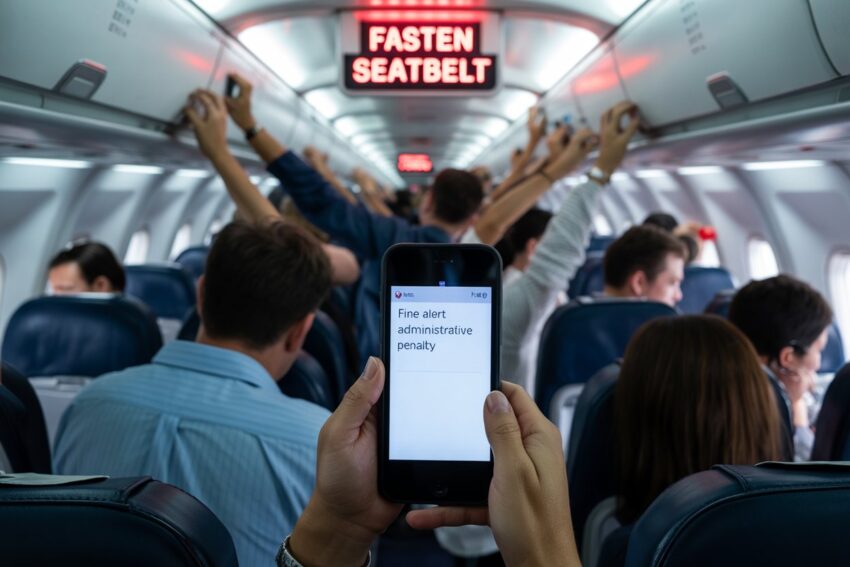

We’ve all seen them. The moment the wheels touch the tarmac—sometimes even before the plane has finished braking—the “click-clack” of seatbelts unfastening echoes through the cabin. Like a synchronized swim team, a dozen passengers leap into the aisle, hunched over under the overhead bins, desperate to be the first to grab their carry-on.
In the travel world, they’re known as “aisle lice.” But as we move into 2026, these impatient flyers are facing more than just the dirty looks of their fellow passengers. They’re facing a cold, hard dent in their holiday budget.
According to recent reports from the Daily Mirror and international aviation authorities, new regulations are being enforced that allow airlines to issue instant fines to passengers who refuse to stay seated until the aircraft has come to a complete stop and the seatbelt sign has been extinguished.
The Crackdown on “Aisle Lice”
The most significant move has come from Turkey’s Directorate General of Civil Aviation (DGCA). Following a massive surge in passenger complaints and several near-miss safety incidents during taxiing, the authority has authorized fines for what they call “disruptive disembarkation.”
If you are flying to, from, or within Turkey in 2026, standing up early is no longer just a breach of etiquette—it’s a breach of the law.
What exactly can get you fined?
It’s not just the act of standing that is being targeted. The new “stay-seated” mandate covers a range of behaviors:
- Unfastening your seatbelt while the plane is still taxiing to the gate.
- Opening overhead compartments before the aircraft has reached its final parking position.
- Crowding the aisle before your specific row has been called for disembarkation.
- Ignoring crew instructions to remain seated during the “shutdown” phase of the flight.
How Much Will It Cost You?
While the exact amount can vary based on the airline and the severity of the “rush,” reports indicate that fines are currently hovering around 2,603 Turkish Lira (approximately £53 or $70).
While £53 might not seem like a life-changing amount of money, it is an “instant” administrative penalty. Cabin crews are now instructed to document the seat number and identity of the offending passenger and report them directly to the civil aviation authority upon landing. For many travelers, that’s the cost of a nice dinner out or a guided tour—gone in the blink of an eye just to save thirty seconds of standing time.
The Logic: It’s Not Just About Manners
To the person standing in the aisle, it feels like they’re being proactive. To the pilots and safety experts, it’s a nightmare.
“People forget that a plane taxiing at 15–20 mph is still a massive machine in motion,” says Jaki Johnson, a veteran flight attendant and travel safety expert. “If the pilot has to slam on the brakes because a ground vehicle crosses the taxiway, anyone standing in that aisle becomes a human projectile. You’re not just risking your own safety; you’re risking the safety of the people sitting next to you who might get hit by your falling suitcase.”
Furthermore, “aisle rushing” actually slows down the exit process. When fifty people try to squeeze into an aisle designed for one, it creates a bottleneck that prevents the front rows from exiting efficiently. By enforcing a “row-by-row” priority, airlines are attempting to make deplaning a linear, predictable process.
Is This Coming to the UK and US?
While Turkey is currently the most aggressive in issuing direct financial penalties, the sentiment is global. In the United States, the Federal Aviation Administration (FAA) has been tightening its “unruly passenger” definitions. While you might not get an “instant” $70 ticket on a domestic flight to Chicago just yet, refusing to sit down is legally classified as “interfering with crew members.”
Under the 2026 FAA guidelines, persistent “aisle lice” can be reported for non-compliance, which can lead to fines reaching into the thousands of dollars for repeat offenders or those who become argumentative with staff.
The “Gate Lice” and Other Trends
The crackdown on standing up is part of a broader 2026 trend of airlines reclaiming control of the cabin. We are also seeing:
- Boarding Alarms: Airlines like American Airlines and United are trialing technology that triggers an audible “beep” if a passenger tries to board before their group number is called (the so-called “gate lice”).
- The Jeans Ban: Even budget carriers like Ryanair have made headlines in early 2026 by “urging” (though not yet forcing) passengers to ditch stiff jeans for more flexible “comfies” to speed up the process of getting in and out of seats.
How to Avoid the Fine (and the Infamy)
The solution is simple, though seemingly difficult for the modern, rushed traveler: Wait.
Keep the Belt Fastened: Do not unclick the buckle until you hear the distinct “ding” and see the light go off.
The “One-Bag” Rule: If you are in a rush, travel with a bag that fits under the seat in front of you. This eliminates the need to stand up and wrestle with the overhead bin the moment you land.
Respect the Row: Unless you have a tight connection (in which case, notify the crew before landing), wait for the rows in front of you to clear before stepping into the aisle.
The Bottom Line
In 2026, the “rules of the road” have officially moved into the skies. As airlines prioritize safety and “passenger satisfaction” over the whims of the individual, the era of the frantic aisle dash is coming to a close.
Is thirty seconds of standing in a cramped aisle really worth a £53 fine and the collective eye-roll of 180 people? Probably not. Next time you land, take a deep breath, finish your podcast, and wait for the “ding.” Your wallet—and your knees—will thank you.
The post The High Price of Impatience: Why Standing Up Too Early on Your Next Flight Could Cost You an Instant Fine appeared first on Travel And Tour World.
