
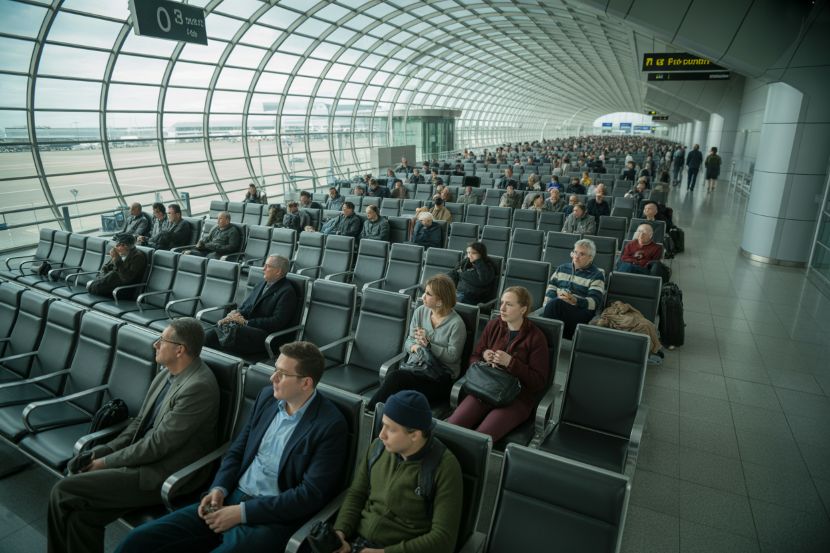

Asia’s skies turned into a battleground of delays and cancellations this week as travellers from Beijing to Bangkok, Tokyo to Singapore, and beyond faced unprecedented disruption. Families, business people, and holidaymakers found themselves stranded at major airports with little warning and mounting frustration as 3,014 flights were delayed and 258 flights cancelled across the region’s busiest carriers, according to the latest compiled operational data. The ripple effects of these disruptions are now drawing attention from civil aviation authorities, foreign affairs ministries, and travellers worried about the reliability of air travel in Asia.
Unpacking the Asia Flight Disruption Crisis
Across Asia, carriers reported significant disruptions over the past weeks, with almost every major airline registering delays and cancellations. Based on aggregated operational data, China Eastern led the list with 309 delays and 64 cancellations, followed by Air China with 206 delays and 49 cancellations, and XiamenAir with 122 delays and 61 cancellations. Smaller carriers such as Hokkaido Air System, Air Seoul and Mandarin Airlines also registered disruptions, pointing to an industry‑wide challenge affecting short‑haul and long‑haul operations alike.
Government Aviation Regulators Respond
Civil aviation regulators across Asia are responding to the disruption. In India, the Directorate General of Civil Aviation (DGCA) has sought detailed operational data from IndiGo and other carriers amid probes into flight cancellations and potential fare pricing issues as cancellations spiked last month. This stems from a winter schedule crisis in December when IndiGo’s network suffered massive cancellations due to crew scheduling constraints imposed by new safety mandates, forcing the regulator to intervene and cap airfares temporarily.
Similarly, aviation authorities in China and Japan have issued advisories and contingency guidance to travellers after multiple reports surfaced of flights delayed or cancelled across key hubs such as Beijing Capital, Shanghai Hongqiao, Narita and Haneda. Official websites from respective civil aviation administrations continue to update real‑time schedules and rights for affected passengers.
Cancelled China Eastern “China Eastern” (CES) Flights
| Ident | Type | Origin | Destination | Scheduled Departure Time |
|---|---|---|---|---|
| CES9698 | B735 | Hangzhou Xiaoshan Int’l (HGH / ZSHC) | Dali (DLU / ZPDL) | Wed 01:50PM CST |
| CES2412 | A320 | Lanzhou Zhongchuan International (LHW / ZLLL) | Jiuquan (JGN / ZLJQ) | Wed 02:40PM CST |
| CES6469 | A20N | Hefei Xingiao Airport (HFE / ZSOF) | Qingdao Jiaodong Int’l (TAO / ZSQD) | Wed 02:45PM CST |
| CES6311 | A320 | Beijing Daxing International Airport (PKX / ZBAD) | Guangzhou Baiyun Int’l (CAN / ZGGG) | Wed 03:05PM CST |
| CES5118 | A333 | Beijing Capital Int’l (PEK / ZBAA) | Shanghai Hongqiao Int’l (SHA / ZSSS) | Wed 04:10PM CST |
| CES5407 | A20N | Shanghai Pudong Int’l (PVG / ZSPD) | Chengdu Shuangliu Int’l (CTU / ZUUU) | Wed 04:30PM CST |
| CES5210 | B732 | Taiyuan Wusu (TYN / ZBYN) | Shanghai Pudong Int’l (PVG / ZSPD) | Wed 04:30PM CST |
| CES5466 | A320 | Xishuangbanna Gasa (JHG / ZPJH) | Nanchang Changbei Int’l (KHN / ZSCN) | Wed 04:30PM CST |
| CES2505 | B735 | Wuhan Tianhe (WUH / ZHHH) | Shanghai Hongqiao Int’l (SHA / ZSSS) | Wed 04:40PM CST |
| CES2417 | A320 | Jiuquan (JGN / ZLJQ) | Lanzhou Zhongchuan International (LHW / ZLLL) | Wed 05:00PM CST |
| CES5119 | A321 | Shanghai Hongqiao Int’l (SHA / ZSSS) | Beijing Capital Int’l (PEK / ZBAA) | Wed 05:10PM CST |
| CES9182 | C919 | Shanghai Hongqiao Int’l (SHA / ZSSS) | Shanghai Hongqiao Int’l (SHA / ZSSS) | Wed 05:10PM CST |
| CES6181 | A320 | Shanghai Hongqiao Int’l (SHA / ZSSS) | Hangzhou Xiaoshan Int’l (HGH / ZSHC) | Wed 05:30PM CST |
| CES6470 | A320 | Qingdao Jiaodong Int’l (TAO / ZSQD) | Hefei Xingiao Airport (HEE / ZSOF) | Wed 05:40PM CST |
| CES5859 | B737 | Xishuangbanna Gasa (JHG / ZPJH) | Hangzhou Xiaoshan Int’l (HGH / ZSHC) | Wed 05:55PM CST |
| CES9151 | A20N | Penglai International (VNT / ZSYT) | Fuzhou Changle Int’l (FOC / ZSFZ) | Wed 06:10PM CST |
| CES5517 | A321 | Shanghai Hongqiao Int’l (SHA / ZSSS) | Qingdao Jiaodong Int’l (TAO / ZSQD) | Wed 06:10PM CST |
| CES6588 | A320 | Jieyang Chaoshan International Airport (SWA / ZGOW) | Xi’an Xianyang Int’l (XIV / ZLXY) | Wed 06:20PM CST |
| CES5363 | A321 | Shanghai Hongqiao Int’l (SHA / ZSSS) | Changsha Huanghua Int’l (CSX / ZGHA) | Wed 06:30PM CST |
| CES2633 | B735 | Chengdu Tianfu Intl (TEU / ZUTE) | Yichang (YIH / ZHYC) | Wed 06:35PM CST |
Weather and Operational Challenges Compound Pressure
Weather remains a consistent factor in Asia’s flight operations. Dense fog in northern India resulted in severe visibility issues at airports such as Jaipur and Ahmedabad, triggering cancellation and delay domino effects across domestic and international routes. These conditions often overwhelm airport capacity and ripple through airline networks, causing cascading delays far beyond the original points of disruption.
Diplomatic Tensions Impact Flight Routes
In addition to operational and weather‑related challenges, geopolitical developments have also played a role. Travel advice and diplomatic tensions between China and Japan have led to a significant reduction in scheduled flights on cross‑border routes, with thousands of planned seats being cancelled or rebooked. These policies have unforeseen knock‑on impacts on airline scheduling, crew rostering, and passenger flows.
Passenger Rights and Traveller Disruption
Travel rights bodies and government consumer portals in Asia are urging passengers to know their entitlements. With thousands of flights delayed or cancelled, air passenger rights include rebooking, refunds, and compensation depending on local civil aviation rules. In India, the DGCA mandates refunds within a fixed timeframe while regulators in China and Japan are recommending enhanced customer service measures during peak disruption periods.
Industry Reactions and Airline Measures
Airlines affected have begun to roll out remediation plans. IndiGo introduced a customer‑care voucher scheme to partially compensate affected flyers from previous disruption windows. Similarly, national carriers such as China Eastern, Air China, and XiamenAir have offered rebooking, credit options, and priority services at airports for passengers whose journeys were severely affected.
Meanwhile, independent data from aviation analytics firms underscores a broader pattern of declining on‑time performance in the Asia‑Pacific region, with several carriers reporting lower punctuality due to a combination of increased demand, regulatory changes, and airport infrastructure constraints.
Airport Hotspots of Delays and Cancellations
Major hubs have borne the brunt of the operational strain. Airports in metropolitan regions such as:
- Beijing Capital and Shanghai Hongqiao (China)
- Tokyo Narita and Haneda (Japan)
- Singapore Changi (Singapore)
- Jakarta Soekarno‑Hatta (Indonesia)
- Bangkok Suvarnabhumi (Thailand)
have all seen significant delays and cancellations, pushing passenger volumes beyond scheduled capabilities and resulting in prolonged wait times for departures and arrivals.
Economic Impact and Travel Confidence
With disruptions spreading across regional airline networks, questions are mounting about the economic impact on tourism, business travel, and cargo logistics. Analysts warn that persistent delays dent airline reputations and can suppress future travel demand, particularly during peak holiday times when Asia typically sees high cross‑border traffic.
Practical Advice for Affected Travellers
Government travel advisories continue to stress the importance of proactive planning. Travellers are urged to:
- Check flight statuses directly with airlines before departure.
- Arrive early at airports during peak disruption periods.
- Understand local passenger rights and refund policies on official aviation regulator sites.
These steps can ease stress and ensure smoother handling of unexpected changes to itineraries.
Looking Ahead: Industry Adjustments and Reforms
Aviation authorities across Asia are now examining long‑term solutions to improve resilience. This includes enhanced air traffic management technologies, crew scheduling reforms, improved weather forecasting integration, and regulatory oversight into carrier operational strategies.
Humanised Last Paragraph
For many travellers caught in the chaos, the journey has been a test of patience more than physics. Reunions delayed, holiday plans upended, and business commitments put on hold, the human cost of these 3,014 delays and 258 cancellations is not just about statistics but stories of disrupted lives. As airlines and regulators work to restore trust and reliability, passengers are left waiting — sometimes in terminals, sometimes at home — hopeful that the next flight will finally get them to where they need to be.
The post Thousands of Passengers Left Stranded Across Asia as China Eastern, Air China, IndiGo, XiamenAir, Shanghai and Other Airlines Cancel 258 and Delay 3,014 Flights Across China, India, Japan, Singapore, Malaysia, Thailand, and Indonesia Including Beijing,Tokyo, Singapore, Bangkok, Jakarta, and Hong Kong appeared first on Travel And Tour World.
