
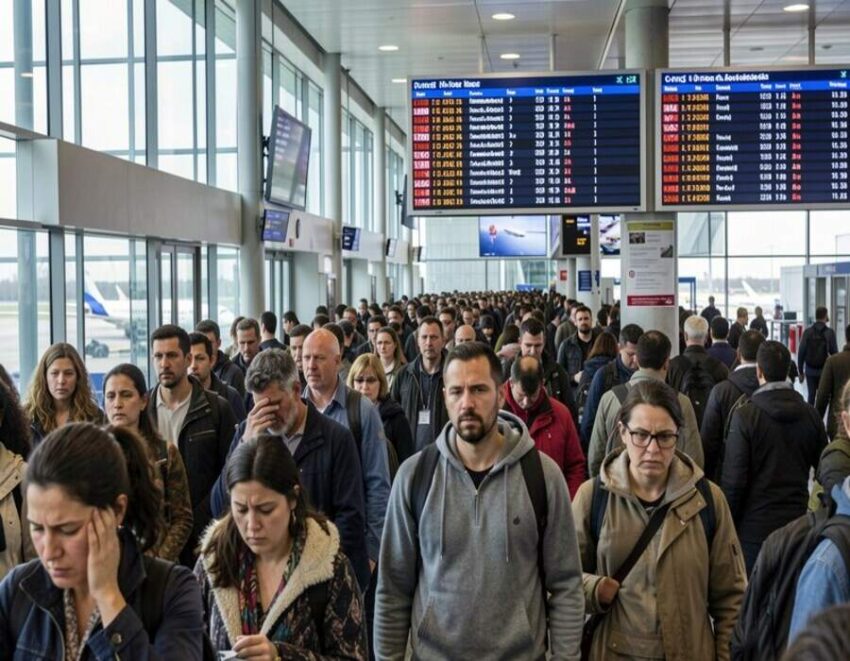
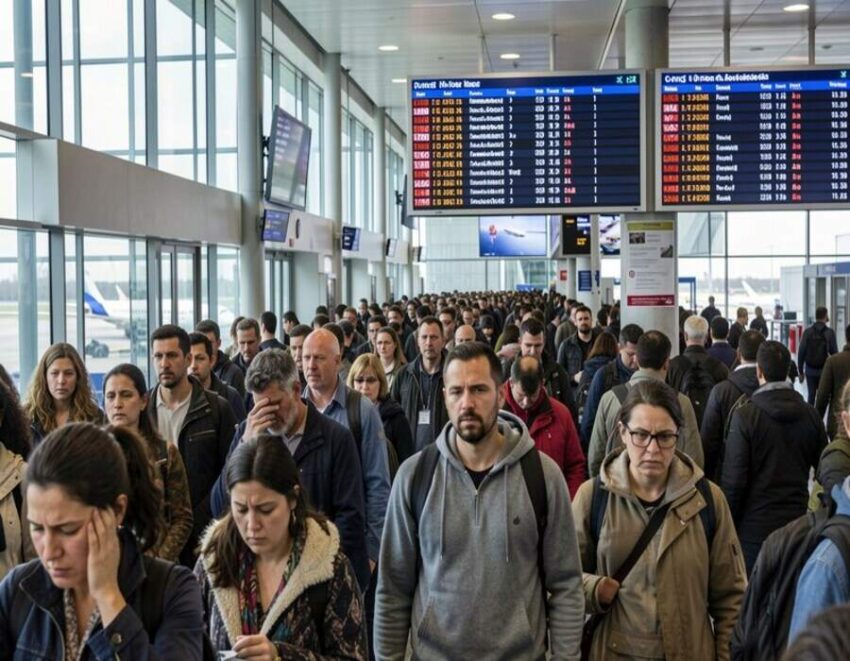
As escalating tensions in the Middle East have led to widespread airspace closures across several countries, including Iran, Israel, Qatar, Iraq, and Syria, thousands of passengers have been stranded at major hubs like Dubai International Airport and others. The closures, triggered by ongoing military operations, have resulted in the cancellation of over 1,000 flights and the delay of more than 18,000 globally, creating unparalleled disruptions for travelers worldwide. With key air routes blocked and flight schedules severely impacted, passengers are facing extended travel times, rerouted flights, and skyrocketing ticket prices, making it a chaotic and uncertain time for air travelers across the region and beyond.
In a stunning escalation of tensions in the Middle East, the recent US and Israeli military strikes on Iran have caused significant disruptions to air travel, affecting not only the Middle East but also travelers globally. The attacks have led to the closure of airspaces in several key countries, severely impacting the flight operations of major Middle Eastern carriers and disrupting global air travel schedules.
Major Middle Eastern Airports Affected
Several airports across the region, including those in key transit hubs such as Dubai, Abu Dhabi, and Doha, have been hit hard by airspace closures. These cities serve as significant international gateways, handling a substantial number of passengers daily. With the escalating military actions, these closures have created a ripple effect that is felt by both airlines and travelers worldwide.
- Dubai, UAE: Dubai International Airport, one of the busiest airports globally, saw major disruptions as flights were canceled and rerouted.
- Abu Dhabi, UAE: As the capital of the UAE, Abu Dhabi International also faced significant flight cancellations and delays.
- Doha, Qatar: Hamad International Airport, Qatar’s primary hub, had to deal with massive delays and cancellations as Qatar Airways suspended numerous routes.
Major Airlines Impacted
The three flagship airlines of the region—Emirates, Qatar Airways, and Etihad Airways—were heavily affected by the closures. These airlines are responsible for the daily transport of tens of thousands of passengers, and the airspace shutdowns led to widespread chaos for both regional and international travelers.
- Emirates Airlines: With Dubai as its base, Emirates had to cancel numerous flights to and from the Middle East. This included delays and rerouted flights due to the conflict zone airspace closures.
- Qatar Airways: As one of the largest carriers in the region, Qatar Airways was forced to ground multiple flights, impacting passengers traveling through Doha.
- Etihad Airways: Based in Abu Dhabi, Etihad also experienced significant operational disruptions, canceling flights and rerouting those that could still fly.
Widespread Flight Cancellations and Delays
The impact on air travel was immediate and extensive. According to aviation data provider Cirium, nearly 4,218 flights were scheduled to land in the Middle East on the affected Saturday, with 966 (22.9%) flights canceled. The situation worsened the next day, as 716 flights out of 4,329 scheduled for Sunday were also canceled. FlightAware reported that more than 18,000 flights were delayed globally, with over 2,350 cancellations reported by 10:30 pm GMT on Saturday alone.
- Over 1,000 Flights Canceled: The cancellations spread far beyond the Middle East, affecting destinations across Europe, North America, and Asia.
- 18,000+ Flight Delays: The delays were part of the broader disruptions, with passengers stranded in multiple locations due to altered flight paths and airspace restrictions.
Airspace Closures: Who’s Affected?
Countries across the Middle East quickly closed their airspaces in response to the escalating conflict, further complicating travel for international passengers. Here are the nations that enacted airspace restrictions:
- Iran: Iran closed its airspace indefinitely, preventing any flights from crossing through or entering the country.
- Israel: Israel followed suit by grounding civilian flights as its airspace became increasingly dangerous.
- Qatar: Qatar also closed its airspace, impacting flights to and from Doha, one of the region’s busiest airports.
- Iraq: Iraq implemented airspace restrictions as military operations took place in the country.
- Syria: Syria closed part of its southern airspace for 12 hours due to military activities near its border.
- United Arab Emirates (UAE): The UAE’s airspace restrictions affected flights to and from major airports in Dubai and Abu Dhabi.
- Jordan: Jordan introduced partial airspace closures as tensions escalated along its borders.
- Kuwait: Kuwait also implemented airspace closures, further adding to the region’s travel chaos.
Impact on International Travelers
The airspace closures have had a ripple effect on international air travel. As major international airlines had to reroute their flights, travel times increased and fuel costs surged. This, in turn, led to a hike in ticket prices as airlines absorbed the higher operational costs.
- US Airlines: Delta and United Airlines suspended flights to Tel Aviv, while American Airlines and other European carriers canceled flights to destinations like Beirut, Amman, and other Middle Eastern cities.
- European Airlines: KLM, Lufthansa, and Air France canceled flights to Lebanon and Syria, adding to the list of disruptions.
Travel Disruptions for Passengers
As this volatile situation continues to unfold, travelers are advised to closely monitor their flight statuses. Airlines have begun offering rebooking options or waivers for affected passengers, allowing them to change travel dates without incurring additional fees. Travelers are urged to:
- Check Flight Status: Passengers should stay updated on their flight schedules and check for any cancellations or rerouting.
- Prepare for Longer Travel Times: Expect longer travel times due to flight reroutes around conflict zones.
- Contact Airlines for Support: Airlines are providing customer support for those affected by the situation, with rebooking options available for affected passengers.
The Uncertainty Ahead
While it is expected that parts of the affected airspace may reopen soon, the situation remains fluid. Experts suggest that a similar attack in June 2025 caused a 12-day shutdown of airspace in the region. For now, travelers are advised to be patient, stay informed, and monitor their flight status closely.
As tensions escalate in the Middle East, airspace closures in Iran, Israel, Qatar, Iraq, and Syria have stranded thousands at Dubai International Airport and other major hubs. Over 1,000 flights have been canceled, and more than 18,000 global delays are wreaking havoc on travel plans worldwide.
The escalation in the Middle East has resulted in severe travel disruptions that have affected airports, airlines, and passengers across the globe. As countries close their airspaces and flight cancellations continue, it remains uncertain when normalcy will return. For those planning to travel to the Middle East, it is crucial to stay updated on the evolving situation and make necessary adjustments to travel plans. With significant airlines grounded and numerous flight cancellations, this crisis underscores the unpredictable nature of global air travel during times of geopolitical instability.
The post Thousands of Passengers Stranded at Dubai International Airport and Other Major Hubs as Iran, Israel, Qatar, Iraq, Syria and More Close Airspaces Over 1,000 Flights Canceled and 18,000+ Global Delays Disrupt Travel Plans Worldwide appeared first on Travel And Tour World.
