
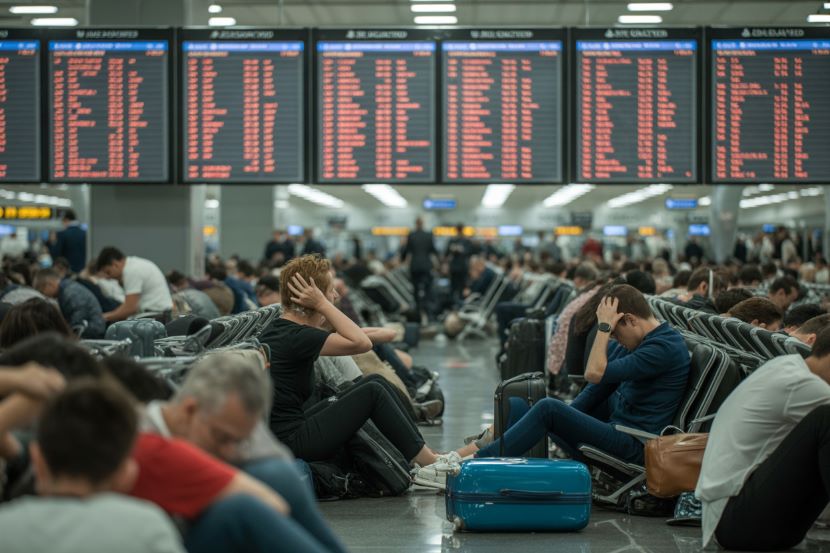
In what has quickly become one of the most chaotic weeks for air travel in Asia, thousands of passengers have found themselves stranded, delayed, or redirected due to a massive wave of flight cancellations and delays across several countries. Airports in China, Indonesia, Thailand, and Nepal have been at the epicenter of this disruption, with major carriers like Hainan Airlines, Tianjin Airlines, Asiana Airlines, Korean Air, Garuda Indonesia, and others scrambling to manage the fallout.
With a staggering 250 flight cancellations and over 2,570 delays, travelers from Shanghai, Beijing, Harbin, Jakarta, Bangkok, and Urumqi to Kathmandu have been hit hard. The disruptions have affected not only domestic flights but also international connections, creating a ripple effect that has sent shockwaves across the entire travel network in these regions.
Airports and Destinations Hit Hard
The most heavily impacted airport has been Shanghai Pudong International Airport, with 6 cancellations and 278 delays, leaving passengers caught in a waiting game that stretched for hours. Travelers bound for international destinations from Shanghai to Europe and the Americas found themselves stuck in terminals, hoping for news of their rebooked flights.
In Beijing, 17 flights were canceled and 103 were delayed at Beijing Capital International Airport, further complicating travel for the thousands trying to depart or connect through this vital hub. Meanwhile, Urumqi Diwopu Airport, located in the far west of China, faced 23 cancellations and 269 delays, leading to serious bottlenecks for passengers trying to make onward connections.
Other airports in Guangzhou Baiyun (2 cancellations, 148 delays), Shenzhen Bao’an (3 cancellations, 145 delays), and Chengdu Tianfu (26 cancellations, 392 delays) saw delays and cancellations stretching well into the evening. This disruption caused significant delays for both domestic and international travelers, many of whom were trying to reach important business meetings or key tourism destinations.
Southeast Asia Struggles: Jakarta and Bangkok in Chaos
The chaos extended well beyond China, hitting Southeast Asia with full force. At Jakarta’s Soekarno-Hatta Airport, 9 cancellations and 88 delays added to the mounting frustration of travelers. This bustling airport, one of Southeast Asia’s busiest hubs, saw many flights to and from destinations like Singapore, Kuala Lumpur, and other regional airports delayed or canceled without prior warning.
In Thailand, Bangkok’s Suvarnabhumi Airport was also in the thick of the turmoil, reporting 1 cancellation and 79 delays. Travelers bound for European and Middle Eastern destinations were particularly affected as flight after flight was delayed or re-routed, leading to further confusion in the Thai capital’s major international terminal.
Nepal’s Tribhuvan Airport Remains Relatively Unscathed
While the disruptions have been widespread, Nepal’s Tribhuvan International Airport has seen fewer cancellations compared to other destinations, with only 18 delays reported. Nevertheless, even these relatively minor delays are causing headaches for those planning to connect through Kathmandu, especially for passengers trying to reach destinations like the Middle East and parts of Southeast Asia.
The Causes: Technical Failures, Staffing Issues, and Weather Woes
So, what caused this mass disruption? Airlines and airport officials have cited a combination of factors leading to these widespread delays and cancellations, with technical failures at key airports playing a significant role. Hainan Airlines, Tianjin Airlines, and Korean Air have been particularly hard-hit by mechanical issues and fleet management problems. These technical failures, often requiring immediate attention, have left many flights grounded and unable to depart on time.
Staffing shortages have also been a contributing factor. Many of the affected airlines have faced challenges in crew scheduling, with last-minute staffing issues causing delays as airlines scrambled to find available crew members. This has been exacerbated by the sheer volume of travelers, with Asiana Airlines and Garuda Indonesia both reporting delays due to the difficulty of managing sudden surges in passengers.
Weather-related issues have not been entirely absent either. While China’s northern regions experienced some heavy snowfall, which affected airport operations, the tropical storms and heavy rains over Southeast Asia contributed to operational slowdowns at Jakarta and Bangkok airports. Although these factors typically cause temporary delays, when combined with the ongoing technical and staffing challenges, they created the perfect storm for travelers hoping to leave or connect through these regions.
The Impact: A Ripple Effect Across the Region
This wave of cancellations and delays has caused a ripple effect far beyond the airports themselves. Thousands of travelers have been forced to extend their stays at hotels, either waiting for their flights to be rescheduled or seeking alternative travel routes. The economic implications for both airlines and airports are significant, with increased operational costs from hotel accommodations, meal vouchers, and passenger compensation.
For tourism, this disruption is particularly damaging. China, Indonesia, Thailand, and Nepal are all major tourism hubs, with millions of visitors arriving each year. As travelers experience delays, many of their travel plans are severely impacted. Hotel bookings, tours, and local events are being postponed, and airlines are struggling to accommodate these sudden changes. Many passengers are unable to make it to their intended destinations, particularly in areas like Harbin, Jakarta, and Bangkok, where tourism plays a central role in the economy.
What Can Travelers Do?
For travelers currently stuck at affected airports, the best approach is to stay calm and stay updated. It’s essential to monitor flight status online through the respective airline’s website or mobile app. Many of the affected airlines are offering rebooking options on alternate flights, though the availability of these flights may be limited, especially in the short term.
If you are booked on a delayed or canceled flight, it’s important to check whether you’re entitled to meal vouchers or hotel accommodations depending on the length of the delay. Many airlines are offering flexible rebooking options, including free changes to future flights, so passengers should be proactive in checking their options.
For those with travel insurance, now is the time to reach out to providers and understand what compensation can be offered for flight cancellations, delays, and any additional expenses incurred during the delay.
Conclusion
As of today, thousands of travelers remain stranded or delayed in China, Indonesia, Thailand, Nepal, and other parts of Asia, facing over 250 cancellations and more than 2,570 delays. With the ongoing issues of technical failures, crew shortages, and weather-related disruptions, passengers can expect further delays as airlines work to clear the backlog. It’s a challenging time for air travel in Asia, and travelers must be prepared for long waits and potential changes to their travel plans. The need for effective management of flight schedules and better crisis response strategies has never been more apparent.
Source: Different airports and FlightAware
The post Thousands of Travelers Stuck in China, Indonesia, Thailand, Nepal, and More as 250 Flights Are Canceled and 2570 Delays by Hainan, Tianjin, Asiana, Korean Air, Garuda, and Others Cause Chaos Across Shanghai, Beijing, Harbin, Jakarta, Bangkok, and Beyond appeared first on Travel And Tour World.
