

In a stunning turn of events, Toronto has overtaken Quebec City, Calgary, Ottawa, Vancouver, Montreal, Edmonton, and other cities in Canada, as it roars with tourist arrivals like never before. While US tourism continues to show signs of recovery, Toronto has surged ahead, leaving its competitors in the dust. The city has experienced a massive influx of domestic visitors, with record-breaking numbers in hotel overnight stays and increased tourism spending.
This meteoric rise has significantly contributed to boosting Canada’s GDP, solidifying Toronto’s position as the leading tourism destination in the country. From vibrant festivals to cultural attractions, Toronto’s offerings have captured the attention of global travellers, drawing crowds in unprecedented numbers. The surge in tourism, especially in Toronto, has created a ripple effect across the entire Canadian economy, supporting jobs and further solidifying the tourism industry’s role as a key pillar of economic growth. As more visitors flock to the city and surrounding regions, the question remains: can Toronto maintain its dominance in Canada’s tourism sector? Keep reading to find out how this dynamic city is outshining its Canadian counterparts and driving Canada’s GDP to new heights.
Canada’s Tourism Economy Roars to Life in 2025
Canada’s tourism industry has shattered all expectations in 2025, leading the charge for a global tourism boom. With a record-breaking $26.7 billion in tourism spending just in the third quarter alone, Canada’s cities are thriving like never before. From Toronto’s vibrant city life to Quebec City’s historic charm, the country’s tourism economy is experiencing an unprecedented surge. Domestic visitors spent a whopping $20.8 billion, while international tourists contributed $6 billion. Tourism now accounts for 1.7% of Canada’s GDP, and the industry supports more than 715,000 jobs. Every major city is thriving, benefiting from a flood of visitors who are eager to explore the country’s diverse offerings. Canada’s rise as a tourism giant is powered by its stunning landscapes, cultural festivals, and a growing reputation for high-quality experiences. From coast to coast, cities like Toronto, Vancouver, Calgary, and Quebec City are now competing for the attention and spending power of visitors worldwide. Read on to discover how Canada’s cities performed and why 2025 is set to be the year that changed the landscape of Canadian tourism forever.

Toronto Smashes Visitor Records with 28 Million Arrivals
Toronto has solidified its place as Canada’s tourism heavyweight. In 2025, the city welcomed an impressive 28.2 million visitors, including 9.1 million overnight guests and 19.1 million day-trippers. This is a dramatic recovery from the pandemic and surpasses the numbers seen in 2024. The city’s tourism appeal extends far beyond its bustling downtown area, attracting visitors from all over Canada and abroad, especially from the UK, Germany, Mexico, and Asia. Toronto’s cultural diversity, world-class food scene, and vibrant neighbourhoods have made it a top destination for travellers. With major events, excellent infrastructure, and an enhanced waterfront, Toronto has made itself a must-visit city. The strategic blend of culture, food, and urban life is clearly working, and 2025 has shown just how powerful Toronto’s tourism sector has become.
Visitor Spending in Toronto Reaches an Unprecedented $9.1 Billion
Visitor spending in Toronto reached a stunning $9.1 billion in 2025, marking a 4% increase from 2024. This surge was driven by a combination of domestic and international visitors. Domestic tourists spent $5.7 billion, while international visitors spent $1.8 billion, an 11% increase over 2024. This spending was spread across a variety of sectors, including restaurants, shopping, attractions, and transportation services. The surge in visitor spending has made a significant economic impact across the city. It’s clear that tourism is no longer just about attracting visitors—it’s about driving economic growth, creating jobs, and providing long-term benefits for local businesses. Taxes generated from tourism have also contributed to funding public services, solidifying tourism’s role as a vital economic driver for Toronto.
Record-Breaking Tourism Spending in Toronto
Toronto has once again solidified its status as a top global destination, achieving record-breaking tourism spending and contributing immensely to Canada’s economy. According to Destination Toronto, the city’s tourism sector generated a staggering $9.1 billion in visitor spending in 2025. These numbers, both record-breaking, resulted in a total economic impact of nearly $13.5 billion, making Toronto not only the largest city in Canada but also a major force in the global tourism landscape.
In a year marked by economic uncertainty, shifting trade policies, and global trade tariffs, Toronto managed to maintain its competitive edge. As Andrew Weir, president and CEO of Destination Toronto, stated, the city’s visitor economy has shown incredible resilience. “Toronto has what travellers and meeting planners are seeking — compelling experiences paired with a warm welcome,” Weir said. The city’s thriving tourism sector has been instrumental in driving growth despite external economic pressures.
Surge in International Tourism to Toronto
One of the standout trends from 2025 was the impressive performance of international tourism. International arrivals to Toronto grew by 8%, with 1.4 million visitors flocking to the city, making this the fastest-growing segment of Toronto’s tourism market. Notably, visitors from the U.K. and Germany led the charge, with growth of 12% and 10% respectively. This uptick in international tourism highlights the increasing global appeal of Toronto, especially as key markets like Europe and Asia recognize the city as a must-visit destination.
Strong Domestic Tourism Drives Growth
While international tourism surged, domestic visits remained the largest contributor to the city’s tourism economy. 25 million domestic visitors made their way to Toronto in 2025, marking a 3% increase compared to the previous year. As Canadian travel to the U.S. declined, more Canadians turned their focus to travel within their own country. This shift has been an important factor in sustaining the growth of Toronto’s tourism sector. Meanwhile, the U.S. market remained the second-largest source of visitors, with 1.9 million American tourists, although this was a 6% decline from 2024.
Major Meetings and Events Fuel Economic Impact
A significant driver behind the record year was Toronto’s ability to host major meetings and events. In 2025, the city hosted an impressive 74 major meetings, attracting around 378,000 delegates, a remarkable 51% increase from the previous year. These events alone resulted in a staggering $982 million in economic impact. Beyond the immediate spending by event organizers and attendees, these large-scale events help position Toronto as a hub for investment, trade, and talent. Industries such as life sciences, technology, AI, manufacturing, and finance have benefited greatly from the influx of high-level meetings that bring innovation and business opportunities to the city.
Toronto Set to Shine with FIFA World Cup 2026
Looking ahead, 2026 promises even greater things for Toronto’s tourism industry. The city is set to be one of the 16 host cities for the much-anticipated FIFA World Cup, with six games scheduled to take place in Toronto. This global sporting event will bring a flood of visitors, creating exciting celebrations for locals and tourists alike. The World Cup is expected to provide a significant boost to Toronto’s economy, further solidifying the city’s reputation as a world-class destination.
Future Major Events to Bring in More Visitors
Destination Toronto has also secured new business that will bring 70 major meetings and events to the city in the coming years. These events are projected to attract over 370,000 attendees, generating $973 million in economic impact. This influx of future business underscores Toronto’s growing position as a leading destination for international meetings, conferences, and trade events.
Toronto’s Dominance in the Global Tourism Market
In summary, Toronto’s tourism sector continues to break records and exceed expectations, providing substantial economic benefits for the city and beyond. With strong domestic and international tourism growth, a thriving events sector, and high-profile events like the FIFA World Cup on the horizon, Toronto is well-positioned to maintain its dominance in the global tourism market. The city’s resilience, innovative strategies, and welcoming atmosphere make it clear that Toronto is a destination on the rise—one that continues to drive economic growth and attract visitors from all corners of the globe.

Vancouver – Riding High on Sustainable Tourism and Record Occupancy Rates
Vancouver’s tourism sector is a model for sustainable growth. In 2024, the city generated $8.9 billion in tourism revenues and supported more than 60,000 jobs. The city’s natural beauty, thriving film industry, and cultural festivals continue to attract millions of visitors. In 2025, Vancouver’s tourism industry remained strong, buoyed by events like the Celebration of Light and Vancouver International Film Festival. Vancouver’s tourism strategy emphasizes balancing growth with environmental protection, ensuring that the city remains an appealing destination for future generations. With the return of cruise ships and preparations for the 2026 FIFA World Cup, Vancouver is on track for even greater success. The city’s commitment to sustainability and green tourism has paid off, helping to preserve its stunning landscapes while offering exceptional experiences to visitors.
Calgary – A City on the Rise with Strong Spending and Year-Round Appeal
Calgary has experienced a remarkable tourism resurgence. In 2024, the city’s visitor economy generated nearly $3 billion, driven by festivals, conventions, and sports events. Calgary’s tourism sector is built around its year-round appeal, from the world-famous Calgary Stampede to winter festivals. In 2025, the city maintained its momentum, with visitor spending rising by 4%. Major events like the Canadian Country Music Awards and the Grey Cup continue to attract visitors, and new attractions and infrastructure investments are helping Calgary solidify its position as a year-round destination. With a growing number of domestic and international visitors, Calgary’s tourism economy is proving that it has staying power, and its future looks even brighter.
Ottawa – Capitalizing on National Institutions and Festivals
Ottawa may not be Canada’s largest city, but it packs a punch in terms of tourism impact. In 2025, the city welcomed 9.8 million visitors, contributing $2.6 billion in spending. Ottawa’s national museums, festivals, and historic landmarks are key attractions, drawing visitors from across Canada and around the world. With its rich cultural heritage and proximity to natural spaces, Ottawa has positioned itself as the “capital of experiences.” Events like RBC Bluesfest and IRONMAN 70.3 continue to draw crowds, and the city’s ability to blend heritage with modern attractions has kept it relevant on the global tourism stage. The positive economic impact of Ottawa’s tourism is undeniable, with millions of dollars injected into local businesses each year.

Quebec City – A Cultural Gem That Continues to Captivate Tourists
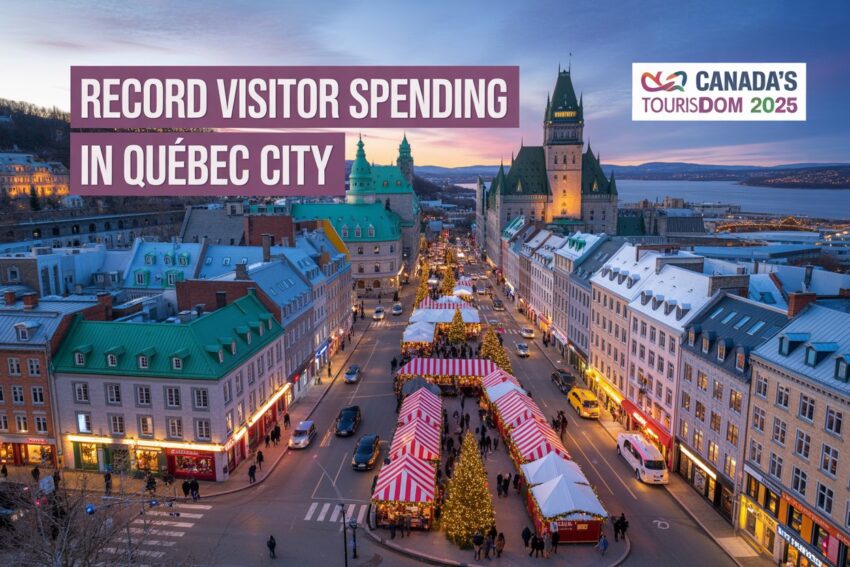
Quebec City is proving that charm never goes out of style. In 2025, the city saw record-breaking occupancy rates, particularly during the summer months, with hotel occupancy averaging 81%. The Festival d’été de Québec played a major role in attracting visitors, with concert nights pushing occupancy to over 90%. Quebec City’s visitor spending surged by 12% compared to the previous summer, reaching an estimated $1.2 billion. This growth was driven by increased spending from domestic markets, particularly Ontario and Quebec, as well as overseas markets, including France. Quebec City’s ability to blend history, culture, and modernity has made it one of Canada’s most beloved tourism destinations. With a growing focus on sustainability, Quebec City’s tourism future looks incredibly promising.
Montreal – Thriving on Business Tourism and Quality Over Quantity
Montreal’s business tourism sector has shown impressive resilience in 2025. Despite hosting fewer events than in previous years, the Palais des congrès de Montréal reported a significant increase in the economic impact of the events it hosted. The city’s focus on attracting high-impact conferences and trade shows has helped mitigate the decline in event numbers. Montreal’s business tourism strategy is proving effective, with nearly 940,000 participants attending 281 events that generated a whopping $277 million in economic impact. Montreal’s ability to cater to the needs of business travellers has positioned it as a premier destination for international conferences and conventions.

Edmonton – Rebounding Stronger ThanEver with Record Visitor Spending
Edmonton has seen a strong rebound in its tourism sector. In 2024, the city saw a 13.4% increase in visitor spending, reaching $2.1 billion. The city’s unique attractions, including the West Edmonton Mall and River Valley parks, have made it a top destination for tourists. Edmonton’s festivals, including K-Days and the Edmonton International Fringe Theatre Festival, continue to attract large crowds. The city’s growing reputation for offering a mix of cultural, sports, and outdoor experiences has helped boost its tourism economy. With expanding air connections and new attractions on the horizon, Edmonton is poised for even more success in the coming years.
Canada’s 2025 Tourism Boom Shows No Signs of Slowing Down
Canada’s tourism sector is thriving like never before, with cities such as Toronto, Quebec City, Calgary, Ottawa, Vancouver, Montreal, and Edmonton all achieving record-breaking visitor numbers and spending. The country’s ability to bounce back from the pandemic and surpass pre-pandemic tourism levels is a testament to the resilience and diversity of its tourism offerings. From bustling urban centres to cultural gems and natural wonders, Canada is a top-tier destination for travellers seeking unforgettable experiences. As the tourism landscape continues to evolve, Canada’s cities are proving that they are ready to lead the world in tourism growth.
The post Toronto Overtakes Quebec City, Calgary, Ottawa, Vancouver, Montreal, Edmonton and Other Cities in Canada Roaring with Tourists Arrival Numbers as US Tourism Leaving in Dust, New Update on Domestic Visitors, Hotel Overnight Stays and More Contributing to Boost Country’s GDP appeared first on Travel And Tour World.
