
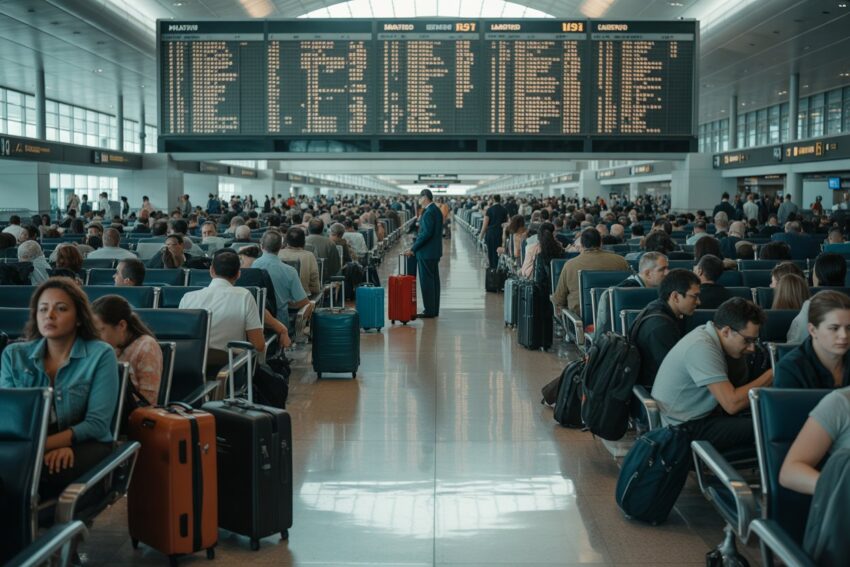
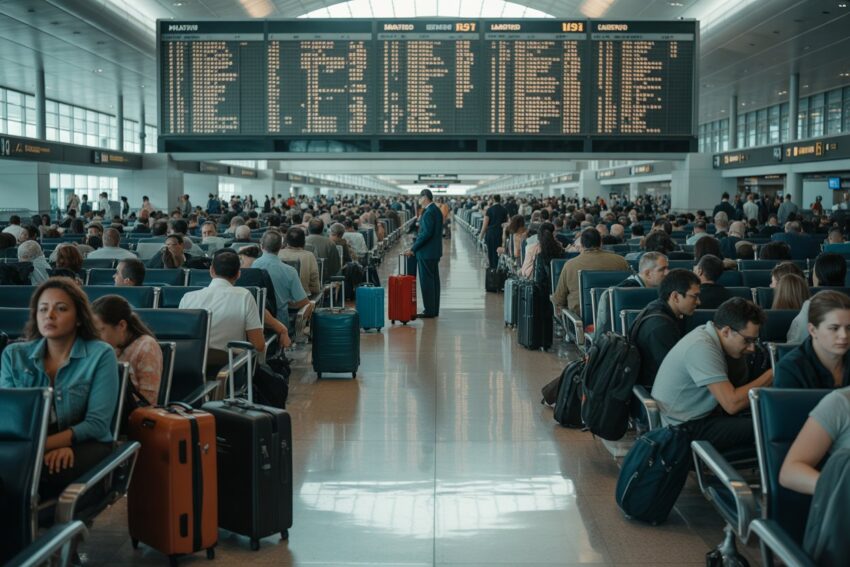
Travelers arriving at Orlando International Airport today expected sunshine and smooth departures, but instead many encountered departure boards filled with updated times and unexpected changes. The airport recorded 227 delayed flights and 15 cancellations, creating a ripple of disruption across one of America’s busiest travel gateways. For families heading to theme parks, business travelers catching connections, and tourists returning home, the delays turned carefully planned itineraries into uncertain waits.
Airlines Most Affected
Operational figures indicate that several carriers experienced scheduling strain, with Spirit Airlines recording the highest number of cancellations and Southwest Airlines logging the largest delay total. JetBlue and Delta also reported notable delays, while other domestic and international carriers experienced smaller but measurable impacts.
| Airline | Cancelled | Cancel % | Delayed | Delay % |
|---|---|---|---|---|
| Spirit | 14 | 11% | 33 | 26% |
| Southwest | 1 | 0% | 85 | 27% |
| Alaska Airlines | 0 | 0% | 2 | 12% |
| Avianca | 0 | 0% | 1 | 25% |
| Copa Airlines | 0 | 0% | 2 | 14% |
| Delta Air Lines | 0 | 0% | 21 | 16% |
| Frontier | 0 | 0% | 4 | 4% |
| Iberia | 0 | 0% | 2 | 100% |
| JetBlue | 0 | 0% | 32 | 25% |
| LATAM Peru | 0 | 0% | 1 | 50% |
| Breeze Airways | 0 | 0% | 6 | 19% |
| Porter Airlines | 0 | 0% | 3 | 30% |
| Air Canada Rouge | 0 | 0% | 1 | 6% |
| Sun Country | 0 | 0% | 1 | 14% |
| United | 0 | 0% | 6 | 7% |
| Avelo Airlines | 0 | 0% | 1 | 25% |
Airlines operate on tightly coordinated schedules, meaning a delay in one city can affect flights across multiple states. Aircraft assigned to several routes throughout the day may carry delays forward, causing a cascading effect that expands disruption totals quickly.
Origin Airports Showing Impact
Flights departing from or arriving from multiple cities experienced delays linked to Orlando operations. Among the airports showing higher disruption counts were:
- Newark Liberty International
- Charlotte Douglas International
- Nashville International
- Boston Logan International
- LaGuardia Airport
Orlando itself recorded the largest share of delays as both an origin and destination point, reflecting its role as a high-volume travel hub.
| Airport | Cancelled | Cancel % | Delayed | Delay % |
|---|---|---|---|---|
| Orlando (MCO) | 7 | 1% | 156 | 23% |
| Newark (EWR) | 2 | 10% | 2 | 10% |
| San Antonio (SAT) | 1 | 33% | 0 | 0% |
| Charlotte (CLT) | 1 | 7% | 4 | 28% |
| Myrtle Beach (MYR) | 1 | 100% | 0 | 0% |
| Austin (AUS) | 1 | 10% | 0 | 0% |
| LaGuardia (LGA) | 1 | 6% | 3 | 18% |
| Nashville (BNA) | 1 | 7% | 2 | 14% |
| Atlanta (ATL) | 0 | 0% | 1 | 4% |
| Bradley (BDL) | 0 | 0% | 1 | 12% |
| Birmingham (BHM) | 0 | 0% | 1 | 50% |
| Boston (BOS) | 0 | 0% | 4 | 23% |
| Burlington (BTV) | 0 | 0% | 1 | 100% |
| Baltimore (BWI) | 0 | 0% | 2 | 13% |
Government Aviation Context
According to U.S. transportation aviation statistics, Orlando International Airport ranks among the nation’s busiest passenger airports, handling tens of millions of travelers annually. Large airports like MCO function as critical nodes within the national aviation system, linking regional routes with international flights.
Government transportation agencies note that major hubs handle complex traffic flows, often coordinating hundreds of aircraft movements per day. When disruptions occur at such facilities, the effects can extend far beyond local operations.
Why Delays Occur
Experts emphasize that delays rarely stem from a single cause. Instead, they typically arise from overlapping operational factors such as:
- Weather conditions along routes
- Air-traffic congestion
- Aircraft arriving late from prior destinations
- Crew scheduling requirements
- Runway traffic demand
When multiple factors occur simultaneously, delay counts can rise rapidly — particularly at high-traffic airports.
Passenger Experience
Inside terminals, the impact is immediate and visible. Boarding times shift, announcements change, and lines form at airline counters. Some travelers may simply wait longer than expected, while others must adjust entire travel plans due to missed connections.
Travel advisors recommend monitoring flight status updates, arriving early, and allowing extra connection time when flying through major hubs. Such preparation can significantly reduce stress during disruption periods.
Growing Demand on Airports
Air travel demand has been steadily rising across the United States as tourism, business travel, and domestic mobility continue to expand. Industry forecasts predict continued passenger growth, meaning airports must continually upgrade infrastructure, staffing, and technology systems to maintain efficiency.
Many airports are investing in advanced scheduling software, predictive weather monitoring tools, and improved coordination with airlines and air-traffic control to minimize delays.
Outlook
Aviation analysts stress that disruption spikes, while frustrating for travelers, are not unusual in high-volume aviation systems. Large airports process thousands of flights daily, and even small operational slowdowns can affect large numbers of passengers.
For travelers waiting at gates, watching departure times change minute by minute, delays can feel like the journey has paused. Yet behind the scenes, teams of controllers, pilots, dispatchers, and ground crews are working continuously to restore schedules. In modern air travel, patience often becomes an essential part of the journey.
The post Travelers Delayed at Orlando International Airport in Orlando, United States as 227 Flights Delayed and 15 Canceled, Airlines Including Spirit, Southwest, JetBlue, Delta and United Impacted Across Newark, Charlotte, Boston, Nashville and Nationwide Routes appeared first on Travel And Tour World.
