
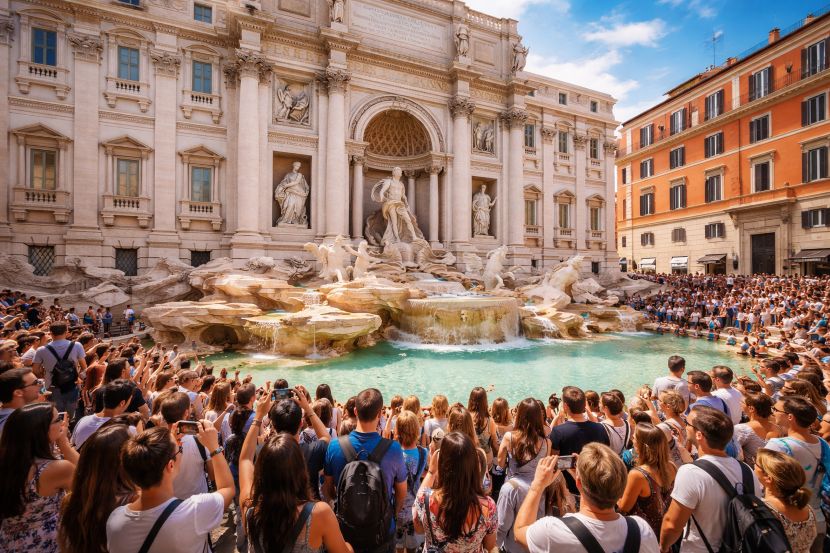

The Municipality of Rome has decided that on February 1st of 2025 the famous Trevi Fountain will begin charging visitors a 2€ entry fee. This is part of the municipality’s efforts to better control the flow of tourists and protect the sustainability of the historical site.
Fee Overview
The 2-euro fee will apply during peak visiting hours, between 9 a.m. and 9 p.m. After hours, the fountain will remain accessible for free. This new policy aims to enhance the visitor experience while helping the city maintain one of its most famous monuments. The fee will be used to cover the costs associated with preserving the Trevi Fountain and managing the large number of daily visitors.
Why the Fee?
Rome’s city officials have been exploring ways to balance tourism and preservation for several years. The decision to implement the fee follows a successful trial period where the number of people allowed close to the fountain was limited. This approach resulted in a more organized and manageable experience for visitors, which city leaders deemed positive.
The 2-euro charge is designed to be affordable and is not expected to discourage tourists. Instead, it will help streamline access to the fountain, reducing overcrowding during peak hours.
What the Fee Will Cover
The funds raised from the 2-euro fee are expected to generate around 6.5 million euros annually. These earnings will be reinvested into the city’s efforts to preserve cultural heritage sites and manage tourist traffic. The fee is part of a broader strategy to maintain Rome’s historic landmarks and improve the overall visitor experience.
Resident Exemption
As with other tourist charges in Rome, the 2-euro fee will not apply to city residents. The local government is committed to ensuring that Roman citizens have free access to cultural and historical sites, supporting the notion that culture is a fundamental right for residents.
New Measures for a Better Experience
The Trevi Fountain fee is part of a wider plan to enhance tourism management in Rome. Last year, the city introduced a system to limit the number of visitors allowed to approach the fountain’s basin at any given time. This system has worked well, helping to alleviate overcrowding and maintain the beauty and integrity of the site.
Visitors will continue to follow a designated pathway with entry and exit points, ensuring smooth flow and safety for all. The new ticketing system will make the entire process more efficient, allowing tourists to pay either in advance, online, or at designated ticket booths in the city.
Other Changes in Rome’s Tourist Strategy
Rome has been increasing efforts to tackle overtourism and manage foot traffic at its most popular destinations. The city already has a similar ticketing system for other historical sites, like the Pantheon. Additionally, Rome’s government has introduced a tourist tax, which also exempts residents but applies to non-residents who are visiting the city. These measures are intended to make the city more livable for its residents and ensure that tourism does not overwhelm its historic spaces.
For visitors planning their trip, the Trevi Fountain fee is just one aspect of the broader strategy to improve Rome’s tourism infrastructure. The city has also made plans to offer more free access to certain museums for registered Roman residents, further promoting cultural accessibility for locals.
What to Know Before You Go
If you’re planning to visit the Trevi Fountain, here are a few essential tips:
- Fee Application: The 2-euro fee is in place from 9 a.m. to 9 p.m. Non-residents will be required to pay the fee.
- Ticket Purchase: Tickets can be purchased online in advance, at ticket booths, or while waiting in line to see the fountain.
- Free Access: After 9 p.m., visitors can access the Trevi Fountain for free, and no fee will be charged.
- Plan Your Visit: Given the high number of tourists, it’s recommended to visit early in the day or later in the evening to avoid large crowds.
- Local Residents: Residents of Rome are exempt from the fee, which is part of the city’s policy to ensure locals have access to cultural sites without financial burden.
Preserving Rome’s Heritage
The Trevi Fountain, commissioned by Pope Urban VIII in 1640 and later completed in 1762, is one of Rome’s most treasured monuments. Its towering figures and dramatic cascades of water have inspired countless visitors. In modern times, it’s become a must-see for tourists, often associated with the famous scene in La Dolce Vita, where the actors Marcello Mastroianni and Anita Ekberg dipped in its waters.
However, bathing in the fountain is strictly prohibited today, with the focus being on preserving the fountain’s historical and artistic value. The coin toss remains a tradition, where visitors make wishes for their return to Rome.
Conclusion
Now in place is a new 2-euro fee that has to be paid to access the Trevi Fountain. The fee will help protect and preserve the attraction, while also managing overflowing tourist levels. The small fee will allow Rome’s top attraction to be protected and accessible to future generations.
The post Trevi Fountain Fee in Rome: A Move to Tackle Overtourism and Enhance the Experience appeared first on Travel And Tour World.
