
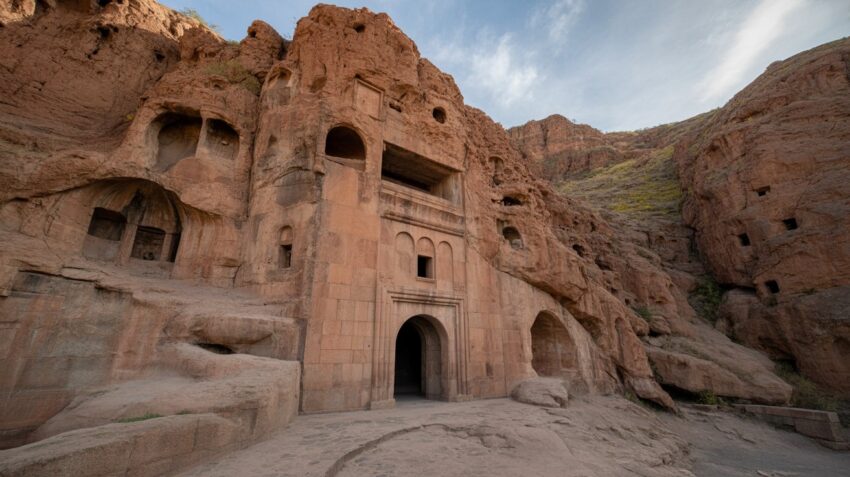

A Hidden Window Into Prehistoric Life in the Noravank Gorge
Tucked deep within Armenia’s dramatic red-rock canyons, the Noravank Caves—most famously known as Bird Cave—hold some of the most extraordinary archaeological discoveries in the region. This seemingly modest cave complex gained global recognition when researchers uncovered artifacts that illuminate daily life thousands of years ago, including what is considered the world’s oldest known leather shoe, preserved remarkably by the unique microclimate of the cave. Today, Bird Cave is not only an archaeological treasure but also an enriching destination for travelers exploring the natural and cultural wonders of southern Armenia.
With its combination of ancient history, geological charm, and a landscape etched by millennia of erosion, the site has become a compelling stop for tourists seeking more than just a scenic view. This guide will take you through the story of Bird Cave, its importance for global tourism, who can visit, how to reach it, and what to expect when exploring one of Armenia’s most fascinating prehistoric sites.
History and Discovery: A Prehistoric Snapshot Preserved in Stone
Bird Cave, officially known as Areni-1 Cave, is nestled within the Noravank Gorge in Armenia’s Vayots Dzor Province. The cave’s unassuming entrance belies its profound historical significance. Although locals had long known of the cave, it remained largely unexplored until the early 2000s, when archaeological teams began systematic excavations.
What followed was a series of groundbreaking discoveries that reshaped the understanding of prehistoric life in the Near East. Among the most celebrated finds was a perfectly preserved leather shoe, estimated to be more than 5,500 years old. Its near-pristine condition was attributed to the cave’s dry, cool, and stable environment, providing an ideal natural archive.
Other discoveries included:
- Grape seeds and traces of early winemaking
- Ritual sites indicating possible burial traditions
- Tools, pottery fragments, and organic materials
- Evidence of complex community life within the region
These findings positioned Bird Cave as one of the most important prehistoric archaeological sites in Armenia, offering insights into early human innovation, craftsmanship, and cultural expression.
Today, while portions of the cave remain under scientific study, visitors can walk the paths and observe the setting where these discoveries were made, gaining a rare connection to prehistoric people whose everyday lives left marks still visible thousands of years later.
Geographical Setting: Where Rugged Nature Meets Archaeological Heritage
The Noravank Gorge is one of Armenia’s most visually striking natural landscapes, characterized by towering red limestone cliffs, a winding canyon road, and the serene Arpa River snaking through it. Bird Cave sits along the canyon’s rocky slopes, just a short drive from Noravank Monastery, one of the country’s architectural masterpieces.
The region’s geology is central to its beauty: layers of volcanic and sedimentary rock create a deep palette of reds, browns, pinks, and oranges that shift subtly throughout the day. The cave itself is situated within these layers, carved by natural erosion over millennia.
Its location in Vayots Dzor, a province famed for its winemaking tradition, adds another layer of cultural significance. The proximity of archaeological wine traces in Bird Cave to Armenia’s modern wine regions highlights a long, unbroken heritage of viticulture in this part of the world.
Visitors experience a harmonious mix of nature, archaeology, and spirituality, as Noravank Gorge forms a triangle of attractions—Bird Cave, Noravank Monastery, and the surrounding hiking trails—offering multiple ways to explore the region.
Global Tourism Significance: A Rare Glimpse Into Human Prehistory
Bird Cave is not merely a local heritage site; it has become a place of international scientific interest and a compelling attraction for global travelers. Its importance for tourism lies in several key aspects:
1. Archaeological Breakthroughs
The discoveries made here—especially the world’s oldest leather shoe—have placed Bird Cave on the global archaeological map. Visitors interested in early civilizations, anthropology, or ancient craftsmanship find the site especially captivating.
2. Academic and Educational Tourism
The cave encourages learning-oriented tourism, attracting students, researchers, and enthusiasts who wish to witness the origins of human innovation firsthand.
3. Complementary Heritage Landscapes
Bird Cave is part of a broader heritage trail including Noravank Monastery, Areni village, local wineries, and other natural sites. This makes the region a multidimensional travel destination.
4. Sustainable Tourism Opportunities
By drawing visitors deeper into rural Armenia, sites like Bird Cave help support local communities, foster cultural preservation, and encourage respectful interaction with natural landscapes.
Visitors often describe Bird Cave as a place where history feels tangible—where the remnants of past societies offer a narrative that stretches back beyond recorded time. It is this sense of continuity that continues to draw global travelers year after year.
How to Reach Noravank Caves (Bird Cave)
Reaching Bird Cave is generally straightforward, especially for travelers exploring southern Armenia from major cities.
From Yerevan
- Distance: Approximately 120 km
- Travel Time: 2–2.5 hours by car
- Route: Take the M2 highway south toward Vayots Dzor, then follow signs to Noravank Gorge
- Transport Options:
- Private taxi or hired driver
- Rental car
- Pre-arranged group tours or guided excursions
- Public transport (bus or minibus to Areni village, followed by local taxi)
From Areni Village
Areni is the nearest population center and is famous for its wine industry. From Areni, Bird Cave is only a short drive into the gorge.
Final Approach
The cave entrance is located near the canyon road. A small footpath leads from the parking area toward the cave. Visitors should wear sturdy shoes, as the pathway can be uneven and rocky. Guided tours are available from local operators and can enhance the experience with additional context about excavation sites and prehistoric findings.
Who Can Visit Bird Cave?
Bird Cave is suitable for a broad range of visitors, though some caution is recommended due to rocky terrain.
Ideal Visitors Include:
- Archaeology and history enthusiasts
- Nature and landscape photographers
- Hikers and adventurous explorers
- Wine tourists combining the site with Areni’s wine culture
- Families with older children who are curious about ancient history
Accessibility Considerations
The entrance path is uneven and includes natural obstacles. Visitors with mobility difficulties may find the approach challenging. However, the gorge and nearby areas still offer beautiful viewpoints even without entering the cave.
Visitors Seeking Peace and Solitude
Bird Cave is quieter than major tourist attractions, making it perfect for travelers seeking slow, contemplative exploration in a natural environment.
Best Time to Visit Noravank Caves
Southern Armenia enjoys a relatively mild and sunny climate, making the gorge accessible most of the year.
Ideal Seasons
- Late spring (May–June): Lush landscapes, pleasant temperatures
- Early autumn (September–October): Harvest season in Areni, ideal for combining wine tourism with archaeological exploration
These seasons offer stable weather and comfortable hiking conditions.
Summer (July–August)
The gorge can become hot during midday hours. Early morning or late afternoon visits are recommended.
Winter (December–February)
The area may experience cold temperatures and occasional snow. The cave remains accessible, but roads can be icy, so driving conditions must be considered.
Overall, the most rewarding visits occur in spring and autumn when the region’s natural colors and mild climate enhance the experience.
A Timeless Encounter With Armenia’s Prehistoric Past
Noravank Caves—Bird Cave—stands as a remarkable testament to Armenia’s place in human prehistory. From its dramatic location along the red cliffs to the world-renowned artifacts uncovered within, the cave connects modern visitors with ancient footsteps preserved in rock and earth. It is more than an archaeological site; it is a layered cultural landscape where nature, history, and scientific discovery intersect.
Whether visited as part of a larger tour of Noravank Gorge, combined with wine tasting in Areni, or explored as a unique adventure on its own, Bird Cave remains one of Armenia’s most compelling destinations for travelers seeking depth, authenticity, and a profound sense of human continuity.
The post Uncovering Noravank Caves (Bird Cave): Armenia’s Archaeological Time Capsule Beneath the Red Cliffs appeared first on Travel And Tour World.
