
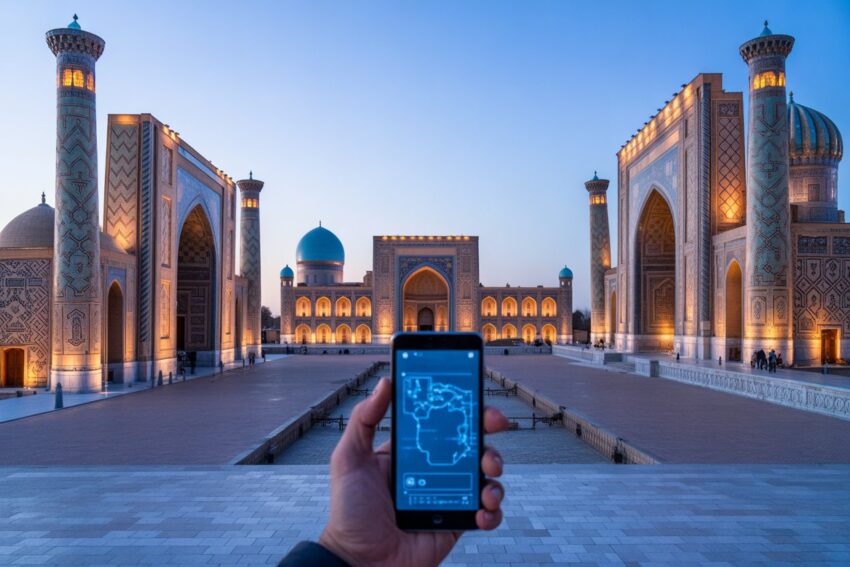
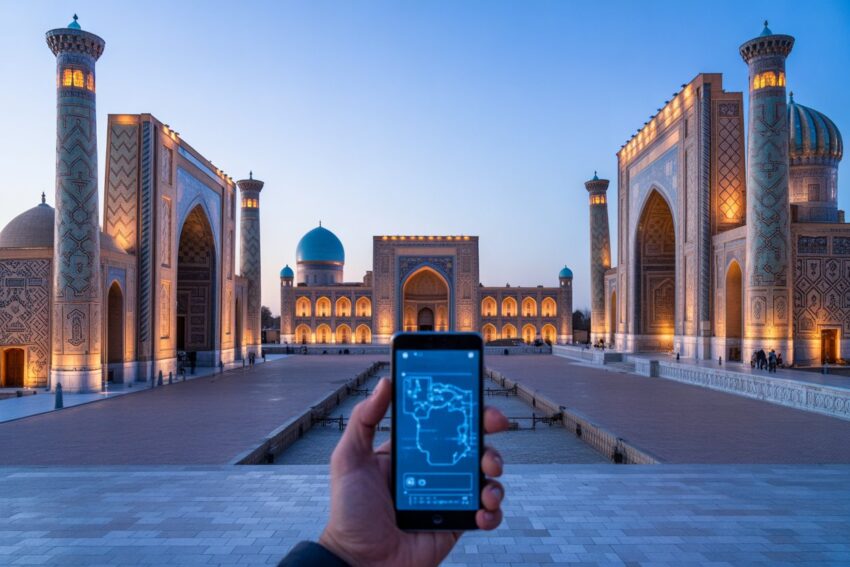
For centuries, the Silk Road was the world’s most significant network of human connection—a place where ideas, spices, and cultures converged. Today, Uzbekistan is reclaiming that title, but with a futuristic twist. As we move into 2026, the nation has set an ambitious goal: welcoming 12 million international tourists in a single year.
At the VII Hotel Business Forum held in Tashkent this February, government officials and industry leaders unveiled a strategy that moves beyond the blue-domed majesty of the past. The secret weapon for 2026? Artificial Intelligence.
Scaling Up: More Than Just a Bed for the Night
To meet the target of 12 million visitors, Uzbekistan hasn’t just been dreaming; it’s been building. According to Abrorkhuja Munovarov, head of the Investment Department at the Tourism Committee, the country has prepared 1,023 new lodging facilities across its regions.
The current landscape of Uzbek hospitality now includes:
- 136 new high-end hotels for luxury travelers.
- 528 family-run guesthouses, ensuring that tourism dollars reach local communities.
- 298 modern hostels catering to the growing Gen Z and backpacker markets.
With a total capacity now reaching 185,600 beds, the nation is finally equipped to handle the surge of global interest that has been building since the visa-free reforms of 2025.
The AI Revolution: Personalizing the Silk Road
While physical buildings provide the “where,” Artificial Intelligence is providing the “how.” The 2026 strategy marks a pivot from traditional mass tourism to hyper-personalized experiences.
Maria Dergakiz, a leader in the hospitality sector, highlighted at the forum how AI is empowering local guides. Imagine a tour guide in Bukhara using an AI-driven platform to curate a route specifically for a traveler interested in 15th-century astronomy, or a family wanting a “kid-friendly” history of the Mongol Empire. These systems analyze individual preferences in real-time, surfacing “hidden gems”—small galleries, artisan workshops, and rural cafes—that might never appear on a standard Top 10 list.
In hotels, AI is being used for:
- Smart Pricing: Keeping Uzbekistan competitive while maximizing revenue for local owners.
- Occupancy Monitoring: Helping smaller guesthouses manage guest flows and predict “peak” seasons more accurately.
- Multilingual Support: Breaking the language barrier instantly, allowing travelers from China, Europe, and the Americas to feel at home in the heart of Central Asia.
Beyond the “Golden Triangle”
For years, the Uzbekistan itinerary was predictable: Tashkent, Samarkand, Bukhara, and Khiva. While these cities remain the soul of the country, the 2026 mandate is to “de-concentrate” the crowds.
The government is aggressively promoting the Fergana Valley, known for its lush landscapes and silk weaving; Kashkadarya, home to rugged mountain beauty; and the autonomous republic of Karakalpakstan, where the haunting “Ships’ Graveyard” of the Aral Sea offers a powerful lesson in environmental history. By using AI to market these less-frequented regions, Uzbekistan is avoiding the “overtourism” traps seen in Europe and Japan, ensuring that growth is sustainable and geographically balanced.
A Growing Domestic Pulse
Perhaps the most heartwarming part of the story is that Uzbeks are falling in love with their own country. In 2025, the “Travel around Uzbekistan” program saw residents making 23.7 million trips. This internal boom has acted as a “stress test” for the industry, forcing service standards to rise to international levels long before the 12-million-foreigner goal was even set.
When you sit in a teahouse in Samarkand today, you aren’t just surrounded by tourists from abroad; you are sitting next to families from the Fergana Valley and students from Tashkent. This creates a more authentic, lived-in atmosphere that no AI can manufacture.
What This Means for the 2026 Traveler
If you have been waiting for the “right time” to visit Central Asia, 2026 is it. The combination of a massive increase in accommodation options and the seamlessness provided by new digital tools makes the country more accessible than ever.
You can expect:
- Simplified Logistics: From e-visas (already expanded in 2025) to AI-powered booking agents.
- Diverse Choices: You can spend one night in a high-tech “smart hotel” in Tashkent and the next in a traditional yurt in the Kyzylkum Desert.
- Cultural Depth: Digitalization isn’t erasing the culture; it’s making it easier to find the parts of the culture that resonate with you personally.
Uzbekistan’s target of 12 million isn’t just about a number—it’s about a new identity. The “Land of the Silk Road” is proving that you can honor a 2,000-year-old heritage while leading the world into the future of hospitality.
The post Uzbekistan’s Digital Silk Road: Targeting 12 Million Tourists in 2026 with an AI Revolution appeared first on Travel And Tour World.
