
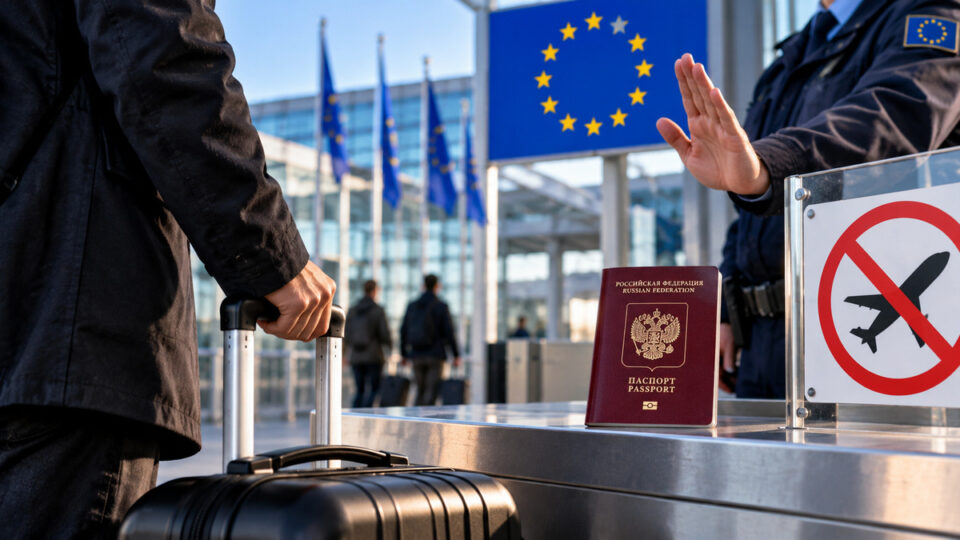
Finland has launched a renewed campaign for a complete European Union-wide ban on Russian tourist visas, potentially reshaping travel access to popular destinations including France, Spain, Italy and Germany. On 12 October 2026, Finnish Foreign Minister Elina Valtonen urged EU member states and the European Commission to introduce tougher, legally enforceable Schengen visa restrictions while Russia continues its war against Ukraine. The proposal, announced as EU foreign ministers meet in Luxembourg, targets non-essential leisure travel, politically connected individuals, Russian athletes and former combatants amid growing concerns over European security and Russian hybrid activities.
The initiative represents another significant development in Europe’s increasingly restrictive approach to Russian travel. Finland already limits non-essential entry by Russian citizens and wants other Schengen countries to adopt a common framework that prevents differences in national visa policies from weakening wider restrictions.
According to the Finnish Ministry for Foreign Affairs, Schengen countries issued nearly 500,000 tourist visas to Russian citizens during 2025. Helsinki considers this continued flow of leisure visitors inconsistent with its efforts to increase pressure on Moscow. However, the proposed European-wide tourist visa ban has not yet entered into force. Russian citizens remain subject to existing EU visa rules, national restrictions, sanctions and border-entry requirements.
Five Major Demands Could Transform Russian Access to the Schengen Area
Finland’s latest initiative combines an outright tourist visa prohibition with additional restrictions targeting particular groups of Russian nationals. The objective is to prevent inconsistencies between national visa practices while improving the EU’s ability to respond to security risks.
The proposals cover five principal areas, including legislative changes intended to make the restrictions more effective across participating countries.
| Finnish demand | Proposed action | Potential travel implications |
|---|---|---|
| Complete tourist visa ban | Stop issuing Schengen tourist visas to Russian citizens while the invasion of Ukraine continues | Russian leisure travellers could lose access to new tourist visas across participating countries |
| Restrictions on sanctioned and politically connected individuals | Tighten visa access for President Putin’s inner circle and other relevant sanctioned individuals | Stronger checks on applicants with political or sanctions-related connections |
| Russian athletes | Restrict visas for Russian athletes, particularly those connected with state structures | Potential disruption to participation in sporting events held in Europe |
| Russian combatants and former combatants | Enforce existing EU-agreed restrictions more effectively | Additional entry checks and restrictions for affected individuals |
| EU visa legislation reform | Strengthen visa guidelines and amend EU legislation where necessary | A more consistent EU-wide framework for introducing future restrictions |
The Finnish Foreign Ministry‘s official announcement confirms the tourist visa proposal, restrictions involving Putin’s inner circle and athletes, and demands for effective enforcement against combatants. The wider Visa Code reform forms part of the Commission’s existing legislative agenda.
France, Spain, Italy and Germany Face Growing Pressure Over Russian Tourism
Finland’s demands place renewed attention on differences in European visa policies, particularly between countries bordering Russia and major tourism destinations in Western and Southern Europe. Finland, Estonia, Latvia, Lithuania and Poland have maintained restrictive approaches towards Russian travel since the invasion of Ukraine. Their geographical proximity to Russia has made border security and visa screening central policy concerns.
France, Spain and Italy have historically been more cautious about blanket tourist visa prohibitions. Earlier European discussions reflected concerns about collective restrictions, legal obligations and maintaining opportunities for Russian dissidents, journalists and civil society representatives to enter Europe. Germany has also played an important role in debates over possible compromises. One mechanism involves limited territorial validity visas, which can restrict travel to specified Schengen countries instead of permitting movement throughout the entire area.
Such documents could provide an alternative where an applicant has a legitimate reason to visit one country but does not need wider Schengen access. They would not, however, automatically provide a complete solution to Finland’s demand for a general tourist visa ban. The latest Finnish announcement does not establish that France, Spain, Italy or Germany have accepted the proposed restrictions. Their eventual positions remain important to the development of a common European response.
Almost 679,000 Russian Visa Applications Reveal the Scale of Europe’s Travel Debate
The latest European Commission statistics provide important context for Finland’s initiative. Despite restrictions introduced after February 2022, Russian citizens remain among the largest groups applying for Schengen short-stay visas.
Figures published by the European Commission on 28 May 2026 show that Russia ranked fourth among the world’s leading applicant countries in 2025, behind China, Türkiye and India.
| Schengen visa indicator | Latest official figure | Reporting period |
|---|---|---|
| Total short-stay visa applications worldwide | More than 12 million | 2025 |
| Annual growth in worldwide applications | 4.3% | 2025 versus 2024 |
| Russian visa applications | Approximately 679,000 | 2025 |
| Russian tourist visas issued | Nearly 500,000 | 2025, Finnish Foreign Ministry figure |
| Total Schengen visas issued worldwide | Almost 10.3 million | 2025 |
| Worldwide visa refusal rate | 14.6% | 2025 |
| Refusal rate for applications lodged in Russia | 6.4% | 2025 |
| Visas issued worldwide allowing multiple entries | Approximately 5.3 million | 2025 |
Sources: European Commission, 28 May 2026; Finnish Ministry for Foreign Affairs, 12 October 2026. Figures for all short-stay applications and tourist visas are different measures and should not be treated as equivalent. The figures underline why the proposed Russian tourist visa ban has become a significant question for European travel policy. Schengen-wide visa demand has continued recovering from the pandemic, while restrictions concerning Russian citizens have developed separately in response to geopolitical and security concerns.
The European Commission has also reported that annual Schengen visa issuance to Russian citizens has fallen from approximately four million before the war to around half a million in recent years. A comprehensive ban on newly issued tourist visas would therefore represent a further tightening of an already restrictive system, rather than the first European measure limiting Russian travel.
Finland Already Enforces Tough Russian Border and Passport Restrictions
Finland’s latest proposal builds on measures that have been developing for several years. The Finnish Government first restricted non-essential Russian entry in 2022 and reinforced the rules in 2023, while its land border crossing points with Russia have remained closed. A further change took effect on 1 June 2026, when Finland generally stopped recognising non-biometric passports issued by Russia.
The measure affects travellers using passports without an electronic chip containing biometric identification information. Finnish authorities introduced it to strengthen the reliability of documents used for travel and entry. However, the policy includes exceptions for children under 18, certain existing residence permit holders and cases involving special circumstances.
A transitional period runs until 31 December 2026. During this period, Finland may continue accepting eligible non-biometric Russian passports containing visas or residence permits issued before 1 June 2026, subject to the published conditions. The passport restrictions are separate from the proposed EU-wide tourist visa ban. A valid biometric passport would not, by itself, overcome restrictions on non-essential travel or guarantee admission to Finland.
Russian Athletes and Former Soldiers Enter the Centre of Europe’s Visa Debate
Another important feature of Finland’s initiative is the proposed extension of restrictions beyond conventional tourism. Russian athletes and individuals connected to sporting organisations have become part of the wider debate over Moscow’s participation in international events. Finland wants visa restrictions targeting Russian athletes. The precise categories covered would depend on the eventual EU measure, including how authorities identify applicants with relevant government or institutional connections.
The Finnish initiative also calls for effective enforcement of the visa restrictions on Russian combatants and former combatants agreed by EU member states during summer 2026. The European Commission confirmed in September that measures adopted in July had introduced a basis for restricting visas for Russian military combatants and ex-combatants. Finland’s emphasis is therefore on ensuring that the existing framework works effectively in practice, rather than presenting the combatant restrictions as an entirely new proposal.
Estonia and Northern European Countries Support Stricter Border Security
Finland’s position reflects a broader security debate among Northern and Eastern European countries, where governments have repeatedly called for stronger controls on Russian entry. Estonia, Latvia, Lithuania and Poland have introduced restrictions designed to prevent non-essential Russian travel through their borders. Their approach has differed from that of some other Schengen countries, creating uneven travel opportunities across the region. Estonia has also expressed concerns over Russian former combatants and the possibility of their involvement in hostile activities in Europe.
The wider Northern and Eastern European argument centres on a basic feature of the Schengen system: a person admitted through one participating country can generally move within the border-free area, provided applicable immigration conditions are met. However, border-free travel does not remove security obligations. Authorities retain powers to conduct relevant checks, refuse entry where legally justified and apply national or EU restrictions. The Finnish proposal aims to reduce differences between national visa decisions, particularly where a traveller could obtain permission through one country and subsequently visit another that follows a more restrictive policy.
EU Visa Code Reform Could Introduce Stronger Powers Against Security Threats
Finland’s push comes as the European Commission advances broader changes to its visa framework. On 29 January 2026, the Commission adopted its first EU Visa Strategy, setting out measures intended to strengthen security while supporting legitimate international travel. The strategy includes proposals to improve the EU’s ability to introduce targeted visa restrictions in response to hostile actions by third countries.
On 3 September 2026, the Commission confirmed that it was preparing further targeted restrictions and that revisions to the EU Visa Code were forthcoming. The proposed reforms could help create a more consistent approach to serious security threats, reducing the need for countries to rely solely on separate national measures. However, the Commission’s January 2026 strategy and future legislative amendments are distinct stages. The strategy has already been adopted, while the additional legal provisions would still require the relevant institutional procedures before entering into force.
Luxembourg and Brussels Meetings Put Russian Travel Restrictions in Focus
The timing of Finland’s initiative coincides with important European diplomatic discussions.
The Foreign Affairs Council is meeting in Luxembourg on 12 October 2026, with Russia’s war against Ukraine and escalating hybrid activities among the principal subjects.
EU leaders are also scheduled to gather in Brussels on 15–16 October, when support for Ukraine and Russian-linked security threats across Europe will feature on the agenda.
| Date | European development | Importance for travel policy |
|---|---|---|
| 12 October 2026 | Finland announces its demand for an EU-wide Russian tourist visa ban | Launches a renewed diplomatic effort to tighten Schengen access |
| 12 October 2026 | EU Foreign Affairs Council meets in Luxembourg | Provides a forum for discussion of Russia and European security |
| 15–16 October 2026 | European Council summit in Brussels | EU leaders will address Ukraine and Russia-linked hybrid threats |
| Date not confirmed | Further EU Visa Code legislative proposals | Could establish additional legal mechanisms for targeted visa restrictions |
The European Council’s published agenda confirms discussions about Russia-linked hybrid attacks but does not establish that a tourist visa ban will be formally approved at the summit.
What the Proposed Visa Ban Means for Russian Travellers and European Tourism
For Russian citizens planning holidays in Europe, the distinction between existing restrictions and future proposals remains essential. There is currently no newly adopted blanket EU-wide prohibition on all Russian tourist visa applications arising from Finland’s 12 October initiative. Travellers must continue following the visa rules of their intended destination, including passport requirements, sanctions-related restrictions and permitted purposes of travel.
Potential effects could include fewer new leisure bookings, changes to travel packages, greater administrative screening and uncertainty surrounding existing reservations. The scale would depend on the final policy, exemptions and its treatment of visas already issued. The current restrictions should not be confused with a universal prohibition on every Russian citizen entering Europe. Humanitarian circumstances, residence rights, family situations and other legally recognised grounds may continue to require separate consideration.
Finland’s proposal therefore marks a potentially significant turning point for European travel policy, but not an immediate closure of the entire Schengen Area to Russian passport holders. Its impact will depend on whether EU member states agree to further restrictions and how those measures are converted into enforceable legislation. As discussions continue in Luxembourg and Brussels, the central issue is whether Europe’s existing country-by-country controls will evolve into a unified, legally binding approach to Russian leisure travel.
The post Finland Pushes for EU-Wide Russian Tourist Visa Ban as France, Spain, Italy and Germany Face New Schengen Travel Debate appeared first on Travel And Tour World.
