
Image Credit: Merseyrail
UK Alongside France and More See Rail Services Hit by Long-Running Tunnel, Track and Ground Stability Problems as several important passenger routes remain affected by major infrastructure work in October 2026. In Britain, Merseyrail is carrying out a four-week tunnel upgrade, while the Cumbrian Coast Line remains affected by Bransty Tunnel repairs and the West of England Line continues to face restrictions linked to dry, unstable clay embankments. In France, the Cévennes and Train Jaune lines are experiencing full or partial closures for engineering work. Cross-border services between Switzerland and Germany are also facing cancellations and replacement buses. The disruption differs by route, but the underlying issue is the same: keeping ageing railway infrastructure safe and reliable requires lengthy intervention.
Why is Merseyrail facing a four-week Northern Line disruption?
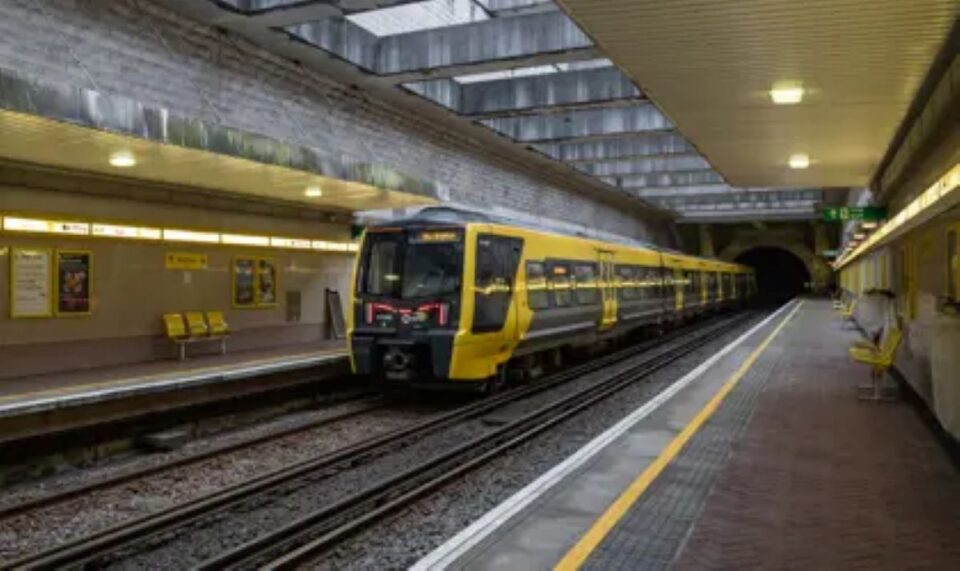
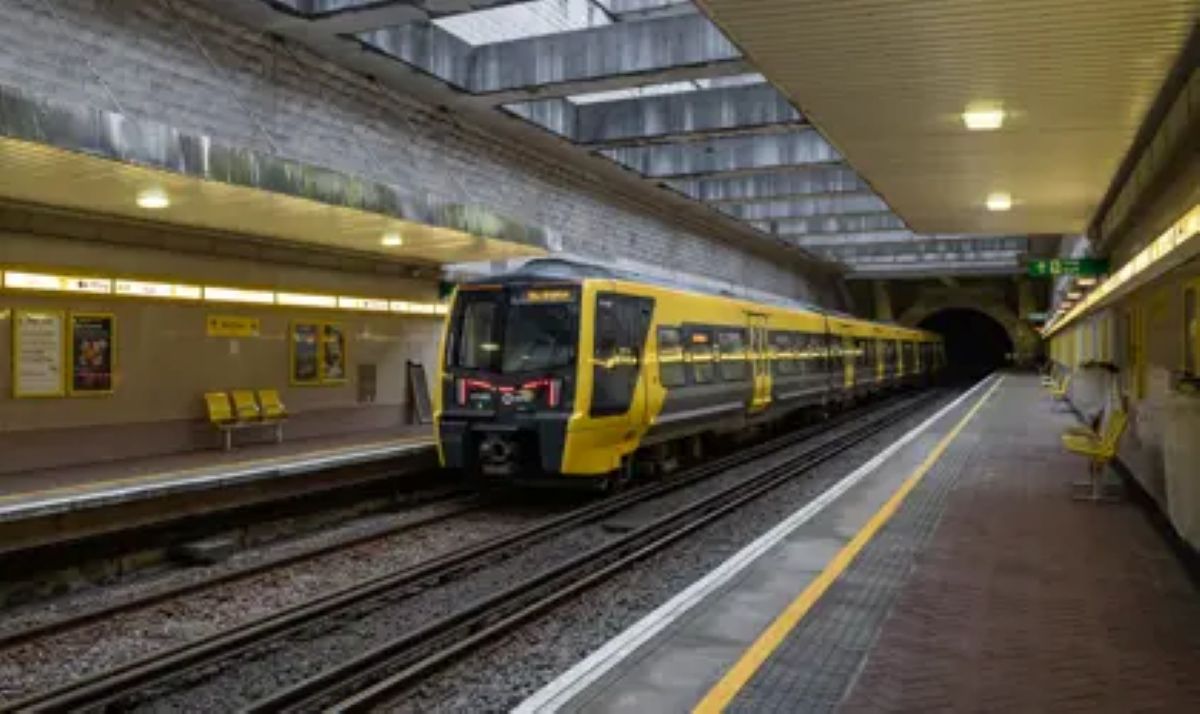
Merseyrail’s current disruption is caused by a £3.5 million engineering programme on the Northern Line. The work began on 11 October 2026 and is scheduled to finish on 6 November, with normal train service expected to return on 7 November.
Engineers are strengthening and waterproofing four underground tunnels carrying trains into Liverpool city centre from the south. Water entering the underground railway can create problems for the 750-volt third-rail electricity supply, potentially leading to power failures, emergency speed restrictions and unplanned closures.
Merseyrail is also installing new track feeder switches. These will allow smaller railway sections to be isolated remotely during maintenance or faults, potentially making repairs quicker and reducing the number of passengers affected.
From Monday to Saturday, replacement buses operate between Hunts Cross and Moorfields, while trains continue from Liverpool Central towards Southport, Ormskirk and Headbolt Lane. Sunday arrangements are more extensive.
Merseyrail disruption at a glance
| Item | Current official position |
|---|---|
| Engineering period | 11 October–6 November 2026 |
| Normal service expected | 7 November 2026 |
| Project value | £3.5 million |
| Tunnels being strengthened | 4 |
| Railway power system | 750V third rail |
| Main replacement-bus section | Hunts Cross–Moorfields |
| Main objective | Waterproofing, strengthening and improved power isolation |
Network Rail says the project is designed to manage disruption in a controlled way rather than risk larger emergency closures later. Liverpool Central itself recorded more than 14 million entries and exits in 2024/25, underlining the importance of the route.
Why has Bransty Tunnel caused a much longer disruption on the Cumbrian Coast Line?
Passengers between Corkickle and Whitehaven are facing a far longer infrastructure interruption. National Rail says pre-planned engineering assessments inside Bransty Tunnel identified unstable ground conditions requiring urgent repair.
The railway through the tunnel has been closed since 9 December 2025, with the current National Rail notice extending to 15 May 2027.
Northern services continue between Lancaster or Barrow-in-Furness and Corkickle, and between Whitehaven and Carlisle. Buses replace trains between Corkickle and Whitehaven.
Passengers using the replacement route can face journey extensions of up to 60 minutes.
The issue emerged during surveys carried out before planned track and drainage renewal. Engineers discovered that sections beneath the railway needed strengthening before heavy machinery could safely be used. The result was a longer closure than initially envisaged.
This is a particularly close comparison with Merseyrail because both cases combine tunnel problems, strengthening work, drainage concerns and replacement road transport.
How are dry conditions disrupting the Waterloo–Exeter railway?
The West of England Line presents a different infrastructure challenge. The problem is not a tunnel but soil stability.
South Western Railway says parts of the railway are built on clay embankments that shrink after prolonged heat and dry weather. This process, known as Soil Moisture Deficit, changes track geometry and can make full-speed operation unsafe.
The affected route is substantial. The West of England Line serves 21 stations over 120 miles, linking London Waterloo with Exeter St Davids as well as Salisbury and Yeovil Junction. The section between Salisbury and Exeter is predominantly single track, making speed restrictions particularly disruptive.
The current temporary timetable was introduced because record-high soil moisture deficits affected the railway. Services are reduced, with journey times to Exeter increasing by up to 24 minutes from Waterloo and 27 minutes in the opposite direction.
SWR says it has monitored more than 30 vulnerable sites, installed 5,500 tonnes of ballast and removed nearly 250 trees whose roots can draw moisture from embankments.
Why are French passengers also facing tunnel and track closures?
France has two particularly clear examples this October.
On the Cévennes Line, SNCF Réseau has suspended rail traffic between La Bastide-Puylaurent and Villefort from 5 October to 6 November 2026. The principal project involves strengthening the Fagoux Tunnel using reinforced sprayed-concrete lining.
The tunnel work is estimated at €1 million.
At the same time, SNCF Réseau is replacing 2,800 sleepers between La Bastide-Puylaurent and Langogne. That parallel project is valued at €900,000, with funding shared between the French state, the Occitanie region and SNCF Réseau. Replacement coaches are required because railway operations are completely interrupted on the affected section.
The Train Jaune, another important scenic railway, is also undergoing a complete closure. SNCF Réseau has suspended services between Villefranche-Vernet-les-Bains and Latour-de-Carol from 28 September to 30 October 2026.
The works include strengthening earth structures, clearing unstable rock faces and replacing signalling-system components. Additional Sunday coach services are being added during the closure.
French rail disruptions currently under way
| Route | Main issue | Disruption period | Key work |
|---|---|---|---|
| Cévennes Line | Tunnel condition and track renewal | 5 Oct–6 Nov 2026 | Fagoux Tunnel strengthening + 2,800 sleepers |
| Train Jaune | Infrastructure and rock stability | 28 Sep–30 Oct 2026 | Earth structures, rock faces, signalling |
How are international rail passengers being affected between Switzerland and Germany?
Cross-border travellers are also dealing with continuing engineering disruption on the Zurich–Munich route.
SBB says engineering work between Lindau and Munich runs from 12 October to 6 November 2026. Individual EuroCity trains are cancelled on several dates, while all EuroCity services between Lindau-Reutin and Munich are cancelled during certain periods.
Replacement buses operate between Lindau-Reutin and Munich ZOB Hackerbrücke for most affected services.
The disruption does not end in early November. SBB lists another engineering programme between Memmingen and Munich from 12 to 17 November, followed by further work between Lindau-Reutin and Munich from 24 November to 3 December.
This creates a particularly important issue for international travellers because a journey sold as a single EuroCity connection may require road transport for part of the route.
Current cross-border engineering timetable
| Corridor | Current disruption |
|---|---|
| Lindau–Munich | 12 Oct–6 Nov 2026 |
| Memmingen–Munich | 12–17 Nov 2026 |
| Lindau-Reutin–Munich | 24 Nov–3 Dec 2026 |
| Replacement transport | Buses on affected sections |
What do these disruptions mean for commuters and tourists?
The impact depends heavily on the reason for travel.
For daily commuters, even a short-term timetable reduction can create repeated delays throughout the week. For tourists, the consequences can be different. A railway closure can disrupt airport transfers, hotel check-ins, onward connections and sightseeing plans.
Replacement buses also do not always reproduce the capacity or speed of trains. Merseytravel warns that replacement vehicles can be busier than usual and advises passengers to allow extra time.
Bransty Tunnel is an especially significant example because road transport can add up to one hour to affected journeys.
For international visitors, the risk is greater when several connections are involved. Missing one replacement bus can create a much larger delay later in the journey.
Travellers should therefore check the operator or National Rail journey planner shortly before departure rather than relying solely on a normal timetable.
Is this a sign that railway infrastructure is becoming more vulnerable?
The current examples suggest that rail infrastructure is facing a wider combination of pressures.
Merseyrail is dealing with water ingress and underground tunnel protection. Bransty involves unstable ground beneath an existing tunnel. The West of England Line is responding to soil shrinkage after extreme dry conditions. French operators are strengthening tunnel structures and renewing sleepers. Cross-border European services are being altered while major construction work takes place.
The causes are not identical, so they should not be presented as one universal engineering crisis.
However, they demonstrate a common operational reality: railways require continuous investment to maintain safe and reliable service.
In several cases, infrastructure problems have been discovered during planned inspections rather than after a catastrophic failure. That is significant. Proactive engineering can create short-term inconvenience while reducing the possibility of larger, less predictable disruption later.
Which rail routes currently have the longest disruption?
| Route | Start | Current / expected end | Approximate disruption length |
|---|---|---|---|
| Bransty Tunnel | 9 Dec 2025 | 15 May 2027 | 17 months |
| Merseyrail Northern Line | 11 Oct 2026 | 6 Nov 2026 | 26 days |
| Cévennes Line | 5 Oct 2026 | 6 Nov 2026 | 33 days |
| Train Jaune | 28 Sep 2026 | 30 Oct 2026 | 33 days |
| Zurich–Munich, current phase | 12 Oct 2026 | 6 Nov 2026 | 26 days |
| West of England Line | 10 Aug 2026 | Until further notice | Ongoing |
The table makes clear that not all “rail disruptions” are comparable. Bransty is a long-running tunnel closure. Merseyrail and the two French routes are defined engineering campaigns. The West of England Line remains subject to a temporary timetable because ground conditions depend partly on weather and soil moisture recovery.
What should passengers do before travelling on an affected route?
Passengers should treat these routes differently from normal services.
The first step is to check the latest timetable and service notice on the day of travel. This is particularly important for cross-border routes, where some trains may operate normally on one day but be replaced by buses on another.
Passengers using Merseyrail should allow extra time for transfers between trains and replacement buses. Those using Bransty Tunnel services should factor in the possibility of substantially longer road journeys.
On the West of England Line, the issue is not a straightforward closure. Trains continue to operate, but service frequency and journey times have been modified because of safety-related speed restrictions.
For tourists, the best strategy is to avoid tight connections whenever possible and build additional time into airport, hotel and onward-travel plans.
Comment From Anup Keshan, Founder and Editor-in-Chief of Travel And Tour World
“Rail infrastructure is fundamental to modern tourism and everyday mobility, so prolonged engineering works can create real challenges for both commuters and visitors. At the same time, these projects highlight why investment in tunnels, tracks, signalling and drainage remains essential. The current situations across the UK and France demonstrate that infrastructure problems can have very different causes, from water ingress and unstable ground to extreme dryness and ageing railway assets. Travellers should not assume that every disruption represents a long-term decline in rail reliability. In many cases, planned intervention is precisely what helps protect future services and reduce the risk of more serious failures.”
Conclusion: Why are UK Alongside France and More seeing prolonged rail disruption?
UK Alongside France and More See Rail Services Hit by Long-Running Tunnel, Track and Ground Stability Problems because railway operators are carrying out essential work while infrastructure faces increasingly complex maintenance demands.
Merseyrail’s £3.5 million tunnel programme is strengthening four tunnels and upgrading power controls. Bransty Tunnel remains closed because of unstable ground. The West of England Line is operating under restrictions after extreme dry conditions affected clay embankments. France is strengthening the Fagoux Tunnel and carrying out major work on the Train Jaune, while Zurich–Munich passengers face repeated cross-border engineering closures.
The disruption is inconvenient, but the official evidence shows that these projects are aimed at maintaining safety, resilience and reliability. For passengers, the immediate answer is careful planning. For rail operators, the longer-term challenge is ensuring that today’s repairs can withstand tomorrow’s environmental and operational pressures.
Image Credit: Merseyrail
The post UK Alongside France and More See Rail Services Hit by Long-Running Tunnel, Track and Ground Stability Problems appeared first on Travel And Tour World.
