
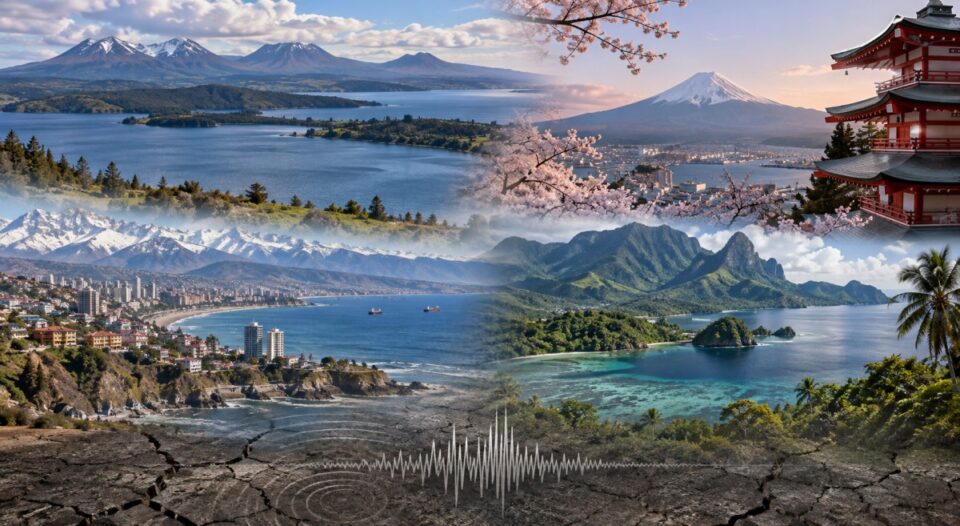
A 5.3 magnitude earthquake near Taumarunui in New Zealand has generated interest in travel safety following recent seismic events in several other countries including Samoa, Fiji, Japan, Chile, and Papua New Guinea in October 2026. The earthquake led to reports of shaking from various areas but fortunately no casualties or significant damages were reported. With popular tourist destinations also reporting tremors, international travelers are now warned to assess earthquake alerts, flight schedules, hotel operations, and safety advice. Despite the fact that there are no significant issues with tourism reported, the latest earthquakes served as a reminder of the importance of emergency planning, flexible bookings, and reliable travel information for travelers.
Why Has New Zealand’s Latest Earthquake Raised Concerns for Travellers?
New Zealand experienced a deep earthquake on 15 October 2026, with the United States Geological Survey (USGS) recording a magnitude of 5.3. The epicentre lay approximately 43 kilometres south-southeast of Otorohanga, at a depth of 286 kilometres. GeoNet separately located the earthquake 30 kilometres north-east of Taumarunui, at approximately 269 kilometres underground.
GeoNet’s earthquake records displayed a magnitude of 5.7, with more than 5,000 public felt reports associated with the event. Its official pages have also shown a revised magnitude of 5.0, highlighting differences between seismic assessments. Despite widespread reports of shaking, the available official records did not establish major structural damage, confirmed injuries or a nationwide travel disruption resulting from this earthquake.
Which Other Countries Have Experienced Recent Earthquakes in October 2026?
The USGS earthquake catalogue identifies seismic activity across multiple countries during 13–15 October 2026. The most significant events in this selection include a magnitude 6.0 earthquake south of Kokopo in Papua New Guinea on 13 October and a magnitude 5.9 earthquake in the Fiji region on 14 October. Samoa also recorded magnitude 5.1 and 4.8 events on 15 October.
Other recorded earthquakes affected Chile, Japan, Indonesia, Russia, Tanzania and Panama. Their magnitudes, depths and proximity to population centres varied considerably. The presence of earthquakes in several countries does not establish a connected global seismic crisis. For travellers, the relevant questions concern local shaking, infrastructure conditions, emergency advisories and whether transport or accommodation services have experienced verified disruption.
Where Did the Latest Earthquakes Strike Worldwide?
Official USGS records provide a geographical overview of recent seismic activity. The table below lists selected earthquakes between 13 and 15 October 2026. These events demonstrate how frequently earthquakes occur in different tectonic regions, including the Pacific Ring of Fire. The magnitudes are reported measurements, not indicators that every location suffered serious damage or required tourist evacuation.
| Country or region | Earthquake magnitude | Date (UTC) |
|---|---|---|
| New Zealand | 5.3 | 15 October |
| Samoa | 5.1 | 15 October |
| Fiji region | 5.9 | 14 October |
| Papua New Guinea | 6.0 | 13 October |
| Chile | 5.1 | 14 October |
| Japan | 4.4 | 15 October |
| Indonesia | 4.3 | 14 October |
| Russia | 4.5 | 14 October |
| Tanzania | 4.6 | 14 October |
| Panama | 4.7 | 14 October |
Source: USGS earthquake monitoring records. Magnitudes and locations may be revised following scientific review.
The locations include internationally recognised tourism regions, although several epicentres were offshore or distant from major visitor centres. The Fiji earthquake occurred at a considerable depth of approximately 585 kilometres, while the Papua New Guinea magnitude 6.0 event was much shallower, at approximately 21 kilometres. Depth matters because it influences how seismic energy reaches the surface.
How Could the Earthquake Affect Tourism Around Lake Taupō and Mount Ruapehu?
New Zealand’s central North Island attracts visitors seeking volcanic landscapes, geothermal attractions, outdoor adventures and scenic lakes. The earthquake’s location near Taumarunui makes the wider Taupō and Ruapehu tourism regions relevant to travellers. However, an earthquake’s proximity to a destination does not automatically indicate damage, attraction closures or unsafe conditions. Visitors should distinguish confirmed operational notices from speculative social media claims.
The Department of Conservation provides booking information for the popular Tongariro Alpine Crossing. Track reservations are free and recommended for all walkers, while bookings are required to use shuttle and guided walking services. Travellers should review current track conditions, weather forecasts and any access restrictions before departing. The earthquake alone does not establish that the crossing has closed.
Are International Flights, Hotels and Tourist Attractions Being Disrupted?
The seismic records reviewed do not confirm earthquake-related airport closures, widespread flight cancellations or major hotel damage across the countries listed. Travellers should therefore avoid assuming that New Zealand, Samoa, Fiji or Papua New Guinea have suspended tourism activities. Airlines, airports and accommodation providers remain the appropriate sources for checking individual services, particularly where additional local inspections might become necessary following seismic activity.
Passengers holding flights or accommodation reservations should examine cancellation conditions before making changes. A recorded earthquake does not automatically entitle travellers to compensation or refunds. Operators may apply different policies depending on whether the booked service remains available. Tourists should retain their booking confirmations, check travel insurance documentation and contact providers directly rather than relying on unverified disruption reports.
What Should Travellers Know About Earthquake Safety and Tsunami Warnings?
New Zealand’s National Emergency Management Agency recommends Drop, Cover and Hold during earthquakes. People should get low, protect their heads and necks, and hold onto sturdy shelter where available. Running outside during shaking can expose people to falling glass or masonry. Travellers staying in hotels should identify emergency exits and follow instructions from trained staff.
For coastal destinations, New Zealand’s official tsunami guidance follows the principle Long or Strong, Get Gone. If shaking makes standing difficult or lasts longer than one minute, people near the coast should move to higher ground or inland after shaking stops. They should not wait for a formal warning. This remains important general advice for coastal visitors.
Why This Matters for International Tourism and Holiday Planning
The recent earthquakes highlight how natural hazards can affect travel decisions across geographically separate destinations. Countries such as New Zealand, Japan, Fiji and Chile offer significant adventure, cultural and coastal tourism experiences. Their seismic exposure makes preparedness valuable, but it does not mean tourists must avoid these destinations. Accurate local assessments provide a more reliable basis for decisions than earthquake magnitude alone.
For tourism operators, emergency communication plays an important role in maintaining visitor confidence. Clear information about hotel safety, transport accessibility and attraction operations can help tourists make informed choices. Conversely, unverified claims about national emergencies could unnecessarily discourage travel. New Zealand’s SafeTravel guidance advises travellers facing natural disasters to prioritise instructions from local governments, police and emergency responders.
What Travellers Should Check Before Booking Earthquake-Prone Destinations
Travellers planning holidays in the Pacific region should monitor official earthquake bulletins alongside airline schedules, attraction updates and accommodation policies. Those visiting remote islands, volcanic landscapes or coastal resorts should also understand evacuation arrangements. Flexible reservations and suitable travel insurance can provide useful financial protection, although coverage depends on policy conditions and any exclusions involving known events.
Before departure, visitors should complete these practical checks:
- Review official earthquake and tsunami updates.
- Confirm flights directly with airlines.
- Check hotel operations and evacuation procedures.
- Verify national park access and tour bookings.
- Examine cancellation and insurance conditions.
- Keep emergency contacts and essential supplies accessible.
New Zealand’s SafeTravel service recommends following local authorities during emergencies and maintaining essential supplies when sheltering in place.
Will Recent Earthquakes Change Travel Plans Across the Pacific?
The earthquake on October 15 in New Zealand and other recent seismic activities show how essential dependable data is about international tourism. Some countries experienced serious earthquakes, but none of the official bulletins about earthquakes show that travel was interrupted drastically. Passengers may stay tuned about everything happening but they should not think that every earthquake signals serious problems in their destination. The situation in the particular area matters most. Tourists who wish to visit the countries of Taupō, Ruapehu, Samoa, Fiji, Chile, Japan or Papua New Guinea should concentrate on preparation rather than cancellation. An official monitoring agency publishes information about earthquakes and travel agencies report the reserving process.
The post New Zealand Unites With Japan, Chile, and Papua New Guinea Following Powerful Earthquakes appeared first on Travel And Tour World.
