
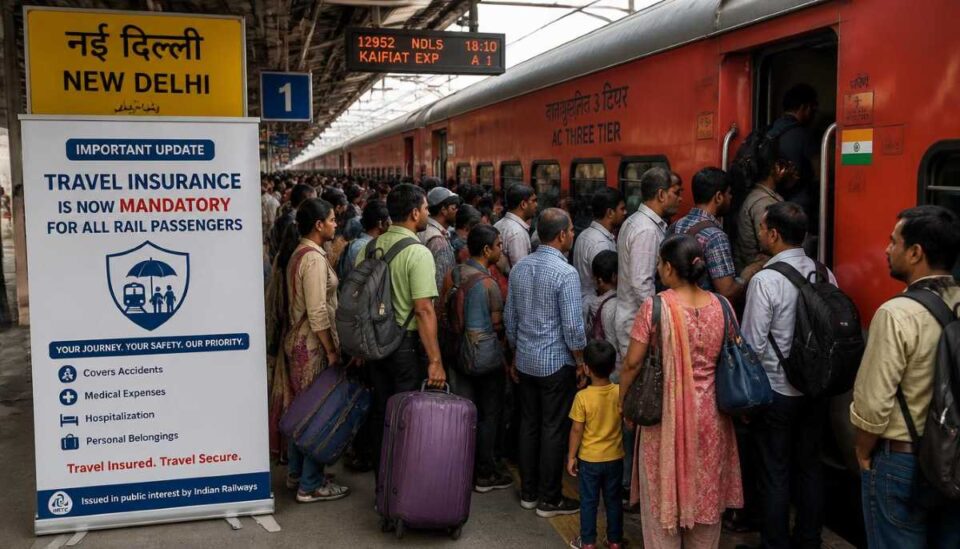
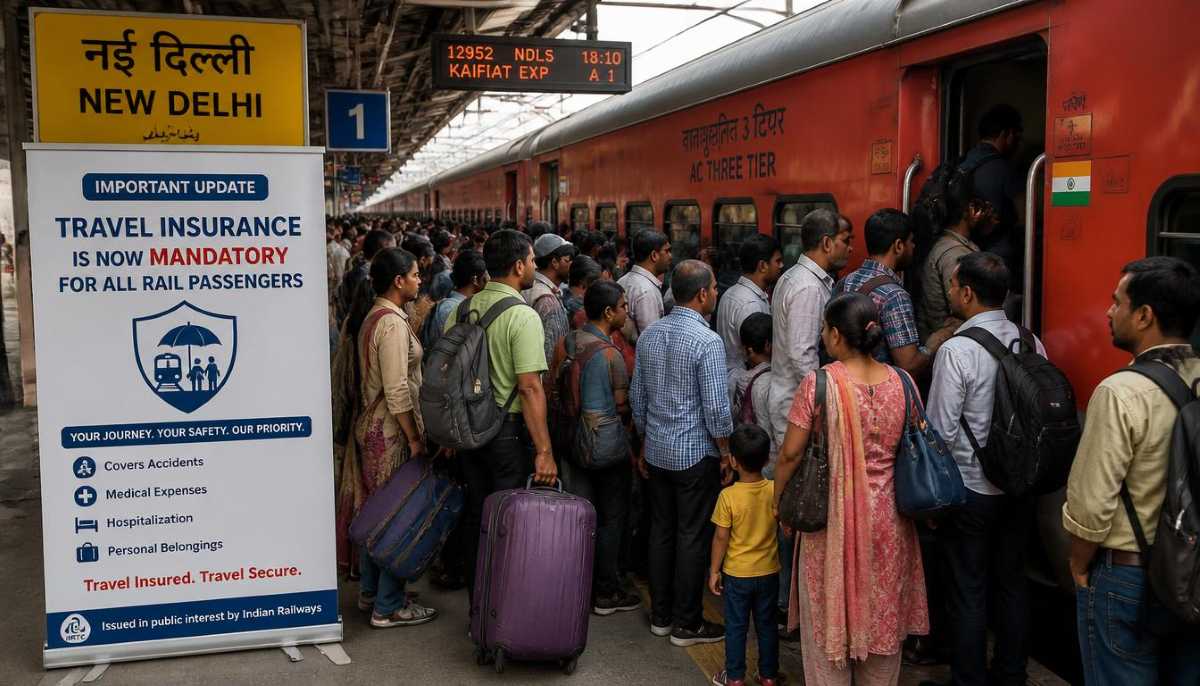
In the evolving landscape of national passenger transport, Supreme Court directives have continually shaped administrative accountability. A landmark judicial intervention has been initiated by a bench comprising Justice Ahsanuddhin Amanullah and Justice R. Mahadevan, focusing heavily on the safety of the common man and the prevention of untoward incidents during train journeys. Within this judicial framework, travel insurance is ordered to be made mandatory for all train tickets, bridging a long-standing systemic gap between digital and physical booking modes effective from October 27.
Background and Context
The historical context of passenger protection schemes within the national transporter reveals a stark disparity in risk mitigation. Previously, insurance coverage was exclusively restricted to individuals purchasing tickets online through digital platforms upon the payment of a nominal additional fee. Consequently, millions of citizens belonging to the lowest strata of society—who rely heavily on physical reservation counters at railway stations nationwide—remained entirely excluded from these protective umbrellas.
During earlier judicial proceedings, ample time was granted by the bench to the Indian Railway authorities to devise a robust mechanism for extending equal insurance benefits to offline purchasers. However, review hearings indicated an absolute lack of progress, prompting the court to register its utter disappointment and displeasure regarding the conduct of officers from the Ministry of Railways. The judiciary noted that official assurances remained confined to paper while budgetary allocations designated for vital safety measures stayed unutilised. Consequently, strict implementation deadlines were established to ensure universal coverage.
Impact on Travellers
The integration of mandatory insurance across all ticketing categories introduces profound advantages for everyday passengers. Travellers purchasing tickets across reservation counters will now receive financial security identical to web-based bookings. This policy extension safeguards vulnerable demographics, including daily wage earners, rural commuters, and economically disadvantaged passengers who traditionally lacked access to digital booking ecosystems.
In the event of unforeseen mishaps, untoward train incidents, or accidental injuries during transit, affected families are guaranteed financial compensation without discriminatory barriers. Furthermore, the standardization of coverage ensures that peace of mind is no longer treated as a privileged add-on feature tied strictly to online payment gateways, thereby democratizing travel safety across the entire socioeconomic spectrum of the nation.
Industry Insights
From an institutional and operational perspective, this judicial mandate compels transport administrators to overhaul legacy ticketing infrastructure. Industry stakeholders note that integrating insurance modules into offline reservation systems requires seamless coordination between railway administration units and insurance corporations.
Observers emphasize that administrative compliance is no longer optional. The judicial bench explicitly warned that failure to operationalize the required mechanism would place direct accountability on the leadership ranks of the Railway Board. This development underscores a paradigm shift toward strict judicial oversight in public utility administration, compelling bureaucratic apparatuses to translate policy declarations into actionable ground realities swiftly.
Practical Information
For commuters and station visitors, navigating the updated ticketing procedure involves clear procedural adjustments. Starting October 27, every reservation ticket issued at physical counters across every railway station will inherently incorporate travel insurance provisions.
Passengers are advised to verify their ticket documentation carefully to ensure that nominee details and policy references are appropriately recorded where applicable. While the baseline insurance is integrated into the ticketing structure, travelers should remain informed about claim initiation procedures, documentation requirements, and designated grievance redressal helplines managed by the respective railway authorities in coordination with partnered insurance underwriters.
Comparison with Previous Policies or Developments
A comparative analysis of past and present policies highlights a major structural evolution in passenger welfare frameworks. Under previous operational guidelines, safety nets were applied selectively. Online bookers enjoyed opt-in or bundled insurance options, whereas millions of counter-dependent passengers faced complete vulnerability during transit mishaps.
Earlier policy iterations suffered from delayed implementation timelines and underutilized budgetary allocations dedicated to safety enhancements. The current intervention supersedes fragmented approaches by establishing a uniform, non-negotiable legal requirement. By abolishing the distinction between digital and physical ticket holders, the new policy establishes absolute equity in passenger protection standards nationwide.
The post New Railway Rules: Mandatory Travel Insurance for Counter Tickets Effective Oct 27 appeared first on Travel And Tour World.
