
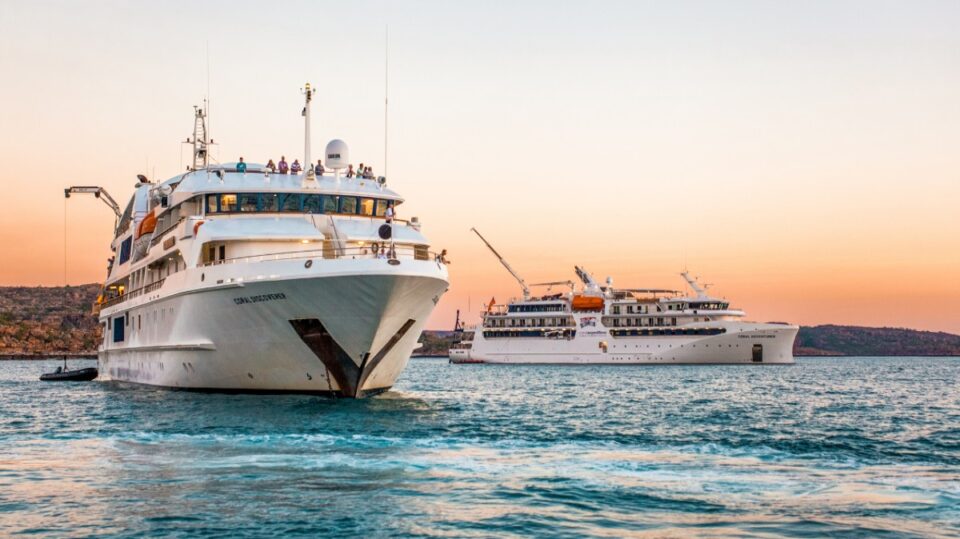

Australia’s Coral Expeditions has revealed an expanded 2027–28 small-ship cruise programme featuring longer journeys through the Kimberley, the Great Barrier Reef, Indonesia and New Zealand’s remote islands. The Cairns-founded expedition operator is introducing a 12-night Kimberley and Beyond voyage aboard Coral Discoverer, extended marine exploration along Australia’s eastern coastline and five planned expeditions through Indonesia’s Raja Ampat region. The programme also brings back New Zealand’s Subantarctic Islands and increases opportunities to explore southern Australia. The changes are designed to give travellers more time ashore, greater access to specialist guides and deeper experiences of remote natural environments.
Australia’s Coral Expeditions Introduces a Broader Programme of Remote Voyages
Coral Expeditions is expanding its small-ship cruise offering with a programme designed around Australia’s remote coastlines and some of the Asia-Pacific region’s most distinctive natural destinations.
The operator’s latest announcement places particular emphasis on exploration rather than conventional large-ship cruising.
Instead of concentrating on major ports and busy visitor attractions, the programme introduces journeys through remote reefs, islands, coastlines and waterways.
The new itineraries are intended to give passengers more time for activities outside the ship.
Guided walking, wildlife observation, snorkelling and cultural interpretation are central features.
Additional expedition personnel are expected to provide greater flexibility when passengers choose activities.
The company is also extending the duration of selected voyages.
A new Kimberley expedition aboard Coral Discoverer will run for 12 nights, while the Great Barrier Reef programme will feature longer ten-night journeys.
Indonesia receives additional attention through new expeditions exploring Raja Ampat and West Papua.
New Zealand’s remote southern islands are also returning to the operator’s programme.
For travellers, the changes create opportunities to experience destinations that are difficult to reach through conventional tourism.
However, the precise activities available on individual expeditions will depend on local conditions and the selected itinerary.
What Makes the New Coral Expeditions Programme Different?
One of the most significant features of the new programme is the greater time allocated to exploration.
Traditional cruise itineraries may involve brief visits to several ports.
Expedition cruising operates differently.
Its purpose is to provide access to natural environments, small communities and locations where large passenger ships may not be suitable.
Coral Expeditions uses smaller vessels and dedicated tender craft to support this approach.
The company’s announcement indicates that some shorter itineraries will be replaced by longer voyages.
This is particularly noticeable on the Great Barrier Reef.
Rather than continuing with the same shorter programme, the operator intends to introduce a limited series of extended expeditions.
The company is also increasing the opportunities for guests to participate in guided activities.
This approach may appeal to travellers who want to understand a destination rather than observe it only from the ship.
However, longer voyages also require a greater time commitment.
Passengers should consider whether the duration, physical activities and remote operating environment suit their preferences.
The expanded programme offers greater variety, but it does not mean that every passenger will take part in every activity.
Coral Discoverer Receives a New Twelve-Night Kimberley and Beyond Itinerary
The Kimberley and Beyond voyage is among the most important additions to the programme.
The itinerary will operate aboard Coral Discoverer, a smaller expedition vessel that has recently undergone refurbishment.
The ship accommodates approximately 68 guests.
Its size allows Coral Expeditions to concentrate on intimate group experiences and access to remote locations.
The new voyage extends the exploration period to 12 nights.
It is designed to introduce passengers to the dramatic landscapes of Australia’s Kimberley region.
The Kimberley occupies a vast area of northern Western Australia.
Its coast is recognised for sandstone cliffs, river systems, extensive tidal movements and remote natural environments.
The new itinerary is intended to combine established Kimberley attractions with locations further beyond the familiar coastal route.
The announced exploration areas include offshore reefs and less frequently visited waterways.
For returning expedition travellers, this provides a different option from the company’s established ten-night Kimberley voyages.
However, passengers should confirm the final route when booking.
Expedition itineraries are subject to change when weather, tides or safety considerations require adjustments.
The Kimberley’s Remote Rivers and Reefs Become Major Attractions
The new Kimberley itinerary is expected to introduce travellers to a wider range of natural environments.
The company’s programme highlights areas such as the Berkeley River, Ashmore Reef and Scott Reef.
These locations offer different experiences within the broader northern Australian region.
The Berkeley River is associated with remote waterways and imposing rocky landscapes.
Ashmore Reef offers opportunities to learn about marine environments and birdlife.
Scott Reef is recognised for its offshore reef systems.
Together, these destinations represent the type of specialist exploration associated with small expedition vessels.
However, their accessibility depends on weather, tides and operating permissions.
Passengers should not assume that a particular landing or snorkelling activity is guaranteed.
Coral Expeditions’ established Kimberley programme also highlights natural features such as Montgomery Reef, King George River and the Horizontal Falls area.
These provide context for the operator’s experience in the region.
The new itinerary is intended to extend the range of exploration.
For travellers, the important difference is the opportunity to spend additional time examining the natural and cultural characteristics of the coast.
Why the Kimberley Requires a Different Type of Cruise Experience
The Kimberley is a destination where local conditions strongly influence travel.
Its coastline includes remote rivers, reefs, cliffs and areas affected by substantial tidal movements.
A conventional port-based cruise model is not always suitable for exploring these environments.
Smaller vessels and dedicated tenders provide an alternative.
Coral Expeditions uses expedition craft to transport guests closer to shore and into selected waterways.
These activities are organised by experienced crew and expedition personnel.
The approach allows passengers to observe landscapes from different perspectives.
Some experiences involve travelling by tender.
Others may include guided walks or opportunities to learn about local natural history.
However, expedition activities require careful planning.
Weather, tidal conditions and sea states can affect where vessels operate.
The company’s official Kimberley expedition guide states that itineraries may change to reflect these factors.
This flexibility is an essential feature of remote cruising.
Travellers should choose this type of holiday with the understanding that the itinerary is designed around exploration rather than a fixed sequence of guaranteed activities.
More Expedition Guides Will Support Different Passenger Interests
Coral Expeditions has identified additional expedition personnel as an important part of its new programme.
The objective is to provide travellers with a wider choice of activities and greater time exploring destinations.
Passengers may have different interests and physical capabilities.
Some might prefer guided walks focused on geology and landscapes.
Others may be interested in snorkelling, marine biology or birdwatching.
Cultural interpretation can also form an important part of the experience.
The presence of specialist personnel can help passengers understand what they are seeing.
However, not every guide will necessarily offer the same activities on every voyage.
The availability of specific experiences depends on the destination and local conditions.
Small-group exploration also requires attention to safety and environmental protection.
For the operator, offering different activities can make the programme more appealing to travellers seeking personalised experiences.
For guests, it creates opportunities to explore a destination according to their interests.
The company’s broader expedition approach places emphasis on learning, observation and responsible access to remote environments.
Great Barrier Reef Cruises Will Feature Longer Ten-Night Expeditions
A major development in the programme concerns Australia’s Great Barrier Reef.
Coral Expeditions intends to introduce three ten-night reef expeditions annually.
These voyages will replace shorter departures within the relevant programme.
The change gives passengers more time to explore areas beyond the best-known coastal tourism centres.
The longer itineraries will concentrate on the outer reef and surrounding marine environments.
For travellers interested in underwater experiences, the programme introduces opportunities to visit several different reef systems.
However, visiting more remote locations can require longer periods at sea.
The extended voyage duration reflects that operational reality.
The company also intends to strengthen its educational focus.
Marine science, conservation and interpretation will form part of the expedition experience.
For passengers, this means the journey is designed around understanding reef environments as well as enjoying their scenery.
The programme should not be confused with an ordinary day trip from the Queensland coast.
It is a multi-night expedition using a vessel that can travel between different marine locations.
Which Great Barrier Reef Locations Are Included?
The announced extended reef programme identifies several important locations.
These include Osprey Reef, the Ribbon Reefs, Lizard Island, Nathan Reef and Mackay Reef.
Restoration Island also features in the new experiences.
The programme additionally includes exploration around Wreck Bay, where the operator intends to look for whale sharks.
Main Locations in the Extended Reef Programme
| Location | Main expedition interest |
|---|---|
| Osprey Reef | Offshore marine environments and reef exploration |
| Ribbon Reefs | Coral ecosystems and underwater biodiversity |
| Lizard Island | Island landscapes and surrounding marine habitats |
| Nathan Reef | Reef environments and specialist-guided exploration |
| Mackay Reef | Marine observation and opportunities for water activities |
| Restoration Island | Island experiences and coastal exploration |
| Wreck Bay | Marine wildlife observation, including the possibility of whale shark encounters |
The locations form part of the announced programme rather than a guarantee that every activity will operate as planned.
Sea conditions and environmental restrictions can influence the final schedule.
Passengers should also check whether snorkelling or other activities are suitable for their abilities.
For travellers interested in the marine environment, the longer itinerary provides a more extensive experience than a brief reef visit.
Reef Science and Conservation Will Play a Larger Role
The extended Great Barrier Reef programme introduces a stronger emphasis on marine science.
Coral Expeditions has highlighted its continuing relationship with Reef Legacy, an organisation involved in coral conservation.
The operator intends to connect guests with information about reef environments and the work being undertaken to understand and protect them.
This educational approach creates an additional dimension to the voyage.
Passengers may learn about coral ecosystems, environmental pressures and conservation activities.
However, educational engagement should not be confused with conducting scientific research.
The precise level of passenger participation will depend on the programme.
The company has not established that every guest will personally undertake research tasks.
The value lies in introducing travellers to people and projects associated with marine conservation.
The Great Barrier Reef is a globally important natural environment.
Tourism in such places requires careful management.
Responsible operating practices, visitor behaviour and adherence to environmental rules remain important.
For travellers, the expedition provides an opportunity to gain a better understanding of the marine environments they are visiting.
Whale Shark Encounters Add Wildlife Interest to the Reef Programme
Marine wildlife is another attraction within the announced itinerary.
Coral Expeditions intends to include exploration around Wreck Bay in search of whale sharks.
These animals are the largest living fish and are recognised for their distinctive spotted appearance.
The possibility of observing them may appeal to wildlife enthusiasts and underwater photographers.
However, encounters cannot be guaranteed.
Whale sharks are wild animals, and their presence depends on natural conditions.
The itinerary should therefore be understood as providing an opportunity for wildlife observation.
It does not promise that every passenger will see or swim near a whale shark.
Marine activities may also be subject to safety and environmental requirements.
Travellers should follow the instructions of the expedition team.
Responsible wildlife tourism requires minimising disturbance to animals.
For Coral Expeditions, including wildlife observation within a longer reef programme provides another reason to explore remote marine environments.
For passengers, the experience offers the possibility of observing wildlife in its natural habitat.
Indonesia Receives Five New Ten-Night Expeditions
Indonesia is another major focus of the announced programme.
Coral Expeditions plans five new ten-night voyages aboard Coral Geographer.
These expeditions will begin and end in Sorong, an important gateway to West Papua and Raja Ampat.
The round-trip format provides a different option from the operator’s established longer voyages between Darwin and Sorong.
For travellers, this may make the region accessible within a shorter cruise itinerary.
The journeys are designed around Raja Ampat’s islands, lagoons and marine environments.
Cenderawasih Bay is also highlighted for potential whale shark encounters.
The new programme therefore combines marine exploration with wildlife interests.
However, the exact route and available activities depend on the individual voyage.
A planned ten-night expedition should not be confused with the company’s previously advertised 18-night Raja Ampat and Spice Islands journey.
Both may explore parts of Indonesia, but their duration and itinerary structure differ.
Travellers should check which product best suits their available time and interests.
Raja Ampat Offers a Different Kind of Tropical Expedition
Raja Ampat is located in eastern Indonesia and is recognised for its marine biodiversity.
The region contains numerous islands, limestone formations and sheltered lagoons.
Its landscapes provide a distinctive setting for small-ship exploration.
Coral Expeditions’ programme is intended to introduce passengers to these natural environments through guided activities.
Depending on conditions, guests may have opportunities for snorkelling, tender exploration and visits to selected islands.
The region also has cultural traditions and communities that form part of its wider identity.
However, travellers should approach local cultural experiences with respect.
Community visits are subject to arrangements made with the relevant people and authorities.
The remote location also creates practical travel considerations.
Sorong is the embarkation point for the newly announced round-trip voyages.
Passengers may need to arrange international and domestic flights to reach it.
The operator’s existing expedition guidance recommends allowing additional time around embarkation and disembarkation.
Such planning is particularly relevant when travelling through remote regions where schedules can change.
Cenderawasih Bay Adds Another Marine Wildlife Experience
Cenderawasih Bay is an important part of the new Indonesia itinerary concept.
The area is associated with marine biodiversity and opportunities to observe whale sharks.
Coral Expeditions has previously included Cenderawasih Bay within its established Raja Ampat and Spice Islands programme.
The new ten-night voyages introduce a different way to explore the wider region.
For passengers, the potential appeal includes underwater scenery and marine wildlife.
However, wildlife sightings depend on conditions.
A scheduled visit to an area associated with whale sharks does not guarantee an encounter.
The operator’s programme should therefore be understood as creating opportunities for observation.
Travellers interested in snorkelling should check the physical requirements and safety arrangements.
The expedition team will determine which activities can proceed.
Weather, sea conditions and local rules may affect the schedule.
For marine tourism, this is an important distinction.
A responsible expedition should prioritise wildlife welfare and passenger safety rather than promise encounters that cannot be controlled.
The new Indonesia programme expands Coral Expeditions’ range of marine-focused journeys.
Coral Geographer Will Serve the New Indonesian Voyages
Coral Geographer is the vessel identified for the new ten-night Indonesia series.
The ship forms part of Coral Expeditions’ modern small-ship fleet.
It is designed for expedition journeys that combine onboard accommodation with activities ashore and on the water.
The vessel’s role is particularly relevant in remote island environments.
Passengers can explore different locations while returning to the ship between activities.
Dedicated tenders support access to selected coastal and marine areas.
However, the type of activity available depends on local conditions.
The ship’s facilities provide a base for passengers travelling through regions where conventional tourist infrastructure may be limited.
For travellers choosing between expedition products, vessel size and onboard facilities can influence the overall experience.
Some passengers may prioritise accommodation and dining.
Others may place greater importance on the daily exploration programme.
Coral Geographer’s new deployment is intended to provide access to Indonesian natural environments within a more focused itinerary.
It also expands the operator’s programme beyond its established Australian cruise routes.
New Zealand’s Subantarctic Islands Return to the Programme
Coral Expeditions is also bringing back dedicated voyages to New Zealand.
The announced season includes exploration of the country’s coastlines and fiords.
A particularly important feature is the return of the Subantarctic Islands.
Campbell Island and the Auckland Islands are among the locations identified.
These remote islands are recognised for their distinctive natural environments and wildlife.
They offer a very different experience from tropical reef cruising.
Travellers visiting the region may encounter dramatic landscapes, seabirds and isolated coastal habitats.
However, access to New Zealand’s Subantarctic Islands is carefully regulated.
Landings and visitor activities depend on permissions, conservation requirements and weather conditions.
The remote setting also creates operational challenges.
Sea conditions can influence whether a planned landing is possible.
Coral Expeditions’ programme is designed to provide opportunities for wildlife observation and natural history interpretation.
However, the inclusion of a destination in an itinerary does not guarantee that every landing will take place.
The return of these voyages adds another dimension to the company’s Asia-Pacific expedition offering.
Why the Auckland and Campbell Islands Are Important to Wildlife Travellers
New Zealand’s Subantarctic Islands are important natural environments with internationally recognised conservation value.
The Auckland Islands and Campbell Island form part of the New Zealand Subantarctic Islands World Heritage property.
Their remote location has contributed to the preservation of distinctive ecosystems.
The islands are associated with seabirds, native plants and specialised wildlife habitats.
For travellers interested in natural history, these environments offer opportunities to observe landscapes that differ from more accessible tourism destinations.
However, visiting them requires careful preparation.
The region can experience challenging weather and sea conditions.
Shore access is not comparable to visiting an ordinary cruise terminal.
Expedition operators must comply with the relevant conservation rules.
Passengers should also be prepared for itinerary flexibility.
The purpose of these journeys is to experience remote nature responsibly.
For Coral Expeditions, returning to the islands strengthens its position in wildlife-focused cruising.
For travellers, the appeal lies in access to places that receive relatively few visitors compared with conventional holiday destinations.
New Zealand’s Fiords and Coastlines Create Additional Expedition Opportunities
Beyond the Subantarctic Islands, the programme includes journeys through New Zealand’s coastal and fiord environments.
The country’s southern landscapes are known for steep mountains, sheltered waterways and extensive natural scenery.
These areas can be explored from small expedition vessels.
Passengers may experience the coastline through ship-based observation and guided activities where permitted.
The operator’s existing New Zealand programme demonstrates its experience with voyages involving South Island destinations and fiord landscapes.
The newly announced season is intended to expand these opportunities.
However, the exact ports and landing locations differ between itineraries.
Travellers should not assume that every New Zealand voyage visits the same fiords or islands.
Weather is also an important factor.
Remote coastal areas may require changes to the planned route.
The value of expedition cruising lies partly in the ability to adapt.
For passengers, this means approaching the holiday with an interest in exploration rather than an expectation that every destination can be visited under all conditions.
Southern Australia Gains More Attention in the Expanded Schedule
The southern coastline of Australia is another major area of development.
Coral Expeditions intends to offer additional voyages through South Australia and south-western Western Australia.
These itineraries provide an alternative to the company’s northern tropical programmes.
The landscape is different from the Kimberley and the Great Barrier Reef.
Southern Australia features rugged coastlines, islands, marine habitats and communities with distinctive regional industries.
The announced programme includes an extended voyage across the Great Australian Bight.
It also includes two ten-night Wild Islands of South Australia expeditions.
The operator intends to combine coastal exploration with opportunities to learn about local food production.
Seafood, wine and agricultural businesses form part of the experience.
For travellers, this creates a different emphasis from tropical snorkelling or remote river exploration.
The southern programme brings together natural history, regional culture and local industries.
However, individual visits to producers will depend on the itinerary and operational arrangements.
The announcement does not establish that every passenger will visit the same businesses.
The Great Australian Bight Becomes an Important Expedition Route
The expanded southern programme includes a voyage connecting Fremantle and Adelaide.
The route crosses the Great Australian Bight, a large marine region along Australia’s southern coastline.
The journey offers opportunities to observe different coastal landscapes.
It also introduces travellers to areas that are less prominent within conventional cruise itineraries.
The Bight is associated with extensive shorelines and important marine environments.
However, an expedition crossing such a broad region involves substantial time at sea.
Passengers should consider the voyage duration and operating conditions.
The company has previously offered journeys across Australia’s southern coast.
Its established expedition guides describe visits to remote islands, walking opportunities and local experiences.
The new programme builds on that existing destination knowledge.
However, no universal landing schedule can be guaranteed.
The final route will depend on the published itinerary and conditions encountered during the voyage.
For travellers interested in Australia’s less frequently visited coastline, the longer expedition provides another opportunity to explore it by sea.
Wild Islands of South Australia Combines Nature and Regional Culture
Two ten-night Wild Islands of South Australia departures form another part of the expanded programme.
The journeys focus on islands and coastal environments in the southern part of the country.
Coral Expeditions’ established southern coast itineraries have included places such as Kangaroo Island and other remote island destinations.
These areas provide opportunities to explore local wildlife and landscapes.
The company’s programme also highlights regional food and wine.
Travellers may be introduced to producers involved in seafood, agriculture and other local industries.
This creates a broader experience than coastal sightseeing alone.
However, the inclusion of culinary themes does not mean that every tasting or producer visit is automatically included.
Passengers should check the particular itinerary and package details.
The new voyages also require consideration of local weather and sea conditions.
Southern Australia can offer a very different expedition environment from tropical northern regions.
For passengers, the programme provides another option for discovering Australia’s coastal diversity.
For regional tourism businesses, expedition visits can create opportunities to introduce local products to travellers.
Western Australia’s Southern Coastline Adds More Regional Diversity
The expansion also includes greater attention to south-western Western Australia.
This region offers a different natural setting from the Kimberley’s tropical and remote northern coastline.
The south-west features coastal towns, marine environments and regional food industries.
Coral Expeditions’ wider Western Australian programme includes the Abrolhos Islands and the Coral Coast.
These existing journeys provide context for the operator’s activities in the state.
The new southern itineraries extend the geographic range of its offerings.
For travellers who have previously explored northern Western Australia, this creates an opportunity to experience another part of the state.
However, the new programme should not be interpreted as providing identical access across all coastal regions.
Each voyage has its own route and operating conditions.
Passengers should check embarkation and disembarkation points carefully.
Some itineraries may begin and end at different ports.
That can influence flight and accommodation arrangements.
The wider programme demonstrates the variety of expedition experiences available around the Australian coastline.
Tasmania, Cape York, Arnhem Land and Papua New Guinea Remain Important
The expanded programme also sits within Coral Expeditions’ established expedition portfolio.
Existing destinations include Tasmania, Cape York, Arnhem Land and Papua New Guinea.
These regions provide contrasting experiences.
Tasmania is associated with rugged landscapes, coastal scenery and natural environments.
Cape York offers access to remote northern Australian locations.
Arnhem Land is recognised for its cultural and natural significance.
Papua New Guinea provides opportunities to explore islands, coastal communities and distinctive regional traditions.
However, each destination has different operating requirements.
Cultural activities involving local communities must be organised respectfully and through appropriate arrangements.
Environmental conditions also influence access.
The new programme is intended to complement these established journeys rather than replace the operator’s entire destination offering.
For travellers, the expanded range provides opportunities to choose between tropical marine environments, remote Australian coastlines and southern wildlife destinations.
The appropriate voyage will depend on personal interests, available time and the level of activity desired.
Why Small Ships Matter for Remote Expedition Travel
Small expedition vessels are central to Coral Expeditions’ operating model.
They allow the company to concentrate on destinations that may not be suited to large cruise ships.
The operator uses dedicated Xplorer tenders and other expedition craft to support activities away from the main vessel.
These smaller boats can provide access to selected waterways, beaches and marine environments.
However, their use depends on safety conditions.
The company’s expedition guides explain that daily plans may change because of weather, tides and local requirements.
This flexibility distinguishes expedition cruising from a rigid sightseeing schedule.
Passengers should expect the crew to make decisions based on current conditions.
The smaller ship environment may also encourage greater interaction between guests and expedition personnel.
Educational presentations and guided activities form part of the broader experience.
However, small-ship cruising is not necessarily suitable for every traveller.
Some activities require mobility, balance or physical effort.
Prospective passengers should review the requirements before booking.
Why This Matters
Coral Expeditions’ expanded programme matters because it introduces new ways to explore remote parts of Australia and the Asia-Pacific.
The new 12-night Kimberley voyage extends the duration of an established expedition experience.
Longer Great Barrier Reef journeys are intended to provide more extensive marine exploration.
Indonesia gains new ten-night itineraries through Raja Ampat.
New Zealand’s Subantarctic Islands return to the programme.
Southern Australia also receives additional attention through island and coastline voyages.
For travellers, the changes provide greater choice among different expedition environments.
For the cruise industry, the programme demonstrates the importance of specialist itineraries, smaller vessels and destination knowledge.
However, the announcement should not be interpreted as a guarantee of specific wildlife sightings or every planned landing.
The practical value of the programme will depend on itinerary delivery, local conditions and passenger preferences.
Its central development is the expansion of longer, specialist-guided journeys through natural environments that are difficult to experience through conventional cruising.
What Travellers Should Know
Travellers considering Coral Expeditions’ new programme should understand that expedition cruising involves remote destinations and flexible daily plans.
The itinerary provides a framework, but actual activities depend on weather, safety and local conditions.
Before Booking an Expedition Cruise
- Confirm the itinerary: Check the vessel, departure point, destination sequence and voyage duration.
- Review activity requirements: Guided walks, snorkelling and tender excursions may require different levels of mobility.
- Check wildlife expectations: Encounters with whale sharks and other animals cannot be guaranteed.
- Plan flights carefully: Remote embarkation ports may require additional domestic or international connections.
- Allow travel flexibility: Expedition schedules can change when conditions require adjustments.
- Review entry requirements: Passports, visas and permits depend on nationality and destination.
- Check insurance: Remote travel may require suitable medical and evacuation coverage.
- Verify inclusions: Confirm which activities, transfers and services are included in the advertised fare.
- Respect conservation rules: Wildlife areas and protected islands may have strict visitor conditions.
Travellers should also check whether the announced voyage has opened for booking.
The programme has been publicised, but individual departures and prices require confirmation through Coral Expeditions’ official reservation information.
Frequently Asked Questions About Coral Expeditions 2027–28
What is new in Coral Expeditions’ programme?
The announced additions include a 12-night Kimberley and Beyond voyage, longer Great Barrier Reef expeditions, five Indonesia journeys, renewed New Zealand Subantarctic exploration and additional southern Australian itineraries.
Which ship will operate the new Kimberley and Beyond voyage?
Coral Discoverer is the vessel identified for the new 12-night Kimberley expedition. The ship is designed for small-group cruising in remote coastal environments.
How long will the new Great Barrier Reef expeditions last?
The operator plans three ten-night expeditions annually, replacing shorter departures within that programme. The journeys will explore outer reef locations and include a stronger marine science focus.
Will Coral Expeditions offer new Raja Ampat cruises?
Yes. The announced programme includes five ten-night voyages aboard Coral Geographer, operating round-trip from Sorong and exploring Raja Ampat and marine environments associated with Cenderawasih Bay.
Are wildlife encounters guaranteed?
No. Wildlife sightings depend on natural conditions. Expedition itineraries can also change because of weather, sea conditions, safety requirements and conservation rules.
Coral Expeditions Develops a More Extensive Asia-Pacific Adventure Programme
Coral Expeditions is broadening its small-ship cruising programme with additional journeys through Australia’s remote coastlines and several destinations in the Asia-Pacific.
The company’s new plans place emphasis on longer expeditions, specialist interpretation and greater opportunities to explore natural environments.
The Kimberley receives a new 12-night itinerary aboard Coral Discoverer.
The Great Barrier Reef programme introduces extended voyages with a stronger marine science component.
Indonesia gains new ten-night journeys through Raja Ampat, while New Zealand’s Subantarctic Islands return to the operator’s destination portfolio.
Southern Australia also features more prominently through journeys across the Great Australian Bight and island exploration.
The expansion provides additional choices for travellers interested in wildlife, coastal landscapes, cultural experiences and remote destinations.
However, the final availability of individual voyages and activities must be checked through the operator’s official booking information.
The programme represents a significant development in Coral Expeditions’ approach to small-ship travel, offering more time for exploration across several distinctive regions.
The post Australia Coral Expeditions Expands Remote Cruises Across Asia-Pacific appeared first on Travel And Tour World.
