
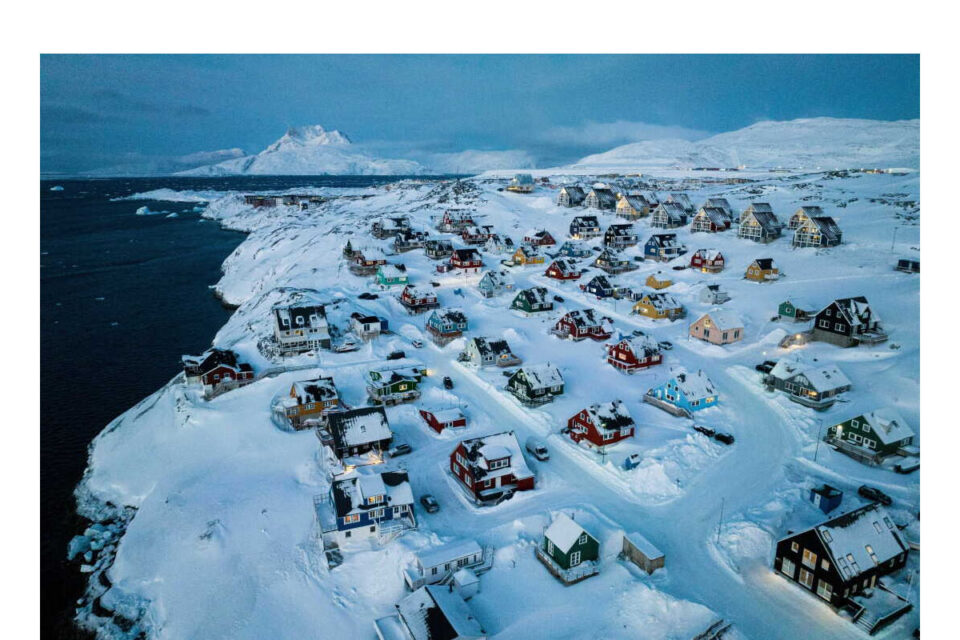
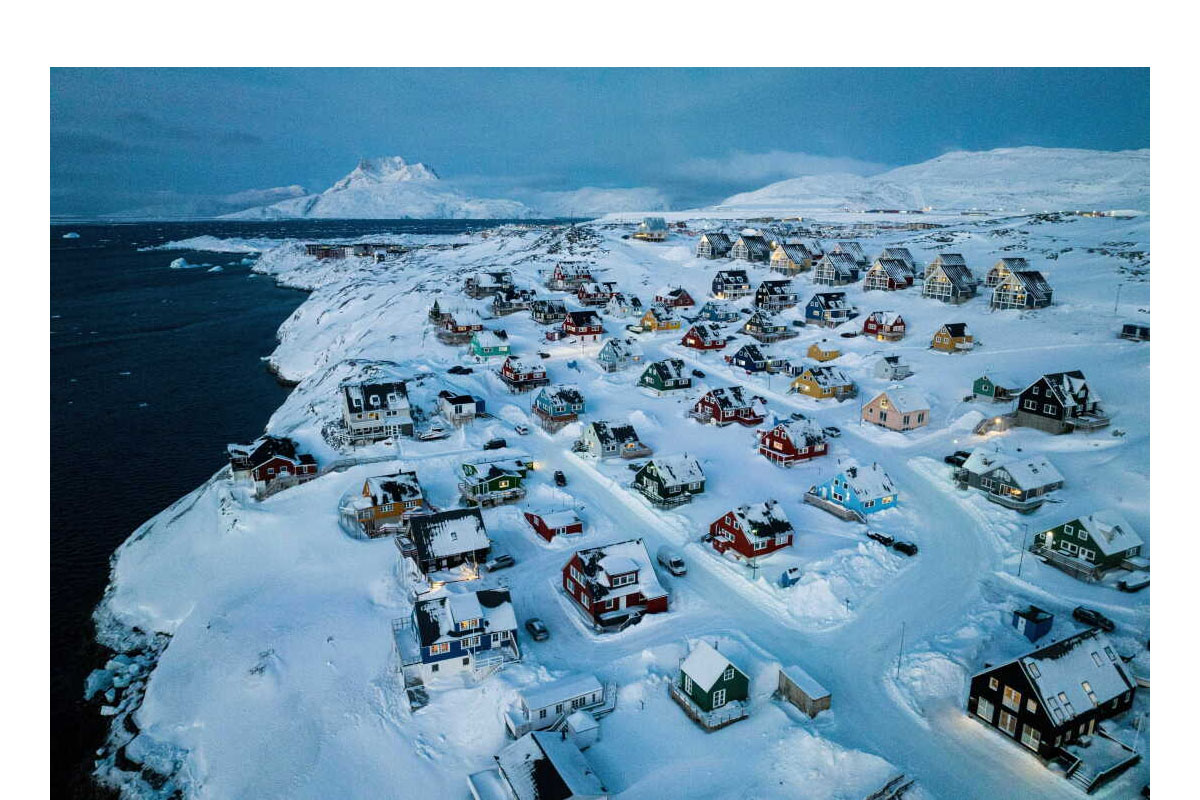
The geopolitical landscape of the Arctic is undergoing a profound transformation, directly influencing the trajectory of Greenland tourism and US security pact dynamics. As of September 2026, the intersection of international defence strategies and a rapidly expanding travel sector has placed this icy territory at the centre of global attention. Following the signing of a landmark defence agreement, questions regarding sovereignty, economic independence, and sustainable visitor growth have emerged. With unprecedented infrastructure developments and surging arrival numbers from key European markets, understanding how geopolitical stability fuels travel demand is essential for navigating Greenland’s highly promising yet complex modern economic future.
Background: The Historical Significance of Greenland in Global Geopolitics
Greenland, the world’s largest island, has long captivated the imagination of explorers, scientists, and political leaders. Geographically positioned at a critical juncture between North America and Europe, its strategic value has been recognised for well over a century. To fully comprehend the modern dynamics surrounding the Greenland tourism and US security pact, it is necessary to examine the historical precedent of international involvement in the Arctic territory.
During the mid-nineteenth century, the United States first formally explored the concept of integrating Greenland into its strategic sphere. Following the successful acquisition of Alaska from the Russian Empire in 1867, United States Secretary of State William H. Seward commissioned comprehensive reports evaluating the rich natural resources of Greenland and Iceland. Although early proposals to acquire the territory for $5.5 million in gold never materialised in Congress, the strategic intrigue persisted. Another formal acquisition concept surfaced in 1910, proposing an intricate exchange of territories involving the Philippines, Denmark, and Germany, which ultimately failed to gain diplomatic traction.
The modern framework for security and cooperation was solidified in the aftermath of the Second World War. The monumental 1951 Defense of Greenland Agreement, signed between the United States and the Kingdom of Denmark, granted Washington substantial operational latitude to establish and maintain military facilities on the island. This treaty directly facilitated the construction of the Thule Air Base, which has since been renamed the Pituffik Space Base. Operating as the United States Armed Forces’ northernmost installation, Pituffik has remained a cornerstone of North American aerospace defence and early warning radar systems.
As global warming accelerates ice melt and opens previously unnavigable Arctic sea routes, Greenland’s vast, untapped mineral reserves and geopolitical positioning have once again drawn intense superpower rivalry. The heightened activities of nations such as Russia and China in the polar region have prompted Western allies to recalibrate their Arctic strategies. Consequently, the historical defence framework required modernisation, leading directly to the highly publicised diplomatic negotiations of 2026. Understanding this robust historical backdrop is paramount to contextualising why a new security arrangement was prioritised and how it inadvertently became a catalyst for global tourism interest.
Latest Official Developments: The September 2026 US-Greenland Security Pact
The culmination of years of diplomatic manoeuvring arrived on 18th September 2026, when an unprecedented trilateral security arrangement was announced involving the United States, Denmark, and Greenland. The Greenland tourism and US security pact fundamentally reshapes the strategic administration of the Arctic while simultaneously projecting an image of fortified stability that appeals highly to international visitors and investors alike.
The agreement was publicly heralded by United States President Donald Trump as a historic diplomatic victory. According to official statements released by the US administration, the newly minted deal grants Washington permanent authority over the island’s security infrastructure. A primary objective of the pact is to completely exclude geopolitical adversaries from establishing military bases, deploying troops, or executing sensitive commercial investments within the Greenlandic economy. United States Secretary of State Marco Rubio characterised the arrangement as a monumental win that permanently secures North America’s strategic defence perimeter.
Under the stipulations detailed by State Department officials, the agreement institutes rigorous mechanisms designed to monitor and regulate foreign direct investment in critical sectors, including telecommunications, deep-water ports, and rare earth mineral mining. Furthermore, the pact permits the United States to expand its military footprint beyond the existing Pituffik Space Base, potentially establishing new logistical and surveillance facilities in southern Greenland. This expanded military presence is structured to operate in strict compliance with NATO frameworks and mutual defence obligations.
For the international community, the swift finalisation of the agreement in late 2026 underscored the urgent necessity of securing the North Atlantic. While the political and military ramifications are profound, the secondary effects on the civilian economy have been equally spectacular. The extensive media coverage surrounding the negotiations served as a multi-billion-dollar global advertising campaign for the territory, inadvertently spotlighting its breathtaking landscapes and accelerating the already thriving tourism sector.
Sovereignty Maintained: Why the Pact Rules Out Territorial Transfer
A critical and non-negotiable element of the September 2026 agreement is the categorical exclusion of any transfer of sovereignty. Following persistent and highly controversial proposals during previous years advocating for the outright American purchase of Greenland, the official documentation and corresponding diplomatic statements explicitly reaffirm the territorial integrity of the Kingdom of Denmark and the constitutional rights of the Greenlandic people.
Danish Prime Minister Mette Frederiksen addressed the international press immediately following the announcement, ensuring absolute clarity regarding the island’s political status. She confirmed that while the agreement significantly enhances collective security in the Arctic, it operates entirely within the established parameters of international law and respects the sovereign jurisdiction of Denmark. Furthermore, the pact acknowledges and upholds the Greenlandic people’s inherent right to self-determination, as enshrined in the 2009 Act on Greenland Self-Government.
By cleanly divorcing the concept of strategic military access from territorial ownership, the agreement successfully resolved long-standing diplomatic tensions. The distinction between security oversight and political sovereignty allows the United States to fulfill its defensive imperatives without undermining the democratic autonomy of the Greenlandic government (Naalakkersuisut). This precise diplomatic wording was vital for securing the support of local politicians in Nuuk, who have consistently advocated for increased international partnerships provided they do not compromise their ultimate goal of eventual independence.
In terms of the tourism industry, the definitive ruling out of sovereignty transfer has provided immeasurable reassurance to European markets and international tour operators. By maintaining its status as an autonomous territory within the Kingdom of Denmark, Greenland ensures that its regulatory frameworks, environmental protections, and European-aligned business standards remain intact. Consequently, international travel agencies can confidently invest in long-term infrastructure projects without the looming uncertainty of a radical transition in governance. The geopolitical stability secured by the pact directly facilitates a secure, predictable environment for the flourishing visitor economy.
Greenland Tourism Statistics 2026: An Unprecedented Industry Surge
Parallel to the unfolding geopolitical drama, the tourism sector in Greenland has experienced a period of exponential and entirely unprecedented growth. The relentless global media attention generated by the Greenland tourism and US security pact has translated directly into a monumental surge in travel bookings, passenger arrivals, and hospitality investments. By the autumn of 2026, official tourism boards and statistical agencies confirmed that the territory was fundamentally transitioning from a niche expedition destination into a highly sought-after global hotspot.
To grasp the magnitude of this transformation, it is essential to review the foundational economic data published in the country’s official Tourism Satellite Account (TSA). Compiled according to rigorous international standards and published collaboratively by Visit Greenland and Statistics Greenland, the TSA provided a definitive baseline for the industry’s economic impact. The comprehensive account revealed that tourism contributed a staggering 1.245 billion DKK in direct value to the Greenlandic economy, supporting approximately 1,800 full-time equivalent jobs. This firmly established the travel sector as a fundamental pillar of the national economy, accounting for an impressive 4.9 per cent of Greenland’s total Gross Domestic Product (GDP) and representing over 6.2 per cent of all domestic employment.
Furthermore, the data indicated that total tourism consumption across the territory amounted to nearly 3 billion DKK, with international visitors contributing approximately 58 per cent of that total. These expenditures were broadly distributed across aviation, maritime transport, local accommodation, culinary experiences, and indigenous cultural products. Anne Nivíka Grødem, the CEO of Visit Greenland, publicly emphasised that the statistical framework proved that tourism was no longer merely a peripheral activity, but rather a vital engine for generating employment and sustainable societal development across all municipalities.
Building upon this robust baseline, the statistics for 2026 showcased astronomical growth. Travel analytics firms and leading expedition operators, such as Intrepid Travel and HX (Hurtigruten Expeditions), reported a staggering 93 per cent increase in online searches for Greenland itineraries during the early months of the year, directly correlating with international political news cycles. As a result, authorities projected that total international visitor numbers for 2026 would climb by roughly 30 per cent compared to previous baseline years, pushing the infrastructure to its maximum operational capacity and accelerating the demand for rapid hospitality expansion.
Denmark, Germany, and Iceland: The Pillars of Inbound Tourism in 2026
While the United States market demonstrated the fastest proportional growth due to newly established direct aviation routes, the foundational bedrock of Greenland’s inbound tourism throughout 2026 remained heavily reliant on its traditional European partners. Based on official regional data trends, port analyses, and airline passenger projections covering the first eight months of 2026, Denmark, Germany, and Iceland solidified their undisputed positions as the most vital source markets for the territory.
As the sovereign affiliate and primary logistical gateway, Denmark naturally accounted for the largest absolute volume of passenger arrivals. Throughout the period from January to August 2026, conservative approximations indicated that upwards of 35,000 to 38,000 visitors arrived from Denmark. This immense volume is driven by a complex amalgamation of leisure tourism, business travel, administrative rotations, and the deeply entrenched familial and cultural ties connecting the two nations. The daily operational frequencies of Air Greenland between Copenhagen and Nuuk serve as the undisputed main artery of the Greenlandic travel economy, facilitating a continuous flow of high-value European tourists.
Germany emerged unequivocally as the second most dominant European source market. Historically possessing a profound cultural affinity for Arctic exploration, pristine wilderness, and sustainable eco-tourism, German travellers contributed an estimated 15,000 to 18,000 arrivals during the first eight months of the year. The German market demographic typically exhibits a preference for extended, multi-week itineraries, deep cultural immersion in remote settlements, and high-expenditure expedition cruises. Their profound appreciation for the fragile Arctic ecosystem aligns perfectly with Greenland’s stringent sustainability goals.
Iceland occupies a uniquely strategic position as both a crucial source market and an indispensable transit hub. During the first eight months of 2026, approximately 10,000 to 12,000 arrivals were attributed to the Icelandic market pathway. Following Iceland’s own explosive tourism boom over the past decade, a growing cohort of international travellers and Icelandic residents have sought out Greenland as the ultimate next frontier for adventure travel. The geographical proximity allows operators to seamlessly package dual-destination itineraries, enabling tourists to contrast the volcanic landscapes of Iceland with the colossal ice sheets of Greenland within a single, cohesive holiday.
The Aviation Revolution: Expanding Infrastructure for Sustainable Growth
The monumental influx of international visitors documented in 2026 would have been logistically impossible without the execution of the most ambitious infrastructural overhaul in Greenland’s modern history. The deliberate transition from a heavily constrained domestic flight network to a robust international aviation hub system represents a paradigm shift for the Greenland tourism and US security pact economic model.
Nuuk International Airport: The Gateway Opens
The centrepiece of this national aviation revolution was the inauguration of the brand-new Nuuk International Airport, which officially opened for full-scale jet operations on 28th November 2024. Prior to this historic upgrade, the capital’s truncated runway could only accommodate small turboprop aircraft, forcing international travellers to transit through the former military facility at Kangerlussuaq. The expanded 2,200-metre runway in Nuuk fundamentally altered global accessibility, allowing wide-body jets direct access to the nation’s political and commercial epicentre. Consequently, United Airlines capitalised on this accessibility by launching highly successful twice-weekly direct flights from Newark (EWR) to Nuuk during the peak summer seasons of 2025 and 2026. Simultaneously, Air Greenland aggressively expanded its European schedule, offering up to eight weekly direct flights from Copenhagen, alongside seasonal direct connections from Aalborg and Billund.
Qaqortoq and Ilulissat: Democratising Regional Access
However, the infrastructural evolution extended far beyond the capital city. In April 2026, the aviation authorities successfully inaugurated a completely new regional airport in Qaqortoq, situated in the breathtaking southern fjords. Historically, this agriculturally rich and culturally significant region could only be accessed via complex and weather-dependent helicopter transfers or lengthy maritime voyages. The opening of Qaqortoq Airport democratised access to South Greenland, immediately triggering a surge in boutique hospitality investments and agricultural tourism initiatives.
The final and arguably most highly anticipated phase of the airport expansion programme is the completion of the Ilulissat International Airport, scheduled for a grand opening at the end of October 2026. Located hundreds of kilometres north of the Arctic Circle and situated adjacent to the UNESCO World Heritage-listed Ilulissat Icefjord, this facility is designed to become the crown jewel of Arctic tourism. By allowing direct international jet arrivals to the heart of the iceberg-laden Disko Bay, the new Ilulissat airport will drastically reduce internal travel costs and logistical friction, cementing the region’s status as the premier destination for glaciology enthusiasts and luxury expedition cruisers.
Economic Implications: Building a Resilient Tourism Sector
The profound economic implications of the surging visitor numbers and infrastructural upgrades are reshaping the foundational structure of the Greenlandic economy. Historically reliant on the commercial fishing industry and annual block grants from the Danish government, Greenland’s political leadership has strategically identified sustainable tourism as the most viable mechanism for achieving long-term financial independence.
The influx of foreign capital generated by the tourism boom has initiated a nationwide wave of commercial development. In the capital city of Nuuk, municipal authorities and private developers have collaborated on ambitious urban planning initiatives designed to increase total hotel capacity by an astonishing 50 per cent by the year 2030, equating to the addition of over 500 premium hospitality beds. This aggressive expansion is critically necessary to prevent the severe accommodation bottlenecks experienced during periods of extreme weather-induced flight cancellations in previous years.
Furthermore, the economic benefits are rapidly cascading into secondary and tertiary sectors. Local entrepreneurs are establishing successful ventures in culinary arts, adventure guiding, maritime transport, and indigenous craftsmanship. The integration of local food supply chains into the high-end hospitality sector has revitalised traditional hunting and gathering practices, allowing local communities to monetise their heritage in a respectful and sustainable manner. The Greenland tourism and US security pact has thus proven to be a catalyst not merely for international political posturing, but for tangible, grassroots economic empowerment across the vast Arctic territory.
Industry Impact: The Shift Towards Slow and Sustainable Travel
Despite the overwhelming surge in global interest and the sudden availability of direct international flights, the Greenlandic government and the national tourist board have steadfastly refused to pursue a model of unrestricted mass tourism. Recognising the devastating ecological and social consequences experienced by other global destinations that failed to manage exponential growth, Greenland has strategically positioned itself as the ultimate purveyor of “slow tourism”.
The guiding philosophy dictates a deliberate capping of visitor volumes in sensitive ecological zones, prioritising high-yield, low-impact travel over high-volume, budget tourism. This strategy ensures that the fragile Arctic tundra, vulnerable wildlife populations, and small, tightly-knit Inuit communities are not overwhelmed by seasonal visitor inundation. By keeping the barrier to entry relatively high through premium pricing models, Greenland guarantees that every tourist arrival generates maximum economic value with minimal environmental degradation.
This commitment to sustainability is starkly reflected in the operations of the expedition cruise industry. World-renowned luxury operators such as Ponant, Silversea, Lindblad-National Geographic, and Quark Expeditions have heavily integrated Greenland into their premier 2026 summer itineraries. These operators deploy state-of-the-art, hybrid-electric, and ice-strengthened vessels that adhere strictly to the rigorous environmental guidelines established by the Association of Arctic Expedition Cruise Operators (AECO). Offering highly educational, science-focused voyages with starting price points routinely exceeding $10,000 per person, these luxury maritime expeditions perfectly align with Greenland’s vision of attracting discerning, environmentally conscious travellers who actively contribute to local conservation efforts.
Official Statements on Tourism and Security
Throughout the transformative period leading up to September 2026, the Naalakkersuisut (Government of Greenland) implemented a series of robust legislative updates to regulate the expanding industry. Comprehensive policies were enacted to mandate the usage of sustainable aviation fuels, enforce stringent waste management protocols for cruise ships navigating the pristine fjords, and require international tour operators to partner directly with local Greenlandic businesses.
These regulatory frameworks are designed to guarantee that the immense wealth generated by the tourism sector is equitably distributed among the local populace rather than being entirely extracted by foreign multinational corporations. The government’s proactive stance has been widely lauded by international environmental organisations as a pioneering blueprint for responsible Arctic development. Furthermore, the legislative harmonisation with Danish and European standards ensures a seamless, highly secure operational environment for international investors, reinforcing the stability promised by the recent geopolitical defence arrangements.
Future Outlook: A Secure and Thriving Arctic Destination
As the autumn of 2026 progresses, the overarching narrative of Greenland is one of extraordinary triumph and meticulous strategic planning. The formalisation of the Greenland tourism and US security pact has effectively neutralised long-standing geopolitical uncertainties, guaranteeing that the island remains a secure, demilitarised zone for commercial enterprise under sovereign Danish jurisdiction. The explicit rejection of any sovereignty transfer has preserved the cultural and political dignity of the Greenlandic people while simultaneously unlocking unparalleled levels of foreign investment and military protection.
Looking ahead, the successful integration of the three new international airports at Nuuk, Qaqortoq, and Ilulissat guarantees that the logistical barriers that historically hindered Arctic travel have been permanently dismantled. With a resilient and heavily regulated slow tourism model firmly in place, and supported by a continuous influx of high-value travellers from dominant source markets such as Denmark, Germany, and Iceland, Greenland stands on the precipice of a golden era.
Ultimately, the convergence of robust national security, visionary infrastructure development, and an unyielding commitment to environmental sustainability ensures that Greenland will maintain its newly acquired status as one of the most exclusive, breathtaking, and culturally enriching travel destinations on the planet for decades to come.
The post Germany Teams with Denmark and Iceland to Lead Greenland Tourism Boom in 2026 as New US Security Pact Rules Out Sovereignty Transfer appeared first on Travel And Tour World.
