
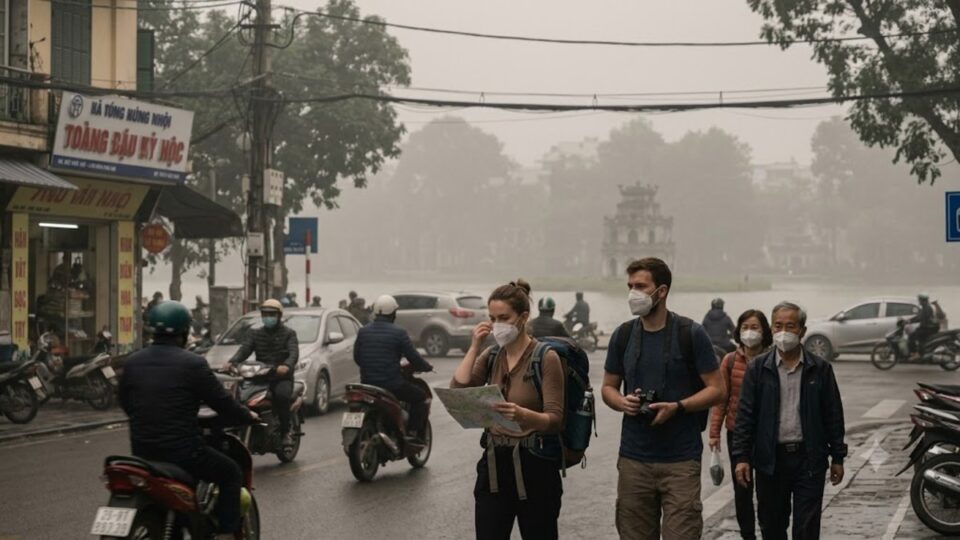
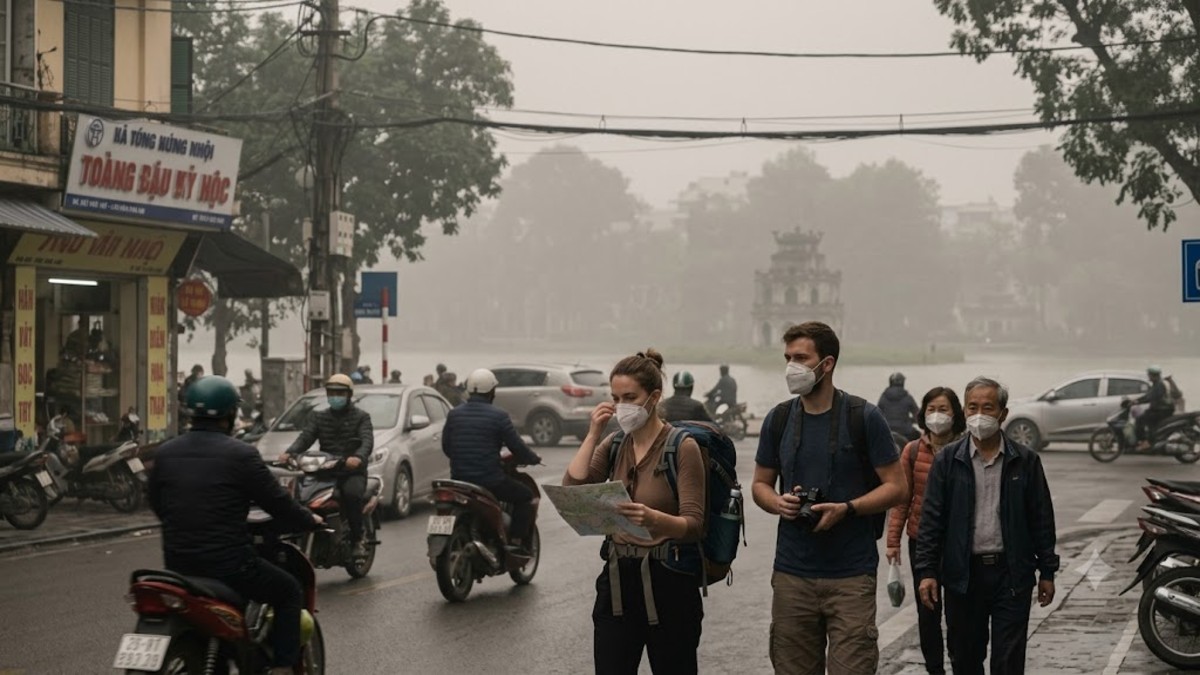
As Hanoi’s air-pollution problem worsens, it has become an important factor for people coming to Vietnam’s capital as the city is entering one of its most active periods of international travelling. According to official environmental authorities, the pollution problem usually intensifies from October during the dry season, while main sources of the issue include fine particles, transport, construction and open burning. For tourists, it does not mean that Hanoi is not worth visiting. However, it means that checking air quality, having flexible schedules for sightseeing, wearing masks and being more cautious when choosing transportation means becomes more important.
Hanoi Air Pollution Risk Rises as the Dry Season Begins
Hanoi authorities have acknowledged that air pollution becomes a bigger challenge during the dry season. The city’s Department of Agriculture and Environment says pollution episodes generally begin appearing from October and become particularly significant between November and March. Fine particulate matter, especially PM2.5, remains the principal concern because stagnant weather can prevent pollutants dispersing effectively across the capital.
The broader 2026 picture is not entirely negative. Between 1 January and 29 September, Hanoi recorded good or moderate air quality on 74.42 per cent of days. Average daily PM2.5 concentration stood at 37.89 micrograms per cubic metre. Nevertheless, authorities stress that these improvements do not eliminate the possibility of significant pollution episodes as seasonal weather patterns change.
What Poor Air Quality Means for Tourists Visiting Hanoi
Air pollution can affect sightseeing plans most directly when travellers spend long periods outdoors. Hanoi’s most popular experiences include walking through the Old Quarter, exploring Hoan Kiem Lake, visiting historical monuments and moving between attractions on foot. During poorer air-quality periods, travellers may prefer shorter outdoor visits, indoor cultural attractions and transport that reduces exposure to busy roads.
Vietnam’s Ministry of Health advises people to monitor official air-quality information and adjust activities according to AQI conditions. When pollution reaches poorer categories, people should reduce prolonged outdoor activity, particularly near congested roads, construction sites and other high-emission locations. Children, older travellers, pregnant women and people with respiratory or cardiovascular conditions require additional caution during polluted periods.
Hanoi Tourism Remains Strong Despite Environmental Pressure
Air pollution arrives at a commercially important moment for Hanoi tourism. Official city figures show the capital received approximately 27.5 million tourists during the first nine months of 2026, up 6.2 per cent year on year. International arrivals reached around 6.67 million, rising 22 per cent, while tourism receipts reached VND113.2 trillion, increasing 13.3 per cent.
Those figures underline why air quality matters economically. Hanoi is attracting growing numbers of international travellers just as Vietnam enters the high inbound season. National tourism authorities reported 17.68 million international arrivals across Vietnam during the first nine months of 2026, 14.5 per cent above the same period of 2025, creating substantial demand for major gateways including Hanoi.
Tourists Can Still Visit Hanoi Attractions and Cultural Sites
There is currently no official indication in the sources reviewed that Hanoi’s principal tourist attractions have been closed because of seasonal air pollution. Travellers can therefore continue planning cultural visits, although checking air conditions before lengthy outdoor sightseeing makes sense. Vietnam Tourism highlights the Old Quarter, Hoan Kiem Lake, museums, temples, galleries and Hanoi’s café culture among the capital’s major experiences.
The Temple of Literature offers another practical option because visits combine courtyards, architecture and cultural interpretation. Vietnam Tourism currently lists general admission at VND70,000 and its night experience at VND199,000, with the night programme typically operating on Wednesdays, Saturdays and Sundays. Travellers should nevertheless confirm current opening times and ticket conditions directly before visiting.
Public Transport Offers Travellers a Useful Alternative
Tourists concerned about exposure beside congested roads may benefit from Hanoi’s expanding public-transport strategy. The city is using its Low Emission Zone programme to encourage greener mobility around central areas. Authorities say residents and visitors increasingly use buses, electric vehicles and walking within restricted sections rather than relying exclusively on motorcycles and private petrol-powered vehicles.
A significant traveller benefit applies inside Ring Road 1. Hanoi’s official Low Emission Zone programme provides free travel on eligible public bus journeys within this area from 1 July 2026 until 30 June 2027, excluding buses operated specifically for tourism businesses. Officials reported that 45 bus routes were participating after implementation began, supporting lower-emission movement around central Hanoi.
Hanoi’s Low Emission Zone Changes Central-City Travel
Hanoi began piloting its Low Emission Zone on 1 July 2026, initially covering parts of Hoan Kiem, including areas around the Old Quarter and Hoan Kiem Lake. The policy is particularly relevant to visitors because this is Hanoi’s tourism core. Authorities stress that the programme does not represent a blanket ban on all petrol or diesel vehicles throughout Ring Road 1.
Within the first-stage Zone 1, road vehicles are prohibited between 7pm and midnight on Fridays, Saturdays and Sundays, subject to authorised exceptions. Tourists staying around Hoan Kiem should therefore check access arrangements when booking taxis, transfers or private transport during weekend evenings. Walking, buses and electric transport can provide practical alternatives while supporting Hanoi’s wider attempt to reduce traffic-generated emissions.
Health Advice Tourists Should Follow During Poor AQI
Vietnam’s Ministry of Health recommends wearing an appropriate mask outdoors and checking official air-quality information regularly. When AQI reaches the “poor” category between 101 and 150 under Vietnam’s system, healthy people should reduce outdoor time if they develop symptoms such as irritated eyes, coughing or sore throats. Sensitive travellers should limit strenuous outdoor activity more substantially.
At AQI levels between 151 and 200, the ministry recommends limiting outdoor activity and strenuous exercise, avoiding highly polluted areas and selecting times when pollution is lower if outdoor activity remains necessary. Travellers experiencing coughing, breathing difficulty, chest discomfort or other acute symptoms should seek medical advice rather than continuing demanding sightseeing programmes through polluted conditions.
Practical Tips for Tourists Visiting Hanoi During Pollution Episodes
- Check Hanoi’s official air-quality portal before beginning outdoor sightseeing, because conditions can change during the day.
- Carry a suitable particulate-filtering mask when pollution levels rise.
- Reduce long walks beside major traffic corridors during poorer AQI periods.
- Move museums, cafés, galleries and indoor heritage attractions higher on the itinerary when haze intensifies.
- Consider buses, metro services or electric transport instead of prolonged motorcycle journeys.
- Travellers with asthma, cardiovascular disease or other relevant medical conditions should follow their existing medical advice particularly carefully.
Why This Matters for Hanoi Tourism in 2026
Hanoi’s challenge is not simply environmental. Tourism depends heavily on the capital’s outdoor streetscapes, lakes, heritage quarters, food culture and walking experiences. Repeated pollution episodes can reduce comfort, limit visibility and encourage visitors to shorten outdoor activities. Yet official tourism figures show that demand remains strong, meaning environmental management will increasingly influence how travellers experience the destination rather than whether Hanoi attracts visitors at all.
The city is responding through emission controls, green transport, construction management and measures targeting uncontrolled burning. Hanoi has identified traffic, construction and open burning as three major emission sources requiring stronger control. For travellers, the immediate message is straightforward: Hanoi remains open and highly accessible, but flexible itineraries and real-time air-quality monitoring should now form part of responsible trip planning.
What Travellers Should Know Before Booking Hanoi
Travelers need to carry on with their plans to visit Hanoi, despite the air pollution affecting the city. There is no official information as stated in this report that suggests the closing of attractions, cancellation of flights and halt of tourism activities in the area due to pollution. In fact, visitors should consider pollution the same way they regard such factors as excessive heat, heavy rain and bad weather: they should be careful and adjust the timing and intensity of the planned outdoor activities. Flexibility in hotel booking that can help travelers with their trip plans is available. It is recommended that travelers stay in hotels located close to their points of interests, that they use hotels which have decent ventilation and that they do not plan too many long walks outdoors. If travelers come to visit Hanoi in October, they need to watch the AQI updates closely because the authorities consider this time to be dangerous for pollution.
The post Hanoi Tourism Faces Air Pollution Challenge as Travellers Prepare for Vietnam Holidays appeared first on Travel And Tour World.
