
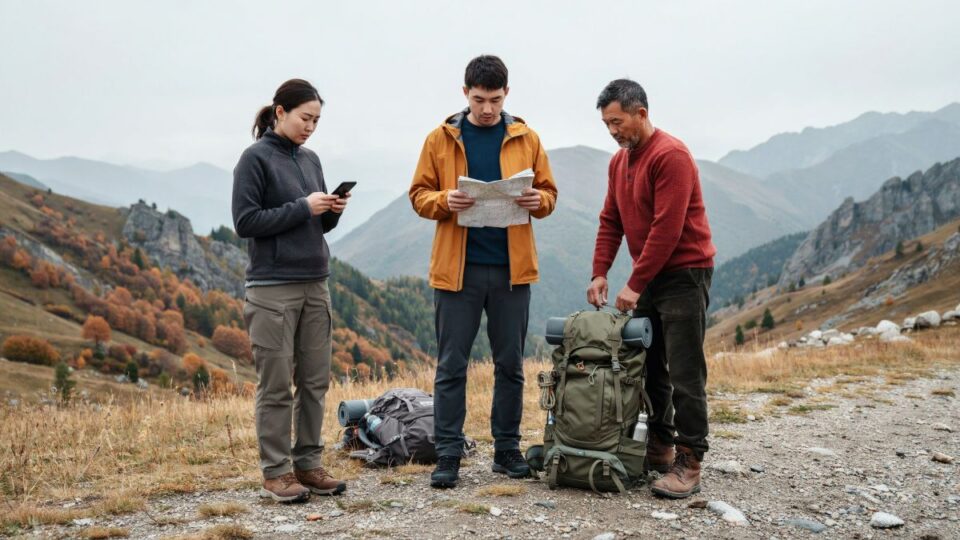

Japan implements Mount Fuji climbing measures for a safe ascent plan. For instance, in the 2026 season, Yamanashi levied a charge of 4,000 yen from the climbers, limited the number of people to climb the Yoshida Trail per day, and allowed entry at specified hours. On the other hand, the Shizuoka region applied different measures to its routes, thus the climbers were supposed to find out which measures applied to which route. This way, the measures are not only about access but also time, equipment, and accommodation considerations. Moreover, the season concluded in September, thus this is an overview of the measures applied in 2026.
Adventure travel is changing before the journey begins
For years, a destination could attract visitors with a famous peak, a fast river or a forest path. Those attractions still matter. But travellers also want to know whether a route is open, what a permit costs and who can help if conditions change. These details can decide whether a trip feels possible. They can also decide how local people take part.
In 2026, several Asian places have put these practical questions into sharper focus. Some are testing digital registration. Others manage access by trail, season or risk. A few are designing guided journeys around local culture. Together, these examples offer a fresh way to explore adventure travel in Asia. They do not prove that the whole continent follows one plan. They show how different places are trying to make outdoor trips clearer to book and easier to manage.
Kazakhstan puts a digital check in at the trailhead
Almaty introduced the Almaty Hike service in November 2026 for people planning trips into the nearby mountains. Users enter a phone number and details about their route. They are asked to return to the service after the hike and confirm that the trip has ended. This gives authorities a record of the planned route and whether a hiker has checked back in.
The tool does not mean that rescuers can watch every person move across a mountain in real time. That distinction matters. The city has announced a simple registration and return check. Its value will depend on how many people use it, how quickly a missed return is noticed and how well the information supports a response.
Japan shows why one mountain can have different rules
Mount Fuji provides a striking example of how access can depend on the route a traveller chooses. During the 2026 climbing season, Yamanashi’s Yoshida Trail charged 4,000 yen per person and set a daily threshold of 4,000 climbers. It also checked that climbers carried proper equipment. A gate restriction applied from 2pm until 3am, with stated exceptions for people staying in mountain huts.
These measures shape the climb before anyone starts walking. Travellers must consider the fee, timing, equipment and overnight arrangements. The system shows how a busy outdoor attraction can use booking and access rules to influence visitor behaviour. It also makes route research essential. A simple search for “Mount Fuji rules” may not tell a traveller which arrangements apply to the trail they plan to use. Shizuoka’s routes had a different set of controls in 2026, which is why visitors need to check the rules for their chosen trail.
Fuji rules do not apply in the same way on every trail
The differences across Mount Fuji matter because the landmark is managed through local route systems. A traveller cannot assume that one set of rules covers every entrance. This is a useful reminder that adventure tourism is often managed locally, even when the landmark is shared.
The 2026 climbing season ended on 10 September, so this is a review of the rules used that year. It should not read as a current November invitation to climb. The larger point remains timely. Clear route information helps travellers plan and prevents a rule for one entrance from being applied to another.
Nepal balances a personal trek with a local guide
Nepal offers another kind of change. In March 2026, an individual foreign traveller could seek a trekking permit for certain restricted areas. The trek still had to be arranged through an agency and include a licensed guide. One guide could lead a group of up to seven trekkers.
This creates room for a traveller who wants a small or personal trip while keeping a local professional involved. A one-person booking does not mean a person walks alone without support. The guide and agency also have an important role in logistics and emergency arrangements. For visitors, that can affect cost and planning. For communities, it raises a practical question: how much of the spending reaches guides and local businesses along remote routes? In this setting, a solo booking still involves an agency and a guide. It does not mean setting off alone.
India faces a test of safety and measurement
India’s adventure story has two sides. In March 2026, the Tourism Ministry said it had prepared model safety guidelines with an industry body and shared them with states and union territories. The ministry asked local authorities to maintain checks on activities and operator licences.
In the same statement, it said it had not studied the country’s high-risk adventure destinations and had no current plan for a central record of accidents, deaths and violations. This creates an important question for a growing tourism product: how can success and safety be measured? Guidelines set a framework, but they do not prove that every state applies the same rules. They also do not show whether incidents have fallen. A careful article can recognise the new standards while asking how authorities inspect operators and keep reliable records.
Sikkim turns its landscape into bookable journeys
Sikkim offers a more direct example of product development. During its Adventure Tourism Festival, which ran from 1 to 7 November 2026, the state promoted two flagship treks. The Heart of Sikkim Trek follows the Kurmit Khursong Trail and reaches Poke La Pass at about 4,500 metres. The advertised journey is around 80 kilometres over 11 days.
The Dzongri–Singalila Round Trek links Yuksom and Uttarey on a western circuit of about 120 kilometres, also over 11 days. The festival portal listed package prices of 14,999 rupees and 23,923 rupees. These details help a traveller picture the commitment involved. They also show how a trek can be presented as a defined itinerary, rather than only as a dramatic place on a map. The listings confirm the launch and advertised package details, but they do not show how many visitors took the treks or what they experienced.
Indonesia makes changing access part of the adventure story
Indonesia shows that access can shift with the environment. In August 2026, the Forestry Ministry introduced risk-based rules for hiking in protected areas as wildfire danger increased. The measures included temporary closures at some locations and tightly controlled access at others. Officials said decisions would depend on the conditions at each site.
Mount Rinjani then closed its Torean route in September after a wildfire in the area. The park asked affected hikers to reschedule or use another entry or exit route, following staff guidance. These notices show why travellers need current information close to departure. A route shown in an old itinerary may no longer be open. Adventure operators also need to explain what happens when plans change. The policy and closure are examples from 2026, not proof that every Indonesian mountain is closed today. Travellers should confirm the latest status with the park before departure and ask the operator how it handles a route change.
Bhutan plans a trail through living highland culture
In eastern Bhutan, officials reported an eight-day survey for a planned Yeti Tracking Trail. The proposed route links Sakteng and Merak with other highland areas and passes through communities with their own traditions and histories. Local guides joined officials from planning, engineering, forestry and medical services during the survey.
This offers a distinct story from the better-known idea of a trek as a test of stamina. A route may also bring visitors into contact with local knowledge and daily life. Bhutan’s visitor guidance says treks must be arranged with an accredited operator or guide. But the new trail is still described as being planned. It should not be presented as an open, finished tourism product or as proof that local households have already gained income from it. A route through a village does not by itself prove that residents receive lasting income or influence over tourism.
Thailand brings soft adventure into the holiday mix
Thailand provides a different picture from the Himalayan and volcanic mountain examples. In October, the Tourism Authority of Thailand announced promotions for sport and soft adventure experiences through a booking platform. In November, it highlighted kayaking in Krabi, community experiences on the Andaman coast and island trips in Phang-nga.
These activities can sit beside beach stays and town visits in a broader holiday. This makes adventure feel more accessible to travellers who may not plan a long expedition. It can also help connect well-known gateways with nearby places. The releases describe marketing and travel trade activity. They do not prove how many bookings followed or how much money reached local businesses. Still, they give the article an important contrast: adventure tourism includes gentle, guided outdoor experiences as well as high-altitude challenges. The approach may suit visitors seeking a lighter activity, but its reach and local economic effects need booking and spending data.
A region-wide story needs careful language
These examples do not describe one Asian policy. Japan’s climbing controls, Nepal’s permit arrangements, Almaty’s hiking registration and Indonesia’s fire-risk measures answer different local needs. Sikkim and Bhutan show trail development at different stages. Thailand shows how activities can be sold as part of a wider holiday.
A report can compare these approaches, but it should not say that Asia is leading the world or that adventure travel is booming everywhere without data to prove it. National visitor totals alone cannot show how many people travelled for hiking, kayaking or climbing. Nor do the announcements tell us whether new rules have reduced accidents. The strongest language is precise: these destinations are experimenting with access, products and visitor management in ways that matter to travellers.
What travellers should check before they book
Readers can take practical lessons from the research. They should confirm the exact route, season and entry rules rather than relying on a general destination page. They should check whether a guide or agency is required and what the price includes. They should ask how the operator communicates closures or bad weather.
For a mountain journey, travellers should share a route and return time with someone and carry suitable clothing, water and navigation tools. Rules can change, so visitors should check current information with the local authority before travel. Mount Fuji’s 2026 season has ended, and Indonesia’s dated notices do not give a live route status for November. The article can help readers ask better questions without presenting old seasonal rules as current instructions.
Adventure travel will be judged by the journey around it
The most powerful Asian adventure story is not simply about finding a higher peak or a wilder trail. It is about what happens around the experience. Can a visitor understand the rules? Does a guide know the route? Can an emergency team learn where a group went? Will an operator offer a clear alternative if access changes? Do residents have a meaningful role in welcoming visitors?
The answers differ from Kazakhstan to Thailand, and they still need more evidence in several places. But the direction is clear in the 2026 examples: adventure travel is becoming a question of planning and delivery as well as landscape. That gives travellers more to consider before setting out and gives destinations a chance to build trust one well-managed journey at a time.
Asia adventure tourism enters a new chapter
In Japan, the trail gets some rules, in Nepal there are guides for routes outside the regular path, in India there are guidelines regarding safety, in Sikkim – new trails for tourists. There is a new trail in Bhutan that connects the tourists with the local culture. In Indonesia, access to the trails may be restricted in case of fire danger. Thailand suggests something milder for outdoor activities.Humanize Text
The post Japan Sets Fuji Route Entry Checks and Access Rules for 2026 Climbers appeared first on Travel And Tour World.
