
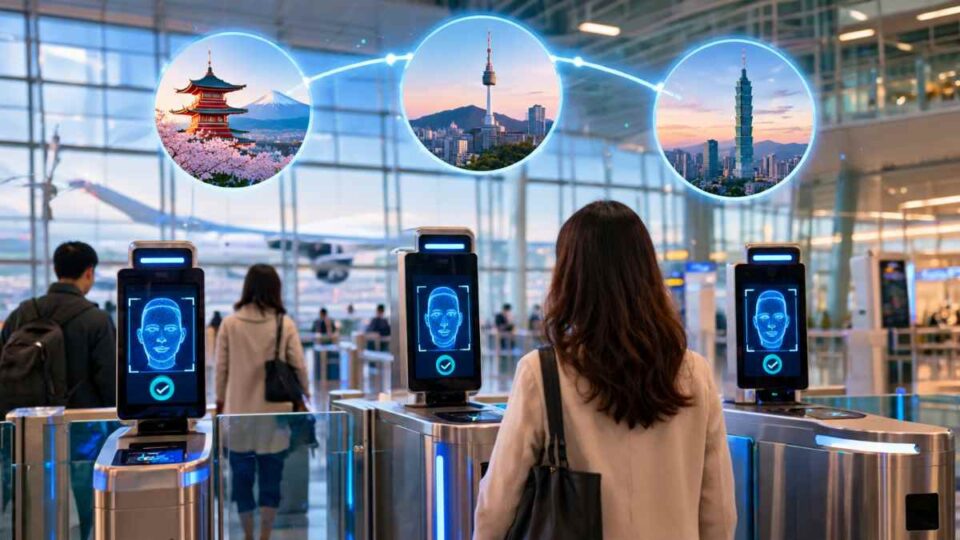
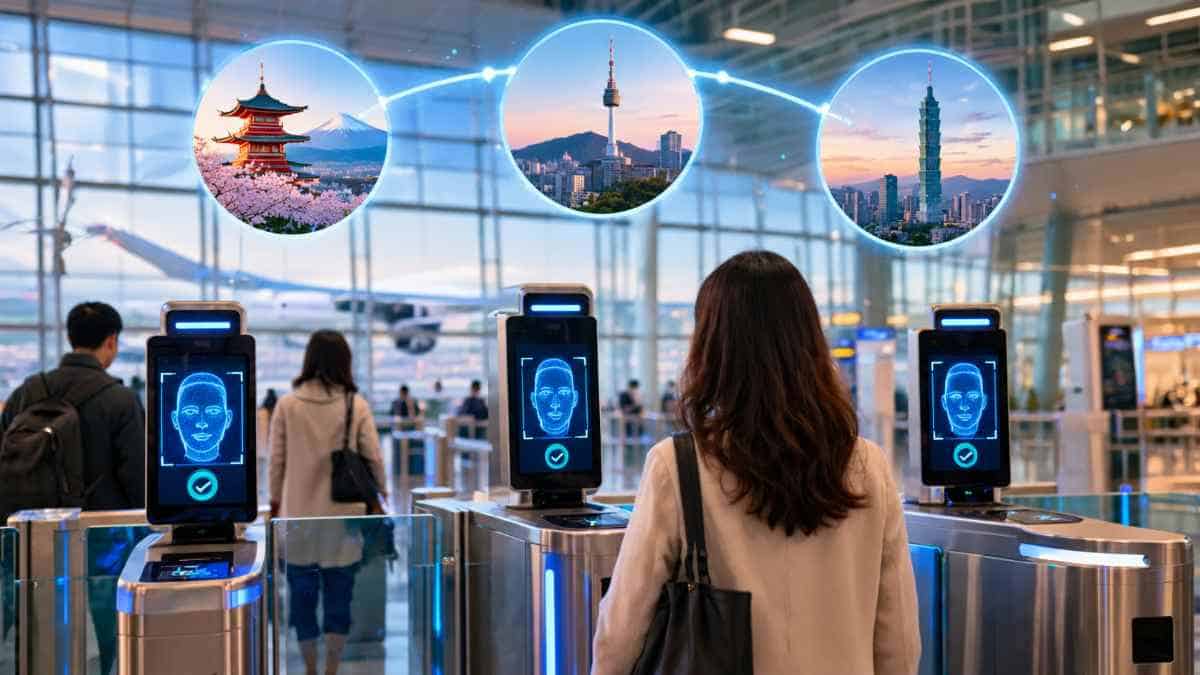
Japan Unites With South Korea and Taiwan to Set Up a New Biometric Transit Corridor. A biometric transit system is to be implemented by Tokyo, Seoul and Taipei starting on 25 October 2026, allowing Japan, South Korea and Taiwan to share a paperless passenger processing system applicable to designated transpacific air routes between the three states. Through this agreement, which involves the relevant civil aviation and border management departments, an effort will be made to facilitate connectivity for international passengers who travel through these Northeast Asian aviation centres. According to the plan, passengers who use designated national airlines and have undergone biometric check-up in Tokyo, Seoul or Taipei will automatically be granted transit permission in all partner hubs. This system will facilitate the process of transit since there will be no need to go through any security checks and baggage re-checks while transferring from one service to another. In terms of tourism, the above development will allow for easier inclusion of more than one East Asian destination in an international trip.
Tokyo, Seoul and Taipei Strengthen Regional Connectivity
Japan, South Korea and Taiwan occupy important positions in the Northeast Asian travel market, with their principal international airports serving as gateways for visitors arriving from North America and other transpacific markets.
Tokyo’s Haneda and Narita airports provide access to Japan’s major tourism centres, including Kyoto, Osaka, Hokkaido and the Mount Fuji region. Seoul’s Incheon International Airport connects international passengers with the South Korean capital, Busan, Jeju Island and other destinations across the country. Taipei’s Taoyuan International Airport serves as a principal gateway to Taiwan, providing access to Taipei, Taichung, Tainan and the island’s eastern coastline.
The proposed biometric arrangement would connect these established aviation gateways through a common transit procedure. Travellers arriving through one participating hub could transfer to another partner hub without undergoing the same secondary screening and baggage re-checking procedures currently associated with certain connecting itineraries.
A New Option for Multi-Destination Holidays
The arrangement could be particularly relevant to visitors planning holidays across several East Asian destinations. Instead of organising separate journeys with additional airport formalities, eligible passengers could potentially combine stays in Japan, South Korea and Taiwan through participating connecting services.
A visitor travelling from the United States, for example, could plan an itinerary beginning in Tokyo, continuing to Seoul and concluding in Taipei before returning across the Pacific. Such an itinerary would offer access to three distinct tourism markets, with opportunities to experience Japanese cultural heritage, South Korean urban attractions and Taiwan’s food, heritage and natural landscapes.
In Japan, visitors could combine Tokyo’s metropolitan attractions with Kyoto’s historic districts and Osaka’s culinary scene. In South Korea, Seoul offers royal palaces, shopping districts and cultural attractions, while Busan provides coastal experiences. Taiwan offers a different travel experience through Taipei’s night markets, traditional temples and access to mountain landscapes.
The proposed transit arrangement would concern eligible airport connections rather than replace the need to plan accommodation, domestic transport and individual destination visits.
Transpacific Travellers and Airport Transfers
The agreement is also designed to support passengers travelling between North America and Northeast Asia. Tokyo, Seoul and Taipei are important connecting points for international air services, making transfer procedures relevant to both leisure and business travellers.
For long-haul visitors, reducing repeated airport screening and baggage handling could make connecting journeys more convenient. Families travelling with children, older passengers and tourists carrying multiple pieces of luggage could also benefit from fewer transfer procedures, provided their flights fall within the participating network.
However, the proposed arrangement would apply to eligible passengers and participating national carriers rather than every airline operating through the three airports. Travellers would therefore need to check carrier participation, connecting-flight eligibility and the applicable airport procedures before booking.
Implementation Scheduled for 25 October
The proposed paperless transit agreement is due to become effective on 25 October 2026. With its introduction, the three border management and aviation systems in question will be involved in a common system of pre-screening of the passengers and subsequent transit clearance. The initiative pertains to the process of transit at the airports and does not imply a general easing of the terms of migration and visa policies. The travellers will have to meet all the conditions of entry into the destination country in addition to those pertaining to the travel itself. Additional information about the procedure of operation of the system, including the airlines involved and the routes covered by it, will be useful for the passengers who plan to make a stopover in Tokyo, Seoul, and Taipei.
The post Japan Unites With South Korea and Taiwan to Set Up a New Biometric Transit Corridor appeared first on Travel And Tour World.
