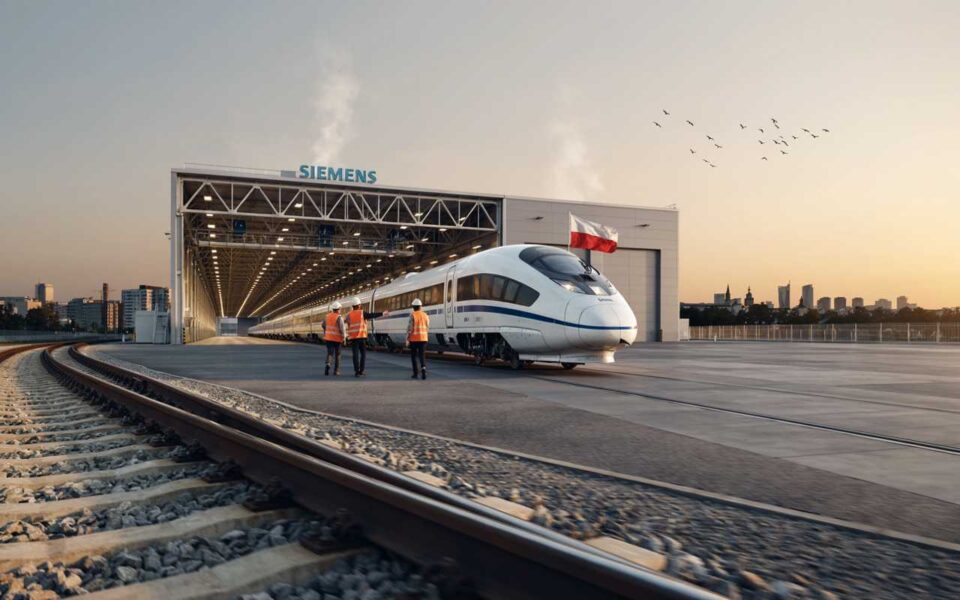
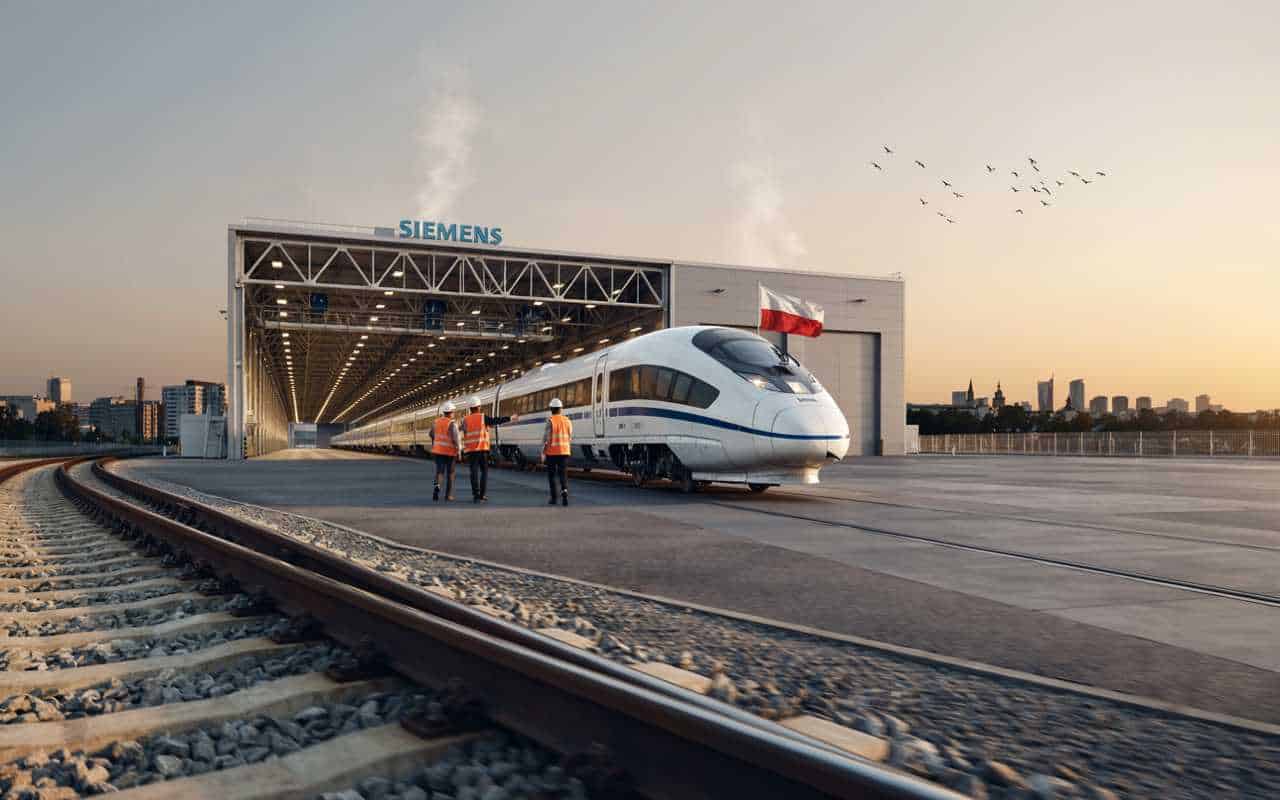
Siemens Mobility is opening its first Central and Eastern European maintenance plant. The 4,300 m2 plant will be finished in 2027 and improve leased locomotives maintenance service times and increase availability. Sustainable transport systems and components are prominent in almost all transport system developments.
This new rail maintenance plant will address the needs of international freight and passenger service operators competing to provide the safest and most reliable services. It will provide more advanced services that use technology for predictive and preventive maintenance, thus improving on the available services.
This service center will provide modern rail maintenance systems to Polish and international competitors.
Siemens Mobility leases locomotives that cannot fulfill customer needs in the region. This is the first service center in the development of the European service center networks, and is built in Poland to serve the region’s customers.
Siemens Mobility’s Central European service center in Poland completes the service networks for this region and fulfills client demands for more sophisticated and advanced services for company locomotives.
Siemens Chooses Poznań Region for Strategic European Rail Expansion
The location of the new facility is highly significant. Gądki, situated near Poznań in the Wielkopolska Voivodeship, places the service centre within one of Poland’s most important transport and industrial regions.
Poland has become a crucial railway market connecting Western Europe with Central and Eastern Europe. Its geographic position allows freight and passenger routes to link Germany, the Czech Republic, Slovakia, Baltic countries and wider European corridors.
The new Siemens centre is expected to provide maintenance services for locomotives operating throughout Poland and neighbouring markets.
The facility will include:
- Capacity for up to seven locomotives simultaneously
- Around five kilometres of electrified tracks
- Advanced maintenance equipment
- An underfloor wheel lathe
- A dropping table for locomotive components
- A dedicated testing area
- Digital fleet management systems powered by Railigent X
This combination of physical infrastructure and digital technology reflects a changing railway industry where maintenance is becoming increasingly data-driven.
Instead of waiting for equipment failures, operators are increasingly turning towards predictive maintenance systems that analyse performance data, identify potential issues, and reduce unexpected downtime.
For railway operators, availability is one of the most important measurements of success. A locomotive that remains operational generates value, while unexpected repairs can disrupt passenger services, freight schedules, and supply chains.
The 2027 Opening Signals a New Era for European Rail Maintenance
The planned 2027 opening of the Gądki Rail Service Centre comes during a period of major transformation across European transport.
Governments and transport companies across Europe are investing heavily in rail as part of wider decarbonisation and connectivity strategies. Rail remains one of the key solutions for reducing dependence on road transport and supporting lower-emission mobility.
However, expanding rail networks requires more than new trains and railway lines. Maintenance capacity must also grow alongside fleet expansion.
This is where Siemens’ new Polish centre creates a new strategic advantage.
Many railway discussions focus on new high-speed routes, modern trains, and passenger experience. However, what others are missing is the importance of the behind-the-scenes infrastructure that keeps trains moving every day.
A modern rail service centre acts as the operational backbone of a railway network.
Without efficient maintenance facilities, even advanced locomotives can face delays, reduced availability, and higher operating costs.
The Gądki facility aims to address this challenge by bringing more service capabilities closer to customers in Central and Eastern Europe.
According to Siemens Mobility, the centre will provide a broad range of services, including:
- Scheduled locomotive inspections
- Safety system maintenance
- Heavy maintenance operations
- Major overhauls
- Technical modifications
- Accident repairs
- Mobile service support
This wide capability range means operators will have access to both routine and complex maintenance solutions from one location.
Poland’s Railway Ambition Meets Siemens Digital Technology
The new service centre will operate using Siemens Mobility’s Railigent X digital platform, which provides data-based asset management solutions for railway fleets.
Railigent X enables operators to monitor equipment performance, analyse operational data, and support more efficient maintenance decisions.
The introduction of digital railway management tools represents one of the biggest changes in the global rail sector.
Traditional maintenance models often depended heavily on fixed schedules and manual inspections. Digital systems now allow railway companies to understand the real condition of equipment through continuous monitoring.
This creates opportunities to:
- Reduce unnecessary maintenance activities
- Identify technical issues earlier
- Improve locomotive reliability
- Increase fleet availability
- Optimise spare-parts management
Siemens currently supports hundreds of locomotives annually in Poland, including its Vectron, Taurus and BR189-F4 vehicles.
The company employs more than 60 specialists in Poland who already provide maintenance support for railway operators.
The new facility will expand these existing capabilities and create a larger regional service network.
The investment also strengthens Siemens Mobility’s wider European strategy. The company operates more than 130 service locations across over 30 countries, combining international expertise with local technical support.
The Polish centre will become another important link in that network.
Why This Rail Investment Matters Beyond Locomotives
At first glance, a locomotive maintenance facility may appear to have limited relevance outside the railway industry. However, the impact extends much further.
Rail infrastructure directly influences trade, tourism, business travel, and regional economic development.
Reliable rail connections make destinations easier to access, support industrial supply chains, and encourage more sustainable movement between cities.
For travellers, improved railway reliability can mean fewer disruptions, better connections, and stronger confidence in choosing rail over alternative transport options.
For businesses, efficient freight rail services can improve logistics performance and strengthen regional competitiveness.
The Gądki centre therefore represents more than a technical investment. It is part of a wider European movement towards smarter, cleaner, and more resilient transport networks.
The project is being supported by regional partners, including:
- The Marshal’s Office of the Wielkopolska Voivodeship
- The Municipality of Kórnik
- The Zakłady Kórnickie Foundation
Their involvement highlights the importance of cooperation between international companies and local institutions in developing modern transport infrastructure.
What Others Are Missing About Poland’s Rail Transformation
The biggest story behind Siemens’ announcement is not only the construction of a new building.
The deeper trend is Poland’s growing role as a strategic centre for European mobility.
While many countries compete to attract technology companies and manufacturing investment, Poland is increasingly positioning itself as a key location for transport innovation and industrial services.
The new Siemens Rail Service Centre demonstrates how maintenance, digitalisation, and regional connectivity are becoming closely linked.
The railway sector of the future will not only be defined by faster trains. It will be shaped by smarter systems that ensure those trains operate efficiently every day.
The Gądki project shows that the next major railway advantage may come from service infrastructure rather than only from new rolling stock.
Central Europe’s Railway Competition Is Moving From Tracks to Service Networks
Europe’s railway transformation is entering a new phase where operational efficiency, digital intelligence and maintenance capacity are becoming as important as new routes and modern trains.
The construction of Siemens Mobility’s new Rail Service Centre in Gądki near Poznań highlights this changing landscape. The project is expected to strengthen railway operations across Central and Eastern Europe by creating a local base for locomotive maintenance, repairs and technology-driven fleet management.
For railway operators, the location of service infrastructure can directly influence performance. A locomotive requiring major repairs cannot support passenger or freight services while waiting for distant maintenance support. By placing advanced capabilities closer to customers, Siemens aims to reduce service complexity and improve response times.
The centre will also support the broader European shift towards sustainable mobility. As governments encourage greater use of rail for passenger journeys and freight transport, the demand for reliable rolling stock maintenance is expected to increase.
The railway industry is often measured by visible achievements such as new stations, high-speed trains and expanded networks. However, the hidden infrastructure behind these developments determines whether rail systems can deliver consistent performance.
This is the angle many discussions overlook.
The future of European rail will depend not only on how many trains are introduced, but also on how effectively those trains are maintained throughout their lifecycle.
Gądki Facility Creates New Maintenance Powerhouse in Poland
The Siemens Rail Service Centre will introduce a significant increase in Poland’s locomotive maintenance capabilities.
The facility is planned as a comprehensive service location capable of handling both light and heavy maintenance requirements.
Key planned capabilities include:
- Routine inspections and servicing
- Safety system checks
- Fleet modifications
- Major locomotive overhauls
- Accident repair support
- Mobile maintenance solutions
The centre will be equipped to handle up to seven locomotives at the same time, supported by approximately five kilometres of electrified tracks.
This infrastructure allows Siemens to provide a wider range of technical services from one location rather than relying on multiple smaller facilities.
The project also reflects the growing importance of lifecycle management in the railway sector.
Modern locomotives represent significant investments, and operators increasingly focus on extending asset lifespan through efficient maintenance strategies.
A well-maintained locomotive can remain operational for decades, making service infrastructure a long-term economic asset.
The new Polish facility will therefore play a role not only in immediate repairs but also in protecting the value of railway fleets over time.
Poland’s Rail Position Strengthens Across European Transport Corridors
Poland’s geographical position makes it an important link between Western and Eastern Europe.
The country connects major transport routes between Germany, the Baltic region, Central Europe and markets further east.
Rail freight operators rely heavily on efficient connections through Poland, while passenger services continue to expand between European cities.
The Siemens investment adds another layer to this transport ecosystem.
| Feature | Siemens Rail Service Centre Poland | Impact on European Rail |
|---|---|---|
| Location | Gądki near Poznań, Poland | Strengthens Central European connectivity |
| Opening timeline | 2027 | Adds future maintenance capacity |
| Facility size | 4,300 square metres | Creates dedicated regional service infrastructure |
| Locomotive capacity | Up to seven locomotives simultaneously | Supports multiple customer operations |
| Track infrastructure | Around five kilometres of electrified tracks | Enables testing and maintenance activities |
| Technology platform | Railigent X | Supports digital fleet management |
| Maintenance scope | Light and heavy maintenance | Covers full lifecycle support |
| Sustainability target | Carbon-neutral operation | Supports greener transport development |
The centre’s carbon-neutral operating goal also reflects the wider direction of the railway sector.
Rail is already considered one of the more environmentally efficient transport modes, but companies are increasingly focusing on reducing emissions throughout the entire railway supply chain.
This includes manufacturing, maintenance operations and energy consumption.
Siemens Investment Highlights The Rise of Digital Rail Management
One of the most important elements of the new facility is not visible from outside the building.
It is the digital infrastructure.
Railigent X will support operations at the centre by enabling advanced monitoring and management of railway assets.
Digital railway technology is changing how operators approach maintenance.
Instead of responding only after failures occur, companies can increasingly use operational data to identify possible problems earlier.
This approach can improve reliability and reduce disruption.
For passenger operators, better maintenance can contribute to smoother journeys and improved confidence in rail services.
For freight operators, it can help maintain delivery schedules and reduce costly interruptions.
The digital transformation of rail is also creating demand for new technical skills.
Engineers working in modern service centres require expertise across traditional mechanical systems and advanced digital platforms.
The Siemens facility will build on Poland’s existing railway workforce while expanding opportunities in specialised railway services.
A Wider Economic Impact Beyond Railway Operations
Although the project is focused on locomotive maintenance, its impact extends into the wider economy.
Large infrastructure investments often create opportunities for local suppliers, engineering companies and technical service providers.
The Gądki facility is expected to strengthen the regional industrial ecosystem around Poznań and Wielkopolska.
The partnership between Siemens Mobility and local institutions demonstrates how international investment can combine with regional development strategies.
The supporting organisations include the Marshal’s Office of the Wielkopolska Voivodeship, the Municipality of Kórnik and the Zakłady Kórnickie Foundation.
Such cooperation can help create stronger connections between global technology companies and local economic networks.
For tourism and travel sectors, improved rail reliability can also have indirect benefits.
European travellers increasingly use rail for city breaks, cross-border journeys and sustainable travel experiences.
Reliable connections between major destinations support tourism flows, business travel and regional accessibility.
A stronger maintenance network can therefore contribute to a more dependable European travel environment.
What Others Are Doing as Europe Builds Smarter Rail Infrastructure
Across Europe, railway companies are investing in maintenance capacity, digital systems and fleet modernisation.
However, the competition is no longer only about building new railway lines.
The next generation of transport leaders will likely be determined by operational intelligence.
Countries with strong maintenance ecosystems can support more reliable services, attract investment and improve connectivity.
Siemens’ decision to establish its first Rail Service Centre in Poland shows how Central Europe is becoming increasingly important in the company’s service strategy.
The project also demonstrates a broader industry lesson.
A railway network is only as strong as the systems supporting its daily operation.
Stations may attract passengers. New trains may attract attention. But maintenance centres keep the entire network moving.
Editorial Perspective Travel Analytics Why This Story Matters
From a travel analytics perspective, the Siemens Rail Service Centre in Poland represents a significant development in Europe’s mobility infrastructure.
The travel industry is increasingly influenced by transport reliability, sustainability targets and passenger expectations for seamless connections.
While aviation remains essential for long-distance travel, rail continues to gain importance for regional and intra-European journeys.
A stronger maintenance ecosystem can support more dependable rail services, which directly affects traveller confidence.
The editorial takeaway is clear: the future of European mobility will not be shaped only by destinations and routes. It will also depend on the technical foundations that keep those connections operating.
Poland’s new Siemens facility demonstrates how behind-the-scenes infrastructure is becoming a critical factor in travel growth, economic movement and sustainable connectivity.
The railway story of tomorrow is not only about where trains go.
It is also about what keeps them running.
Conclusion
The Rail Service Center in Gadki improves rail services across Central and Eastern Europe.
Siemens Mobility’s new rail service model lets them park up to 7 of their locomotives and maintain the latest technologies and tools, such as Railigent X, in their 4,300 sq. m facility.
Siemens Mobility also now has the opportunity to offer a wider range of services to their customers in Poland, and can open a central service facility.
Often transport infrastructure is ignored as focus is placed on improving the layer of transport systems.
Addition of new transport and transport ways fosters the installation of new transport systems.
In Europe, transport and mobility systems aim to foster clean transport, intelligent and adaptable transport systems, plus smart sustainable transport systems.
Gadkiis one of the first railway service centers to adopt these principles.
It uses the concepts of availability, intelligence, flexibility, and sustainability to provide advanced railway services and infrastructures to both freight and passenger transport.
One of the many new standards is high speed transport.
The post Poland Gains Siemens Rail Powerhouse as New Poznań Hub Targets Europe’s Next Mobility Era in 2026 appeared first on Travel And Tour World.
