
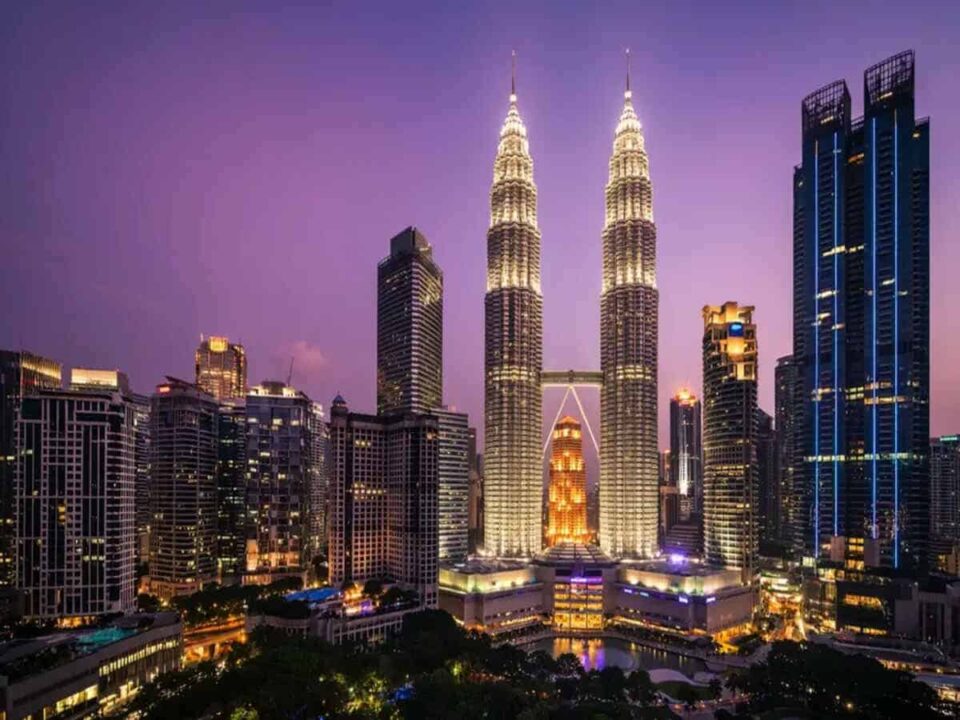

Malaysia teams up with Indonesia and more as food, islands and heritage give Southeast Asia a powerful reason to return. Malaysia teams up with Indonesia through a wider Southeast Asia travel story, where food, islands and heritage create memorable journeys. Moreover, repeat-visit favourites across Southeast Asia continue attracting travellers seeking new experiences. From Malaysia’s celebrated food to Indonesia’s spectacular islands, every journey can reveal something different. Heritage adds another layer, connecting visitors with fascinating cultures and historic places. Travel And Tour World explores why Malaysia, Indonesia and more are becoming repeat-visit favourites. Read the entire story to discover the destinations, experiences and travel ideas shaping Southeast Asia’s evolving holiday appeal.
Southeast Asia’s Most Visited Countries: Detailed Statistics, Destinations and Traveller Guide
For travellers planning a Southeast Asian holiday, visitor numbers provide useful context about the region’s most established international destinations.
Thailand recorded the largest number of international tourist arrivals among ASEAN destinations in 2024, with 35.5 million visitors.
Malaysia followed with 25.0 million, while Vietnam recorded 17.5 million.
Indonesia and Singapore completed the top five with 13.4 million and 12.4 million respectively.
These figures come from the ASEAN Tourism Outlook using UN Tourism data and provide the most useful like-for-like regional comparison currently available.
However, Malaysia reports a broader visitor measure domestically.
Tourism Malaysia counted 37.96 million international visitor arrivals in 2024 and 42.2 million in 2025.
That broader measure includes visitors beyond overnight tourists, so it should not be directly compared with the UN Tourism-based tourist-arrival figures without qualification.
For global travellers, the statistics reveal something more useful than a simple ranking.
Each destination offers a different combination of beaches, heritage, food, nature, cities, wellness and adventure.
Southeast Asia’s International Tourism Leaders at a Glance
| Rank in 2024 | Destination | International tourist arrivals, 2024 | 2025 national figure | Main travel strengths |
|---|---|---|---|---|
| 1 | Thailand | 35.5 million | 32.97 million | Beaches, islands, food, culture, wellness |
| 2 | Malaysia | 25.0 million | 42.2 million international visitors* | Cities, food, islands, heritage, nature |
| 3 | Vietnam | 17.5 million | 21.2 million | Heritage, cuisine, beaches, mountains |
| 4 | Indonesia | 13.4 million | 15.39 million | Bali, culture, islands, nature, wellness |
| 5 | Singapore | 12.4 million | 16.9 million | City breaks, food, shopping, attractions |
| 6 | Cambodia | 6.7 million | 5.57 million | Angkor, heritage, culture |
| 7 | Philippines | 5.4 million | — | Beaches, diving, islands, adventure |
| 8 | Laos | 3.9 million | 4.58 million | Mekong, temples, nature, slow travel |
| 9 | Myanmar | 1.1 million | — | Heritage and cultural tourism |
| 10 | Brunei | 0.3 million | — | Rainforest, Islamic heritage, quiet escapes |
*Malaysia’s 2025 figure is a broader international visitor-arrival measure rather than the UN Tourism-style overnight tourist measure used in the 2024 ASEAN comparison. The figures therefore should not be interpreted as a direct year-on-year ranking.
Five-Year Visitor Comparison: Thailand, Malaysia, Vietnam, Indonesia and Singapore
| Country | 2021 | 2022 | 2023 | 2024 | 2025 |
|---|---|---|---|---|---|
| Thailand | 427,869 | 11,153,026 | 28,150,016 | 35,545,714 | 32.97 million |
| Malaysia | 399,865* | 14,267,416* | 28,964,308* | 37,961,485* | 42.2 million* |
| Vietnam | Pandemic restrictions | 3.66 million | 12.6 million | 17.6 million | 21.2 million |
| Indonesia | ~1.5 million | 5.89 million | ~11.68 million | 13.9 million | 15.39 million |
| Singapore | 330,000 | 6.3 million | ~13.6 million | 16.5 million | 16.9 million |
*Malaysia’s series uses Tourism Malaysia’s broader visitor-arrival measure from 2021 onward, rather than only overnight tourist arrivals. Tourism Malaysia reported 399,865 visitor arrivals in 2021, 14.27 million in 2022, 28.96 million in 2023 and 37.96 million in 2024.
Thailand’s official statistical series shows 427,869 international tourist arrivals in 2021, 11.07 million in 2022, 28.15 million in 2023 and 35.55 million in 2024. Thailand then recorded 32.97 million international arrivals in 2025.
Vietnam recorded 3.66 million international arrivals in 2022 and 12.6 million in 2023. It reached approximately 17.6 million in 2024 and nearly 21.2 million in 2025.
Singapore reported 330,000 international visitor arrivals in 2021 and 6.3 million in 2022. Arrivals subsequently recovered to around 13.6 million in 2023, 16.5 million in 2024 and 16.9 million in 2025.
Indonesia’s official statistical system recorded a sharp post-pandemic recovery, from roughly 1.5 million foreign arrivals in 2021 to 5.89 million in 2022. The country reached about 13.9 million in 2024, while the 2025 BPS publication records the year’s international visitor dataset.
Thailand: Southeast Asia’s Largest International Tourist Market
Thailand remains the region’s largest destination when measured through comparable international tourist arrivals.
The country’s official statistics recorded 35,545,714 international tourist arrivals in 2024.
The figure represented a major recovery from 427,869 arrivals in 2021 and 11,153,026 in 2022.
Arrivals reached 28,150,016 in 2023 before crossing 35 million in 2024.
In 2025, the total eased to 32.97 million, according to the Tourism Authority of Thailand’s year-end assessment.
For travellers, Thailand’s strength lies in its geographic variety.
Bangkok works well for a first city break, with temples, markets, contemporary shopping and a large restaurant scene.
Northern Thailand offers Chiang Mai and Chiang Rai for temples, mountain landscapes and cultural experiences.
Southern Thailand provides Phuket, Krabi, Koh Samui and other islands for beach holidays, diving and water activities.
Travellers interested in history can add Ayutthaya or Sukhothai.
Food is another major attraction.
Visitors can look for pad Thai, tom yum, green curry, som tam, mango sticky rice and regional northern dishes.
For accommodation, Bangkok’s Sukhumvit, riverside and historic areas suit different travel styles.
In Chiang Mai, the Old City and riverside areas provide convenient bases.
Beach travellers can choose accommodation around Phuket, Krabi, Koh Samui or smaller islands according to the type of holiday desired.
A practical 10-day plan could begin with three nights in Bangkok, followed by two nights in Chiang Mai and four nights in a southern beach destination.
The final night can be spent near the departure airport or in Bangkok.
Thailand’s official tourism strategy is also increasingly highlighting wellness, gastronomy, nature, sports and niche travel experiences rather than relying only on conventional sightseeing.
Malaysia: A Multi-Region Destination for Repeat Travellers
Malaysia requires special attention because its visitor statistics are measured differently from several neighbouring countries.
Tourism Malaysia recorded 37,961,485 international visitor arrivals in 2024.
The same official series shows 399,865 in 2021, 14,267,416 in 2022 and 28,964,308 in 2023.
The 2024 figure represented a 31.1 per cent increase from 2023.
Tourism Malaysia subsequently reported 42.2 million international visitor arrivals in 2025.
These figures help explain why Malaysia is central to the repeat-visitor story, although the broader visitor definition must be kept separate from overnight tourist statistics.
For a first visit, Kuala Lumpur provides an easy introduction.
Travellers can explore the Petronas Twin Towers, central markets, heritage districts, mosques, museums and the city’s extensive food scene.
Penang provides a different experience through George Town’s heritage character and culinary traditions.
Langkawi adds beaches, island activities and nature.
Melaka works well for travellers interested in history and architecture.
Sabah and Sarawak are better suited to visitors looking for rainforest, wildlife and indigenous cultural experiences.
Tourism Malaysia’s 2023 tourist profile found city sightseeing, shopping and local cuisine among the most common activities.
It reported that 82.3 per cent of surveyed tourists engaged in city sightseeing, while 72.4 per cent went shopping and 45.5 per cent experienced local cuisine.
Heritage visits accounted for 25.6 per cent, while water activities represented 13.3 per cent.
For food, travellers should consider nasi lemak, char kway teow, roti canai, laksa, satay and regional dishes.
A 10-day itinerary could include three nights in Kuala Lumpur, two nights in Penang, three nights in Langkawi and two nights in Melaka or another mainland destination.
Travellers wanting nature can replace Melaka with Sabah or Sarawak.
For accommodation, Kuala Lumpur’s Bukit Bintang and KLCC areas are convenient for first-time visitors.
George Town suits heritage-focused travellers, while Langkawi’s beach areas work well for longer island stays.
Tourism Malaysia’s current destination strategy also promotes Malaysia’s combination of cultural diversity, food, heritage and nature.
Vietnam: From Heritage Cities to Mountains and Beaches
Vietnam has recorded one of Southeast Asia’s strongest tourism recoveries.
The country welcomed approximately 3.66 million international visitors in 2022.
Arrivals increased to 12.6 million in 2023 and approximately 17.6 million in 2024.
In 2025, international arrivals reached nearly 21.2 million, surpassing the country’s previous annual record.
The official Vietnam tourism authority attributes the recovery to reopened borders, expanded air connectivity, tourism promotion and more flexible visa arrangements.
Vietnam works particularly well for travellers who want several types of holiday in one journey.
Hanoi provides a strong introduction to northern Vietnamese culture, street food and historic neighbourhoods.
Ha Long Bay adds a dramatic coastal landscape.
Ninh Binh offers limestone scenery, waterways and rural landscapes.
Central Vietnam brings together Hue, Hoi An and Da Nang.
Ho Chi Minh City provides a faster-paced southern experience.
The Mekong Delta adds river-based travel and agricultural landscapes.
Food can easily become part of the itinerary.
Travellers should consider pho, banh mi, bun cha, cao lau, fresh spring rolls and regional seafood.
For accommodation, Hanoi’s Old Quarter is practical for first-time city visitors.
Hoi An’s old town area works well for travellers wanting heritage and evening experiences.
Da Nang provides a convenient beach base.
Ho Chi Minh City’s District 1 offers easy access to major urban attractions.
A 12-day journey could include three nights in Hanoi, two nights in Ninh Binh or Ha Long Bay, three nights in central Vietnam and four nights around Ho Chi Minh City and the Mekong Delta.
Vietnam’s tourism authorities have also promoted rural and agricultural tourism, creating options for travellers who want to move beyond the country’s most famous cities.
Indonesia: An Island Nation Built for Longer Holidays
Indonesia welcomed approximately 13.9 million international tourists in 2024.
The country had already recovered strongly from the pandemic, rising from around 1.5 million foreign visitors in 2021 to 5.89 million in 2022.
The 2025 government target was between 14.6 million and 16 million international tourists, with the BPS statistical system subsequently publishing its complete 2025 international visitor dataset.
Indonesia’s greatest travel advantage is its scale.
Bali remains the best-known international gateway, but travellers can create very different holidays elsewhere.
Yogyakarta combines heritage with Javanese culture and access to major archaeological sites.
Jakarta offers a large-city experience.
Lombok provides beaches and outdoor activities.
Labuan Bajo is associated with Komodo National Park and marine experiences.
Lake Toba provides a completely different northern Indonesian landscape.
Borobudur, Mandalika, Labuan Bajo and Likupang are among destinations promoted through Indonesia’s priority tourism programme.
Food varies dramatically by region.
Travellers can try nasi goreng, rendang, satay, gado-gado, soto and regional seafood.
In Bali, accommodation around Ubud suits culture and wellness travellers, while southern coastal areas suit beach holidays.
Yogyakarta’s central districts are useful for heritage-focused stays.
For an 11-day itinerary, travellers could spend four nights in Bali, three nights in Yogyakarta and four nights around Lombok or another island.
Travellers wanting wildlife can instead use Labuan Bajo as the second major base.
Indonesia is particularly suitable for repeat visitors because changing islands can completely alter the character of a holiday.
Singapore: Compact City, High-Value Experiences
Singapore recorded 330,000 international visitor arrivals in 2021.
The number rose to 6.3 million in 2022, followed by a strong recovery in subsequent years.
International visitor arrivals reached 16.5 million in 2024 and 16.9 million in 2025.
The Singapore Tourism Board reported that Mainland China, Indonesia, Malaysia, Australia and India were the five largest visitor markets in 2025.
Singapore is different from the larger Southeast Asian destinations because the country can be explored in a relatively short stay.
Travellers can combine Marina Bay, Gardens by the Bay, Sentosa, Chinatown, Little India and Kampong Gelam.
Food is a central part of the experience.
Visitors can seek out chicken rice, laksa, chilli crab, satay, kaya toast and other hawker-centre dishes.
For accommodation, Marina Bay suits travellers seeking proximity to major landmarks.
Orchard Road works well for shopping-focused visitors.
Bugis and the city-centre districts provide convenient access to cultural neighbourhoods.
A four-day itinerary can cover the principal attractions.
A fifth day allows more time for museums, neighbourhood exploration, Sentosa or additional food experiences.
Singapore is also useful as a regional gateway.
Travellers can combine it with Malaysia, Indonesia, Thailand or Vietnam to create a multi-country Southeast Asian journey.
The Wider ASEAN Visitor Picture
| Country | 2024 international tourist arrivals | Share of ASEAN’s listed 2024 arrivals* | Traveller profile |
|---|---|---|---|
| Thailand | 35.5m | ~28.5% | Beaches, culture, food |
| Malaysia | 25.0m | ~20.1% | Food, cities, islands |
| Vietnam | 17.5m | ~14.1% | Heritage, food, landscapes |
| Indonesia | 13.4m | ~10.8% | Islands, nature, culture |
| Singapore | 12.4m | ~10.0% | City, food, shopping |
| Cambodia | 6.7m | ~5.4% | Heritage, temples |
| Philippines | 5.4m | ~4.3% | Islands, diving |
| Laos | 3.9m | ~3.1% | Culture, nature |
| Myanmar | 1.1m | ~0.9% | Heritage, culture |
| Brunei | 0.3m | ~0.2% | Rainforest, heritage |
*Calculated from the ASEAN Tourism Outlook’s 2024 figures for the ten ASEAN destinations listed in the source.
The figures demonstrate how concentrated international tourism remains among a handful of Southeast Asian destinations.
Thailand alone recorded more international tourist arrivals in 2024 than the Philippines, Laos, Myanmar and Brunei combined.
Malaysia, Vietnam, Indonesia and Singapore form the next major group.
Cambodia occupies another important niche because of its globally recognised cultural heritage.
The Philippines is particularly attractive to travellers focused on beaches, diving and island adventures.
Laos provides a quieter alternative for visitors interested in temples, rivers and slower journeys.
Cambodia: The Heritage-Focused Choice
Cambodia welcomed approximately 6.7 million international tourist arrivals in 2024.
The country’s tourism identity remains strongly connected with Angkor and Siem Reap.
Travellers can spend several days exploring temple complexes before moving towards Phnom Penh.
The capital offers museums, markets, riverfront experiences and Cambodian cuisine.
Kampot and the southern coast provide a slower alternative for travellers with additional time.
Food-focused visitors can try amok, lok lak, kuy teav and Cambodian curries.
A practical seven-day journey could include three nights in Siem Reap, two nights in Phnom Penh and two nights around Kampot or another southern destination.
For accommodation, Siem Reap’s central areas are convenient for temple visits.
Phnom Penh’s riverside and central districts provide easy access to urban attractions.
Cambodia is especially suitable for travellers who want cultural depth rather than a conventional beach holiday.
Philippines: Islands, Diving and Coastal Escapes
The Philippines recorded approximately 5.4 million international tourist arrivals in 2024.
The country’s official tourism department promotes destinations ranging from Boracay and Bohol to Cebu, Coron, El Nido, Siargao and Davao.
This makes the Philippines particularly relevant for island-focused travellers.
Boracay is suited to beach holidays.
Palawan offers island scenery and marine experiences.
Cebu combines beaches, diving and urban travel.
Bohol provides beaches alongside cultural and natural attractions.
Siargao has become particularly associated with surfing and relaxed island travel.
Travellers can plan a 10-day trip around two or three islands rather than attempting to cover too much territory.
Seafood, adobo, sinigang, pancit and lechon are among the foods visitors can seek out.
For accommodation, travellers should choose bases according to flight and ferry connections because island transfers can consume substantial travel time.
The Philippine Department of Tourism provides destination information covering regions from Luzon to Visayas and Mindanao.
Laos: A Slower Southeast Asian Journey
Laos recorded approximately 3.9 million international tourist arrivals in 2024.
The country offers a contrasting travel rhythm compared with Thailand and Singapore.
Luang Prabang is the main cultural base for many international visitors.
Vientiane provides a quieter capital-city experience.
The Mekong River and surrounding countryside offer opportunities for slower exploration.
Travellers can combine temples, markets, river journeys and outdoor experiences.
Laotian cuisine includes dishes such as larb, sticky rice, khao piak sen and grilled meats.
A six-day itinerary can include three nights in Luang Prabang and three nights in Vientiane, with additional time for nature excursions if transport allows.
The destination suits travellers looking for cultural immersion and less intensive sightseeing.
What the Five-Year Numbers Tell Travellers
| Country | Pandemic-era low point shown | Recovery milestone | Latest full-year figure available |
|---|---|---|---|
| Thailand | 427,869 in 2021 | 35.55m in 2024 | 32.97m in 2025 |
| Malaysia | 399,865 in 2021 | 37.96m in 2024 | 42.2m in 2025 |
| Vietnam | 3.66m in 2022 | 17.6m in 2024 | 21.2m in 2025 |
| Indonesia | ~1.5m in 2021 | 13.9m in 2024 | 15.39m in 2025 |
| Singapore | 330,000 in 2021 | 16.5m in 2024 | 16.9m in 2025 |
The recovery pattern is striking.
Thailand moved from fewer than half a million international tourist arrivals in 2021 to more than 35 million three years later.
Vietnam went from 3.66 million in 2022 to almost 21.2 million in 2025.
Singapore moved from 330,000 arrivals in 2021 to 16.9 million in 2025.
Malaysia’s broader visitor count rose from 399,865 in 2021 to 42.2 million in 2025.
Indonesia also moved from approximately 1.5 million international arrivals in 2021 to more than 13 million in 2024 and above 15 million in 2025.
A 21-Day Southeast Asia Travel Plan
Travellers with three weeks can combine several leading destinations rather than staying in one country.
| Days | Destination | Main experience |
|---|---|---|
| 1–4 | Bangkok | Temples, markets, food, city life |
| 5–7 | Chiang Mai | Culture, mountains, markets |
| 8–11 | Kuala Lumpur | Architecture, food, shopping |
| 12–14 | Penang | Heritage and cuisine |
| 15–17 | Singapore | City attractions and hawker food |
| 18–21 | Bali | Beaches, culture and wellness |
This route works best for travellers who want variety.
It combines large cities, heritage areas, food destinations and an island finale.
Travellers wanting more nature can replace Singapore with Sabah, Sarawak, Laos or northern Vietnam.
Travellers seeking beaches can extend Bali or add Thailand’s southern islands.
How Travellers Can Choose Between Southeast Asia’s Leading Destinations
| If you want… | Consider |
|---|---|
| Major beaches and islands | Thailand, Indonesia, Philippines |
| Food-focused travel | Malaysia, Thailand, Vietnam, Singapore |
| Heritage | Thailand, Vietnam, Cambodia, Malaysia |
| City breaks | Singapore, Bangkok, Kuala Lumpur, Ho Chi Minh City |
| Mountains | Vietnam, Thailand, Malaysia, Indonesia |
| Diving | Philippines, Indonesia, Thailand, Malaysia |
| Short trip | Singapore, Malaysia, Thailand |
| Long multi-region holiday | Indonesia, Vietnam, Thailand, Malaysia |
| Wildlife and rainforest | Malaysia, Indonesia, Philippines |
| Slower cultural travel | Laos, Cambodia, Vietnam |
The Best Way to Plan a Repeat Visit
The strongest lesson from the regional statistics is that a return trip does not need to duplicate the first.
Travellers who have already experienced Bangkok can explore northern Thailand or its islands.
Visitors who have seen Kuala Lumpur can switch to Penang, Langkawi, Sabah or Sarawak.
A first Vietnam holiday focused on Hanoi and Ha Long Bay can later move towards Hue, Hoi An and the Mekong Delta.
Indonesia can be approached island by island.
Singapore can also serve as a gateway to a wider regional journey.
For global travellers, Southeast Asia therefore offers more than a list of high-volume destinations.
Its tourism strength comes from the ability to combine multiple travel styles within relatively short distances.
The visitor statistics show where international demand is concentrated.
The destinations themselves explain why travellers can return and build a completely different holiday each time.
Conclusion
Malaysia teams up with Indonesia and more across a Southeast Asia travel landscape filled with food, islands and heritage. Together, these destinations give global travellers countless reasons to return. Malaysia offers vibrant cities, diverse cuisine and tropical escapes, while Indonesia adds spectacular islands, culture and nature. Meanwhile, Thailand, Vietnam, Singapore and other Southeast Asian destinations bring their own distinctive experiences. For repeat visitors, every journey can follow a different route and reveal something new. Travel And Tour World highlights how food, islands and heritage continue shaping Southeast Asia into a compelling repeat-visit favourite for travellers seeking fresh experiences across the region.
The post Malaysia Teams Up With Indonesia and More as Food, Islands and Heritage Turn Southeast Asia Into a Repeat-Visit Favourite appeared first on Travel And Tour World.
