
Image Credit: TTW
“Managing Tourism and Sustainability Are Really Important”: BWH Hotels Pushes Balanced Destination Growth because the group sees responsible hospitality as a combination of strong tourism demand, local economic benefit and better distribution of visitors across destinations. Wytze van den Berg, Vice President EMEA at BWH Hotels, said the company wants to showcase local neighbourhoods while also addressing overtourism and encouraging travel to emerging destinations. As BWH Hotels Pushes Balanced Destination Growth, the focus is not simply on expanding hotel numbers. “Managing Tourism and Sustainability Are Really Important” captures the broader strategy: tourism should support economic growth, improve local wellbeing and develop in ways that benefit both travellers and the communities hosting them.
BWH Hotels is looking beyond traditional hotel expansion as it marks 80 years in hospitality, with Wytze van den Berg, Vice President EMEA at BWH Hotels, highlighting destination authenticity, sustainable growth and Africa’s long-term potential as central themes for the future of travel.
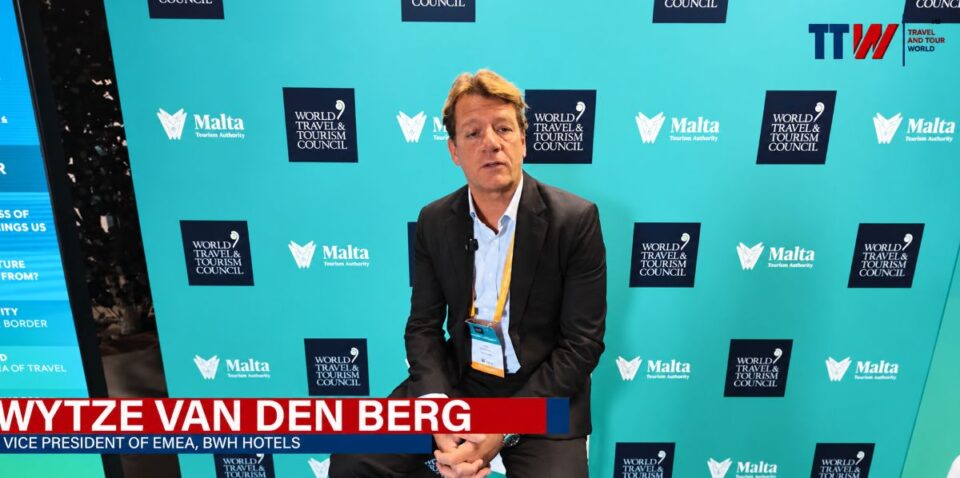
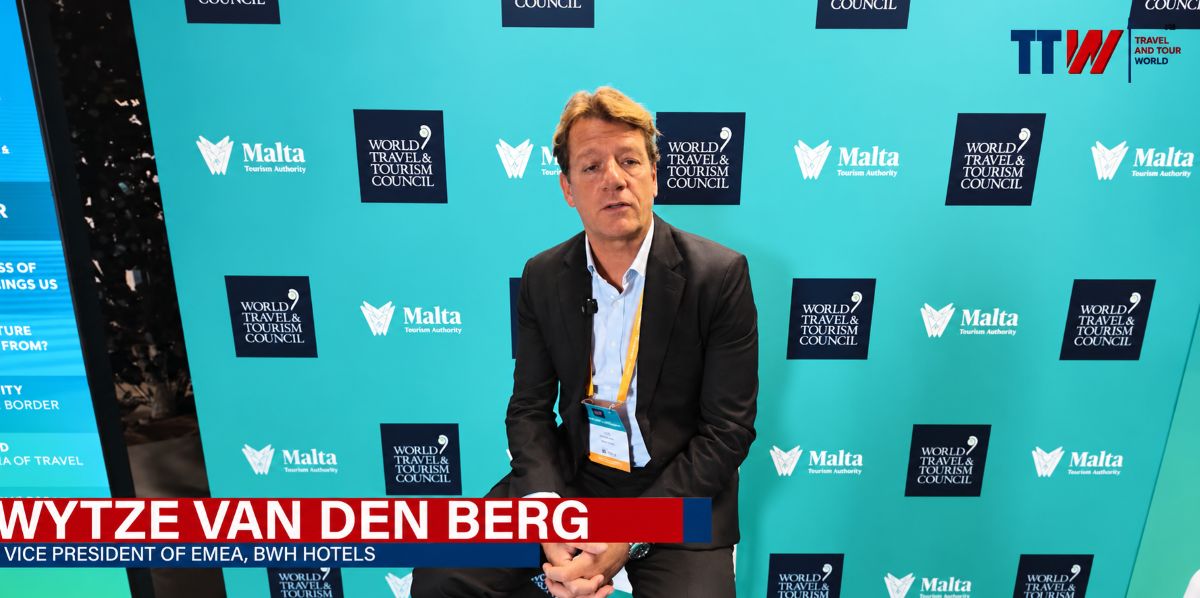
Speaking in an exclusive interview with Travel And Tour World at WTTC, van den Berg said the group’s role goes beyond providing accommodation. Its broader aim, he explained, is to connect travellers with destinations, neighbourhoods and local surroundings.
“We have been in this industry for 80 years and we really want to bring destinations and travel to our guests.”
That message framed much of the discussion. Van den Berg repeatedly returned to the idea that hospitality works best when hotels are integrated into the economic, cultural and social fabric of the destinations in which they operate.
How does BWH Hotels define its core purpose?
Van den Berg said BWH Hotels is celebrating its 80th anniversary and operates around 4,000 hotels in more than 100 countries through its wider portfolio.
He described BWH Hotels as the parent company of WorldHotels, Best Western Hotels and SureStay Hotels.
“We have about 4,000 hotels in over 100 countries and we really like to showcase the local neighborhoods and the surroundings of the destinations.”
That quote captures the company’s focus on local experience.
The goal, according to van den Berg, is not simply to provide a hotel room. BWH Hotels wants travellers to engage with the destination around the property, whether they are visiting for business or leisure.
He added:
“We really like to showcase the local neighborhoods… to the people who like to travel our hotels and our destinations either for business or either for leisure.”
The underlying idea is clear: hotels can function as gateways into the wider destination, not just as places to stay.
Why does sustainability matter to BWH Hotels?
Van den Berg placed sustainability alongside tourism management as a major priority.
“Managing tourism and sustainability are really, really important.”
He said BWH Hotels has been a member of the Global Sustainable Hospitality Alliance for many years and continues to explore initiatives that can help balance tourism growth.
His comments focused on two connected challenges.
The first is overtourism. Popular destinations can face pressure when visitor numbers become concentrated in a limited number of places.
The second is under-distribution. Other destinations may have the capacity and need for more tourism but do not yet receive the same visibility or investment.
Van den Berg suggested that hospitality companies can help address both issues by encouraging travellers to discover new destinations.
“We explore many initiatives to balance overtourism, but also finding new destinations and finding people to bring that to new destinations.”
That reflects a broader sustainability argument: travel growth can be better distributed geographically instead of continuously concentrating demand in already crowded destinations.
How does BWH Hotels connect tourism with economic growth?
Van den Berg repeatedly linked hospitality with economic development.
“This industry is so important for economic growth and the well-being of people.”
His view is that tourism should create benefits beyond hotel revenue.
Hospitality investment can support jobs, infrastructure, local suppliers, entrepreneurs and wider destination development.
That is why BWH Hotels, he said, works with partners to identify ways to expand tourism while also creating value in the places where travel demand is growing.
The emphasis is important. Sustainable hospitality, in his framing, is not only about reducing environmental impact. It is also about ensuring that tourism growth contributes to local communities and supports longer-term economic improvement.
This makes destination development part of the hotel investment conversation.
For BWH Hotels, growth therefore appears to depend on three elements working together: visitor demand, local economic opportunity and sustainable infrastructure.
Why does Africa stand out as a future investment market?
When asked which market could offer the strongest future investment potential, van den Berg pointed to Africa.
“It’s a big world. So there are many, many markets where we see, where we anticipate a lot, a lot of growth.”
He then singled out the continent:
“It’s not an easy region because it’s so big. It’s the continent of Africa.”
His reasoning centred on demographic growth and long-term demand.
Van den Berg said that by 2050, Africa would have more residents than China and India combined.
His point was not simply about population size. He used that projection to illustrate the potential scale of future economic and travel demand across the continent.
“So imagine the volume of the people and bringing sustainable hospitality to that region is going to be very important.”
For hotel groups, that suggests long-term opportunities in markets where population growth, urbanisation, business activity and domestic travel demand may all increase.
What does sustainable hospitality investment in Africa mean?
Van den Berg made clear that he does not see hospitality investment in Africa only as a way to bring in tourists.
“It is going to be very important to bring tourists but also make sure we can invest in those economies to make the life better of the people living there.”
This is one of the strongest statements in the interview.
It positions tourism investment as something that should contribute to local living standards, not merely extract economic value from destinations.
That can include investment in hotels, infrastructure, jobs, skills, supplier networks and broader economic activity.
His argument is that sustainable hospitality should create a relationship between visitor growth and local development.
That approach is particularly relevant in emerging markets, where tourism can become a major source of employment and foreign investment if development is managed effectively.
For BWH Hotels, Africa appears to represent both commercial potential and a test of whether hospitality growth can deliver broader social and economic benefits.
Why are events like WTTC important for hotel development?
Van den Berg also emphasised the value of industry events as platforms for networking and collaboration.
“Events like the World Travel and Tourism Council are important also for that to get in touch and network with operators and entrepreneurs coming from these countries.”
His point is that hospitality expansion cannot happen in isolation.
Hotel groups need to connect with developers, governments, infrastructure providers, tourism authorities and local entrepreneurs.
WTTC and similar events create opportunities for those stakeholders to meet.
Van den Berg said such meetings can help hotel groups reach people and markets they may not encounter through normal business channels.
That is particularly important when considering investment in large and diverse regions such as Africa.
The scale and complexity of such markets mean partnerships can be essential for understanding local conditions, regulation, infrastructure and investment opportunities.
Why does collaboration with governments matter?
Van den Berg described travel and tourism as a highly interconnected industry.
“Travel and tourism is such a holistic approach and it’s important that all the different silos and the different parties can work together.”
That includes governments.
He said the industry needs platforms where stakeholders can reach public authorities and help secure investment in areas such as infrastructure, safety and security.
“People who can actually reach out to governments to secure… investments in infrastructure, in safety and security.”
These conditions can directly influence whether a destination is attractive to both investors and travellers.
Airports, roads, security systems and public services all affect hotel viability.
His comments reinforce the idea that hospitality growth depends on more than hotel development alone.
A strong tourism economy requires broader destination infrastructure and effective cooperation between public and private sectors.
How should tourism revenues benefit local populations?
Van den Berg ended on a point that ties together sustainability, investment and economic development.
“Making sure that the economies who are benefiting from tourism are really using that money to invest in their country, in their population.”
That is central to his view of responsible tourism.
Tourism can create significant revenue, but its value depends partly on how those revenues are used.
If governments and businesses reinvest in infrastructure, safety, local communities and economic development, tourism can become a stronger long-term growth tool.
The implication is that successful hospitality expansion should not be measured only by room counts or visitor numbers.
It should also be measured by whether destinations become stronger, more resilient and more prosperous.
What is the central message from the interview?
The interview presents a clear picture of how BWH Hotels views the next stage of hospitality growth.
The company wants to connect guests more closely with local destinations. It sees sustainability as essential to managing tourism pressure. It views Africa as a major long-term opportunity. And it believes partnerships between hotel groups, governments and local businesses are critical.
Van den Berg’s most important message may be that hospitality development has to work for both travellers and residents.
“We really want to bring destinations and travel to our guests.”
But equally:
“We can invest in those economies to make the life better of the people living there.”
That combination—guest experience and local benefit—defines the broader strategy he outlined.
Conclusion
“Managing Tourism and Sustainability Are Really Important”: BWH Hotels Pushes Balanced Destination Growth because long-term hospitality expansion depends on more than attracting higher visitor numbers. The reason is that destinations need infrastructure, sustainable investment and tourism models that spread economic benefits to local communities. BWH Hotels Pushes Balanced Destination Growth by supporting local experiences, exploring new destinations and working with partners on infrastructure, safety and development. “Managing Tourism and Sustainability Are Really Important” therefore reflects a practical hospitality message: future growth should combine traveller demand with local value. For BWH Hotels, the strongest destinations will be those where tourism supports economic opportunity while remaining sustainable for residents, businesses and visitors.
Image Credit: TTW
The post “Managing Tourism and Sustainability Are Really Important”: BWH Hotels Pushes Balanced Destination Growth appeared first on Travel And Tour World.
