
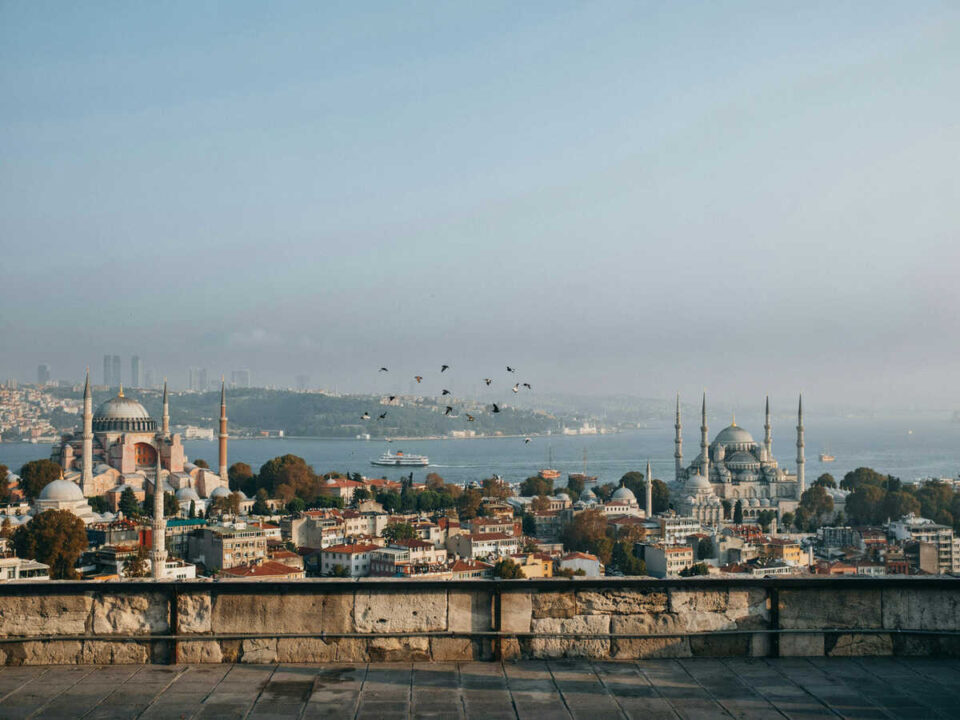

Turkish-Italian collaboration aims at promoting cultural tourism by way of historical site development. The beginning of an innovative chapter of cultural diplomacy in the Mediterranean is about to start through the new Turkish-Italian collaboration in order to promote the cultural history of both the countries. It was announced at the 17th Symposium of Archaeology on Italian Missions in Turkey held in the ancient city of Hierapolis in Denizli on October 13, 2026.
Türkiye’s Minister of Culture and Tourism, Mehmet Nuri Ersoy, and Italy’s Minister of Culture, Alessandro Giuli, outlined a comprehensive framework that bridges scientific research with robust destination development. By intertwining the preservation of historical monuments with upgraded visitor experiences, the partnership aims to draw international travelers while safeguarding antiquity for future generations.
The Historic Twinning of Ephesus and Pompeii
At the core of this cultural resurgence is a newly established twinning partnership between two of the ancient world’s most iconic cities: Ephesus in Türkiye and Pompeii in Italy. Both destinations serve as extraordinary time capsules of Roman urban life and architecture, and this strategic alignment sets the stage for unprecedented academic and operational synergy.
- Shared Expertise: The agreement establishes a direct corridor for the exchange of advanced conservation techniques and historical interpretation practices.
- Scientific Research Programs: Italian and Turkish specialists will collaborate on joint research initiatives, leveraging the unique preservation environments of both sites.
- Tourism Synergy: While combined ticketing or joint visitor routes have not been formalized, the twinning heavily boosts the international profile of both destinations, encouraging tourists to explore the broader Mediterranean narrative.
Transforming Elaiussa Sebaste: The 2027 Archaeological Park Vision
Looking toward the immediate future, a major focal point of the alliance centers on Elaiussa Sebaste, an ancient Roman port city situated in Türkiye’s southern Mersin province.Founded in the 2nd century BC, the city thrived as a critical maritime and agricultural hub connecting Anatolia with Cyprus, Syria, and Egypt.
Starting in 2027, a collaborative valorization project spearheaded by Italy’s Central Institute of Archaeology and Türkiye’s Ministry of Culture and Tourism will shift the site’s focus from active excavation to heritage management and public accessibility. The ultimate objective is the phased development of a sprawling archaeological park. This transformation will protect vital monuments—including the site’s Roman theater, agora, and intricate aqueducts—while introducing modernized visitor interpretation centers to help travelers navigate the vast historical landscape.
A Legacy of Collaboration Across Anatolia
This modern diplomatic push is built upon a foundation of continuous academic cooperation. Italian archaeological missions have maintained a presence in Türkiye for decades, most notably at Hierapolis, where Italian teams have been conducting excavations for approximately 70 years.Today, researchers from Pamukkale University collaborate closely with Italian experts under Türkiye’s “Heritage for the Future” program, balancing monument restoration with the immense tourist footfall generated by the adjacent white travertine terraces of Pamukkale.
Beyond Denizli and Mersin, the bilateral partnership extends across multiple Turkish provinces, with joint teams leading research at several highly strategic historical locations:
| Archaeological Site | Turkish Province | Historical Significance |
| Hierapolis | Denizli | Classical thermal spa city featuring 70 years of continuous Italian research and restoration. |
| Arslantepe | Malatya | A pivotal ancient settlement critical to understanding the emergence of early state societies. |
| Uşaklı Höyük | Yozgat | An ancient Anatolian settlement revealing early urban dynamics and Hittite history. |
| Karkamış | Gaziantep | A major historic settlement strategically located near the Syrian border. |
| Yumuktepe | Mersin | A multi-layered mound showing evidence of extensive prehistoric and historical human occupation. |
Exporting Heritage: Cultural Diplomacy in Rome
The alliance also leverages massive international exhibitions to project Türkiye’s archaeological wealth directly to European audiences. The Troy and Rome: Myths, Legends and Stories of the Ancient Mediterranean exhibition, hosted at the Colosseum Archaeological Park, has been cited as a major, success underpinning these new initiatives. By showcasing hundreds of artifacts—many on loan directly from Turkish museums—these high-profile events stimulate international market appeal and lay the cultural groundwork for future tourism.
Furthermore, both nations are united in their legal commitment to combat the illicit trafficking of cultural property.The successful repatriation of Turkish artifacts seized in Italy stands as a testament to the practical, enforcement-level success of this partnership.
Türkiye and Italy form a groundbreaking archaeological partnership to promote heritage tourism with the help of Ephesus, Pompeii, and new parks.
Through combining the scholarly approach of the twin cities project of Ephesus-Pompeii with big infrastructure projects such as Elaiussa Sebaste Archaeological Park, Türkiye and Italy are not just conserving the past; they are shaping the future of heritage tourism in the Mediterranean.
The post Türkiye Bands Together With Italy To Propel Heritage Tourism Towards 2027 With Ambitious Archaeological Projects And Ancient Treasures appeared first on Travel And Tour World.
